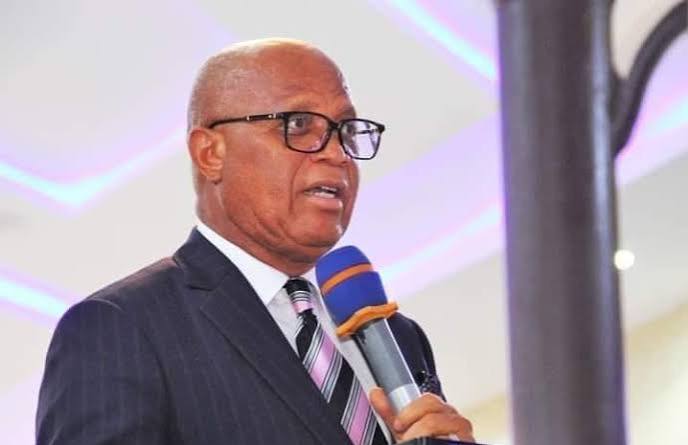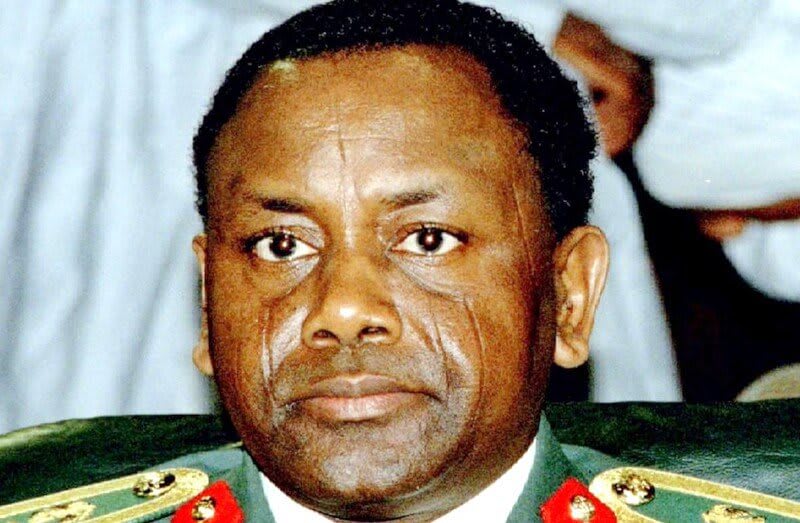
A former Assistant Director of the Department of State Services, Dennis Amachree, has stated that late military Head of State, Gen. Sani Abacha, believed he was invincible.
Amachree, who made the assertion in his new memoir, DSS @40: My Journey Behind the Shield, excerpts of which were published by The Nation on Tuesday, 21 July, 2026, said that Abacha, despite the extensive security around him, could not escape death, warning that the former ruler’s death underscores the transient nature of power.
“Abacha, a military dictator who surrounded himself with a seemingly impenetrable security detail, thought he was invincible. Yet, in the end, death kept its appointment with him, rendering his concentric rings of security useless.
“His story is a poignant reminder that power is transient and that no amount of security can shield a leader from their ultimate fate,” he said.
The retired DSS officer questioned why prominent figures around the late military ruler allegedly promoted conflicting accounts of his death.
Dennis Amachree
“Why did the generals, close aides and politicians deliberately propagate false narratives about Abacha’s death? Who fed the media with these fake stories?
“While the truth may be suppressed temporarily, the forces of human curiosity and investigative inquiry will ultimately bring it to light,” he stated.
According to him, the conflicting accounts of Abacha’s death are symptomatic of a wider culture of misinformation and lack of accountability in Nigeria.
The retired intelligence officer further argued that deliberate distortion of facts has hindered the country’s progress.
He said, “The confusion surrounding Abacha’s death is a microcosm of a larger problem in Nigeria: a leadership culture steeped in falsehood and a lack of accountability.
“The deliberate suppression of facts and the promotion of misinformation by those who should be held to a higher standard have kept the country in a retrogressive circle.”
Amachree also recalled that before his death in June 1998, Abacha was allegedly working towards transforming himself from a military ruler into a civilian president.
According to him, the late Head of State had perfected plans for self-succession by backing political parties that eventually adopted him as their presidential candidate.
“Before Abacha died, he had perfected the plan for self-succession. He wanted to transition from military dictator to civilian president.
“He formed five political parties, put his men in charge of all of them and made all of them adopt him as their presidential candidate.”
Amachree added that the parties created the impression of a democratic transition while pursuing Abacha’s political ambition.
“The parties were struggling to do his bidding while giving the impression of a transition to democracy.”