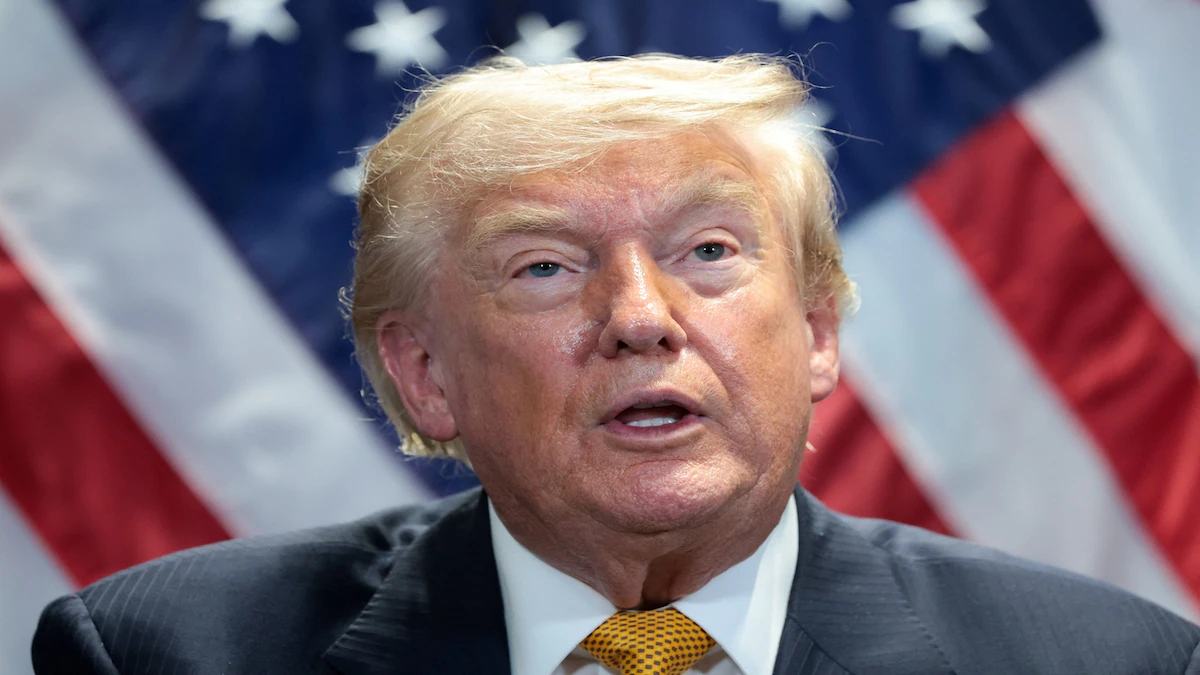
After two consecutive nights of US strikes on Iran, Tehran says it has retaliated by targeting US military bases and “strategic centres” in Bahrain, Kuwait and Qatar. The US says its strikes were in response to Iranian attacks on shipping in the Strait of Hormuz, while President Donald Trump has warned that any further Iranian action would invite retaliation “20 times harder”.
The escalation has disrupted one of the world’s busiest energy corridors. Shipping through the Strait of Hormuz has slowed sharply, oil prices have climbed to their highest levels in nearly three weeks, and Gulf nations are once again facing the prospect of becoming frontline states in a conflict they have tried to avoid.
Yet despite the intensifying military exchanges, several foreign policy experts believe Washington’s strategy faces fundamental constraints. Speaking to CNBC-TV18, former Foreign Secretary Kanwal Sibal, West Asia strategist Dr Waiel Awwad and former ambassador KP Fabian argued that military pressure alone is unlikely to force Iran into submission and could instead make a negotiated settlement even harder to achieve.
Why do experts believe the US strategy faces growing challenges?
According to Kanwal Sibal, the biggest weakness lies in the contradiction between military escalation and diplomatic engagement.
He argued that the interim understanding between Washington and Tehran had already become fragile because both sides accused the other of violating its terms. While the US has justified its latest strikes as retaliation for attacks on shipping, Sibal questioned whether Washington itself had fully adhered to the framework it had negotiated.
“I think Iran, and the rest of the international community, can never be sure whether Trump will honour any deal that he enters into,” he said.
Sibal believes Washington is pursuing a dual-track approach—continuing military operations while attempting to keep diplomatic channels open. In his view, repeated military action erodes trust, making any future agreement increasingly difficult to negotiate and sustain.
Why has the Strait of Hormuz become central to the conflict?
Although Iran’s nuclear programme continues to dominate international attention, Dr Waiel Awwad believes the Strait of Hormuz has become the immediate strategic battleground.
The narrow waterway carries roughly one-fifth of global oil trade, making it one of the world’s most important maritime chokepoints. Any disruption to shipping has immediate consequences for global energy markets.
According to Awwad, Iran views its ability to influence shipping through the Strait as its strongest source of leverage. He argued that Tehran believes Washington attempted to bypass monitoring arrangements under the temporary framework, contributing to the latest escalation.
“The main reason for the United States, in fact, is to take control of the Strait of Hormuz more than the issue of Iran’s nuclear programme,” Awwad said.
Whether or not that assessment proves correct, the Strait has once again emerged as the focal point of the crisis. Shipping disruptions have already tightened global energy markets and renewed concerns over crude supplies.
Why doesn’t military superiority guarantee a strategic victory?
Despite the scale of recent American strikes, the experts argue that military superiority alone may not be enough to achieve Washington’s broader objectives.
Sibal said Iran’s geography, dispersed military infrastructure and decades of preparation make it exceptionally difficult to defeat through air power alone.
A campaign capable of permanently neutralising Iran’s military capabilities would require an enormous commitment of resources and could ultimately demand a ground operation—an option that carries significant political, military and economic risks for the United States.
He also pointed to Iran’s ability to retaliate indirectly by threatening energy infrastructure across the Gulf. Any attacks on oil facilities or desalination plants could drive energy prices sharply higher and disrupt supplies to major importers, including India.
The experts’ broader argument is that military strength does not automatically translate into strategic success, particularly when the conflict involves economic disruption, regional alliances and asymmetric retaliation.
Why are Gulf countries becoming increasingly uneasy?
The renewed conflict has also placed Gulf states in an increasingly difficult position.
Countries such as Saudi Arabia, Qatar, Bahrain and Kuwait host key American military facilities while simultaneously trying to avoid becoming direct participants in a wider regional conflict.
Sibal said Saudi Arabia, in particular, remains concerned that any collapse of the ceasefire could expose critical infrastructure to Iranian retaliation.
Awwad argued that recent attacks have highlighted a broader dilemma for Gulf governments. Rather than serving solely as security guarantees, American military bases have increasingly become potential targets during periods of escalation.
If that trend continues, he suggested, Gulf states may eventually reassess the strategic costs and benefits of hosting large US military deployments.
Is there still room for diplomacy?
Despite increasingly hostile public statements from both Washington and Tehran, the experts believe diplomacy has not completely disappeared.
Sibal said there are signs that informal communication channels may still be functioning alongside military operations. However, he warned that President Trump’s public rhetoric risks strengthening hardline factions within Iran and reducing political space for negotiations.
“I don’t think Iran will buckle under pressure,” Sibal said. “They know the future of the country is at stake.”
He argued that sustained military pressure, without a credible diplomatic pathway, is more likely to prolong the confrontation than resolve it.
What does this mean for India?
For India, the implications extend well beyond geopolitics.
The Strait of Hormuz remains a vital route for India’s crude oil imports, making any disruption to shipping an immediate concern for energy security.
Higher crude prices could increase India’s import bill, widen the current account deficit and add to inflationary pressures if the conflict intensifies.
Instability across the Gulf could also affect millions of Indians living and working in the region while complicating New Delhi’s carefully balanced relationships with both Iran and the Gulf states.
The bigger picture
The latest escalation highlights the growing complexity of the US-Iran confrontation.
The United States retains overwhelming military capability, but the experts argue that it also faces significant strategic constraints if it seeks a prolonged conflict. Iran, meanwhile, cannot match American firepower but continues to possess important sources of leverage through its geography, regional influence and its ability to disrupt one of the world’s most critical energy corridors.
Taken together, the experts’ assessment suggests the conflict has exposed the limits of military coercion. Washington can impose significant costs on Iran through military action, but translating battlefield pressure into lasting political outcomes may prove considerably more difficult. As military exchanges continue alongside tentative diplomatic contacts, the challenge for both sides will be finding a path that avoids a prolonged conflict with mounting economic and geopolitical consequences for the wider world.