Katsina State Governor, Malam Dikko Umaru Radda, has urged residents to expose bandit informants and collaborators, warning that lasting peace cannot be achieved while criminal networks continue to receive support from within local communities.
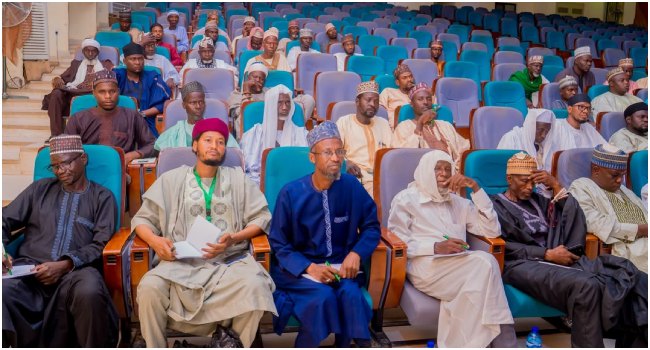
Speaking at a sensitisation programme and public lecture organised by the Katsina Scholars Forum for Community Advancement, led by Sheikh Munir Adam Koza, the governor said every resident has a role to play in strengthening security by providing useful information to law enforcement agencies and refusing to shield those aiding criminal groups.
According to a statement issued on Friday by the Governor’s Chief Press Secretary, Ibrahim Kaula Mohammed, Radda stressed that while the government remains committed to protecting lives and property, citizens must support ongoing efforts by identifying individuals who provide intelligence, logistics and other assistance to bandits.
“We must all work together by exposing those who provide information, logistics and other forms of support to criminals,” the governor said.
He noted that defeating insecurity requires close collaboration among Islamic clerics, traditional rulers, community leaders, security agencies and the general public, adding that religious leaders have a critical role in promoting values that discourage criminality and encourage cooperation with security authorities.
Governor Radda recalled that when his administration took office, 23 of Katsina State’s 34 local government areas were heavily affected by banditry. He said the government responded by recruiting 2,500 personnel into the Katsina Community Watch Corps to complement the efforts of the police, military and other security agencies.
According to him, the intervention has significantly improved security, with several roads previously considered unsafe now accessible to motorists, while markets forced to shut down by bandit attacks have resumed commercial activities.
Despite the gains, the governor said security agencies remain alert to emerging threats in parts of Musawa and Matazu Local Government Areas.
He commended the Community Watch Corps for its contributions to restoring peace, describing the outfit as an indispensable partner in the state’s security architecture.
“Only Allah knows what the situation would have been without the support of the Community Watch Corps. They have stood shoulder to shoulder with our security agencies in protecting our communities,” he said.
The governor cited the abduction of the late General Abubakar Rabe as evidence of the need to dismantle criminal support networks and urged politicians not to politicise security issues. He also appealed to residents to place the collective interest of the state above personal and political considerations.
Radda further urged Islamic clerics to ensure their sermons promote obedience to the law, support for security agencies and peaceful coexistence, while reaffirming his administration’s commitment to strengthening the traditional institution through improved welfare packages for district and village heads.
Also speaking, Deputy Governor Malam Faruk Lawal Joɓe said the administration has enhanced the welfare of traditional rulers by increasing the allowances of village heads, upgrading the status and remuneration of district heads and reviewing the salaries and allowances of other traditional title holders to enable them to play a more effective role in community security.
Earlier, the convener of the programme, Sheikh Munir Adam Koza, said the forum was designed to equip clerics and community leaders with practical knowledge to address emerging security challenges. He urged residents to continue praying for peace and to support government initiatives aimed at restoring lasting security across the state.
Delivering the keynote lecture, the Chief Imam of the National Mosque, Abuja, Sheikh Ibrahim Makari, stressed that government alone cannot overcome insecurity. He called for more responsible religious preaching, stronger community-based intelligence gathering, proper moral upbringing of children and greater involvement of retired public servants and security personnel in efforts to make communities safer.