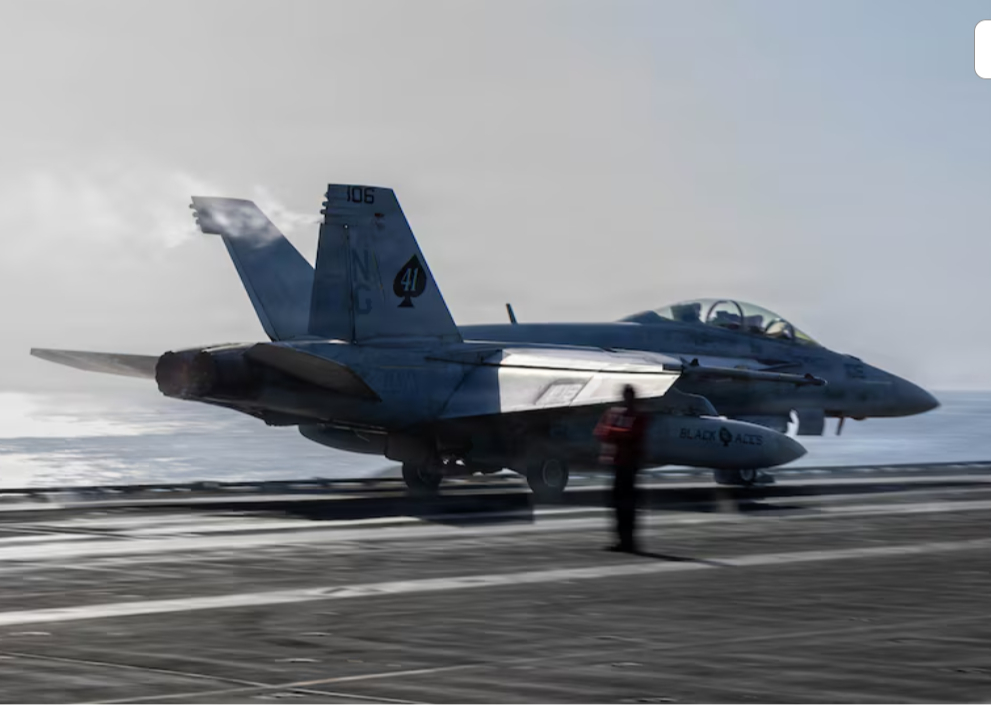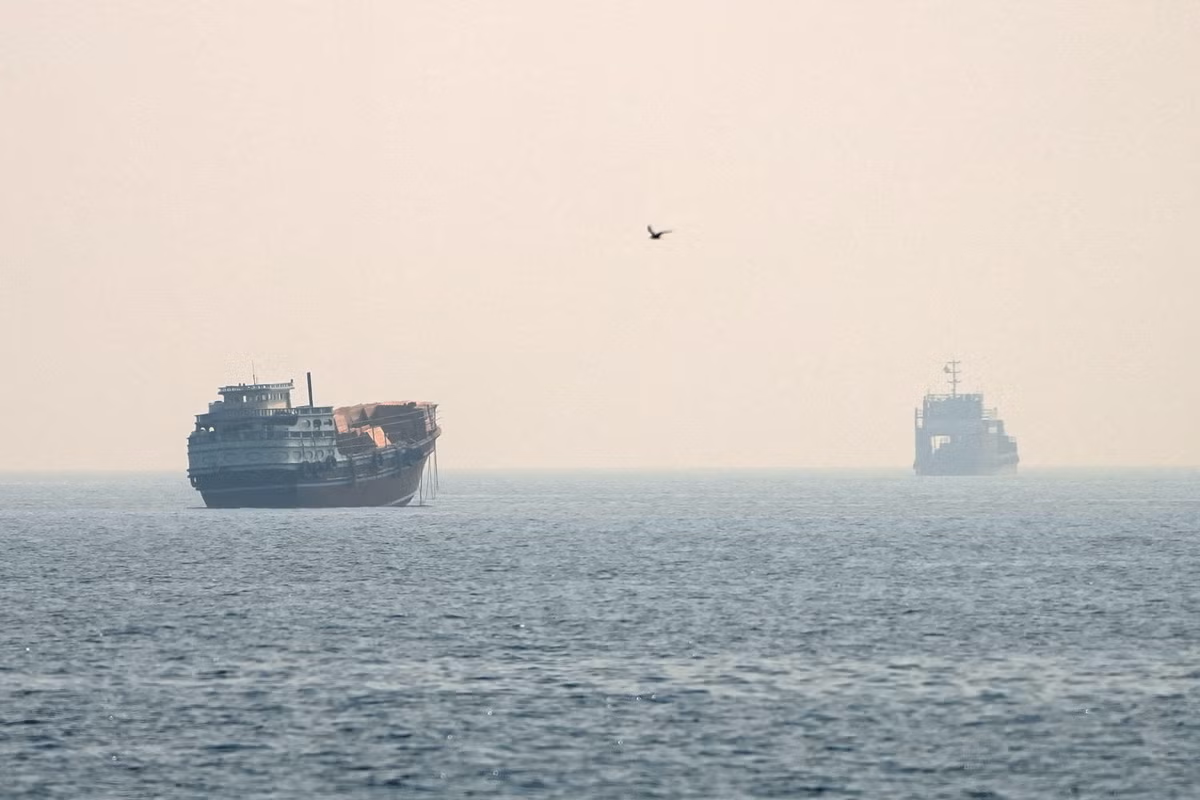
An Indian seafarer who went missing following an attack on a commercial vessel off the coast of Oman is dead, his father-in-law said on Wednesday, as Iran and the US resumed fighting in the Gulf.
Heramb Karmarkar, a 30-year-old marine engineer, was on board the Cyprus-flagged GFS Galaxy along with 10 other Indian crew members when it was attacked on Sunday.
Karmakar was declared missing after the rest of the Indian sailors were rescued from a lifeboat by the Omani Navy, according to reports.
The Dubai-bound vessel that had a total of 24 crew members, was struck by an “unidentified projectile” after crossing the contested waters of the Strait of Hormuz, according to reports.
Karmarkar’s father-in-law, Vivek Tandon, said the company operating the vessel had informed him of his son-in-law’s death.
“We received a condolence message from the company saying that Herambh is no more,” Mr Tandon told The National.
“We are all in a bad state after receiving this news. Now we just want Herambh back to complete his last rites.”
Iran had claimed that it struck the ship after it attempted to transit through an unauthorised route despite warnings to correct its course.
According to Lloyd’s List, Iran’s attack on GFS Galaxy in the Strait of Hormuz set the vessel “on fire and prompting the crew to abandon ship, marking the fourth attack on commercial shipping in the waterway since 6 July”.
India’s foreign ministry on Sunday said the continued attacks on commercial shipping in the Middle East were “deeply worrisome” and called for the de-escalation of tensions.
New Delhi on Tuesday summoned Iran’s deputy ambassador to lodge a diplomatic protest after another Indian sailor was killed and eight others were injured following an Iranian attack on two oil tankers in the Strait of Hormuz.
The United Arab Emirates said two tankers, the Mombasa and Al Bahiyah, were targeted in the southern lane of the strait while in Omani territorial waters. Indian national Rohan Kumar, who died, was on board the Al Bahiyah tanker, the Emirati officials said.
“My brother came under attack while working in Al Bahyah. He had stayed with us for a few months during a vacation and returned to his job on 8 June, promising to rejoin the family after completing this contract of voyage in four months. Now we are waiting for his mortal remains to reach,” his brother Manish Kumar, a resident of Bihar state, told Hindustan Times.
Rohan Kumar, 31, was working “tirelessly at sea to support the family”, his father Sanjay Kumar Gupta said.
He added: “Those dreams are shattered now.”
The Emirati defence ministry condemned the “blatant attack”, saying it was “a serious violation and a clear breach of international law that threatens the security and stability of the region”.
“The UAE reserves its full right to respond to this escalation and to take all necessary measures to protect its territory, its citizens and residents, in a manner that safeguards its sovereignty, security, and stability, and protects its national interests,” it said.
Islamic Revolutionary Guard Corps said on Tuesday that two “offending” tankers had been hit and disabled after ignoring repeated warnings, turning off navigation systems and attempting to pass through what the guards described as a mined route.
The IRGC accused the US of “inciting vessels to use an illegal route” and said cooperation with the “aggressor enemy” would only result in damage, delays in reopening the strait and a global energy crisis.
The United Kingdom Maritime Trade Operations (UKMTO) agency said on Tuesday that a tanker had been hit by an unknown projectile while travelling 40 nautical miles northeast of Oman’s Qalhat.
UKMTO said the tanker’s master reported that the projectile struck the starboard-side engine room and that all crew were safe. It is also not clear whether the UKMTO report referred to the same incident as the one reported by the UAE.
Several Indian seafarers have come under attack, with at least seven killed in strikes. India has more than 300,000 sailors working in global shipping fleets, according to government data.