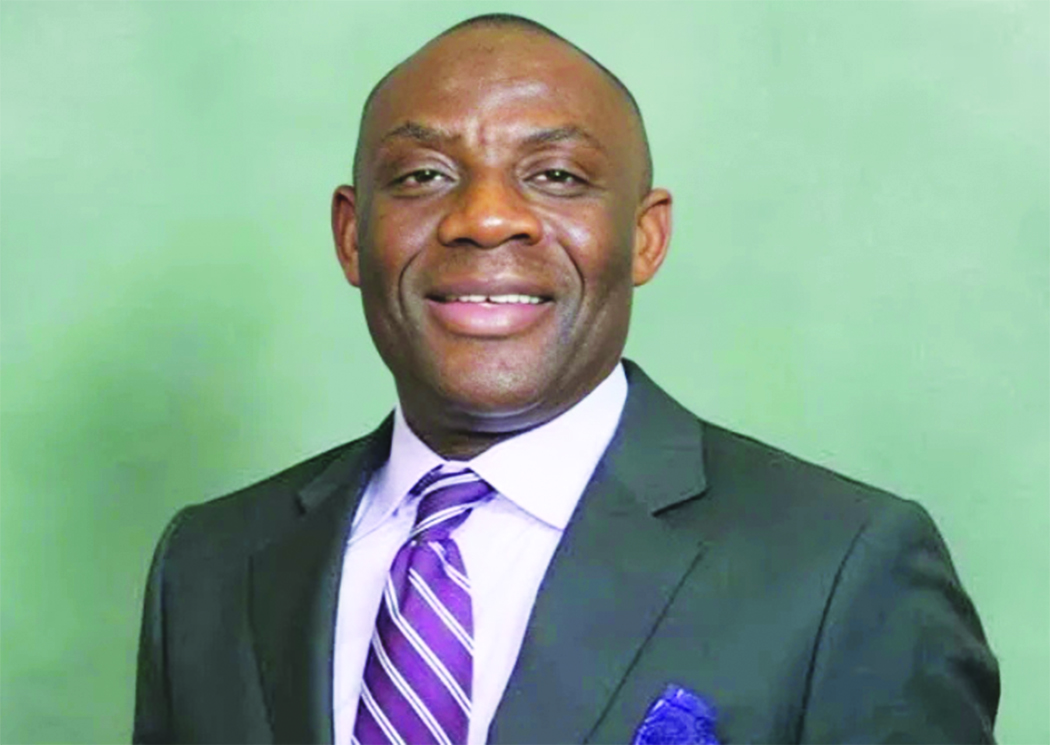
By Daniel Oluwatobiloba Popoola
The Federal Government has intensified efforts to restore financial stability to Nigeria’s electricity sector with the rollout of the Series II Bond Issuance under the Presidential Power Sector Financial Reforms Programme (PPSFRP), assuring investors that the Tinubu administration is honouring its financial commitments and laying a credible foundation for sustained private investment in the power industry.
Speaking on Monday, 21July, 2026, at the Investor Forum for the PPSFRP Series II Bond Issuance, Special Adviser to the President on Energy, Olu Arowolo Verheijen, said the initiative forms a critical pillar of President Bola Ahmed Tinubu’s Renewed Hope Agenda to resolve inherited financial liabilities, improve liquidity across the electricity value chain and restore confidence in Nigeria’s power sector.
Addressing investors, financial institutions, development partners, government officials and transaction advisers, Verheijen said governments earn investors’ confidence not through promises but by consistently fulfilling their obligations.
Every successful capital market tells the same story: investors return where governments keep their promises. Today’s forum is about exactly that,” she said.
She explained that the Tinubu administration had deliberately moved away from the fiscal distortions that previously characterised the electricity sector by transforming legacy liabilities into structured investment opportunities backed by transparency, discipline and timely execution.
According to her, the reforms are converting yesterday’s liabilities into today’s liquidity and tomorrow’s investment capacity, adding that improved liquidity would strengthen the entire electricity value chain, enhance operational efficiency and rebuild investor confidence.
Verheijen stressed that the administration adopted an execution-first strategy, insisting that government deliberately focused on delivering existing commitments before embarking on further expansion.
She disclosed that under Series I, launched in February 2026, the Federal Government injected approximately ₦501 billion into the programme, comprising ₦300 billion in cash and about ₦201 billion in non-cash bond instruments, representing roughly 22 per cent of verified settlement obligations under executed settlement agreements.
She explained that the outstanding liabilities would be settled through the Series II and subsequent bond issuances.
Providing further details, Verheijen said government has so far settled ₦333.12 billion owed to eight participating generation companies, covering 17 power plants that executed participation agreements under the programme.
She also announced that the first Series I coupon payment, valued at about ₦63.5 billion, was paid in full on Tuesday 14 July,2026, describing the payment as a strong demonstration of government’s commitment to meeting its obligations.
“In sovereign finance, trust compounds just as powerfully as interest. Governments that expect private capital to invest must first demonstrate that their own commitments will be honoured. That is exactly what this Programme has done,” she stated.
The presidential aide said the credibility established through the reforms was already yielding positive results across the electricity sector.
According to her, participating generation companies have resumed meeting obligations to gas suppliers, lenders, and operations and maintenance contractors whose payments had previously remained outstanding.
She noted that the overwhelming investor response to the first bond issuance reflected growing confidence in both the Presidential Power Sector Financial Reforms Programme and the Federal Government’s broader economic reform agenda.
Verheijen said the Series II Bond Issuance would further settle verified legacy debts, deepen liquidity across the electricity market and reinforce the financial framework required to attract long-term private capital into Nigeria’s power sector.
She urged investors to see the bond beyond its financial value, describing it as an investment in reforms designed to restore payment discipline, strengthen sector cash flows, attract private investment and accelerate Nigeria’s economic transformation.
“By participating, you are not simply purchasing a financial instrument. You are investing in a reform programme designed to restore payment discipline, strengthen sector cash flows, crowd in private capital and accelerate Nigeria’s economic transformation,” she said.
Verheijen emphasised that the programme extends beyond financial restructuring, noting that its ultimate objective is to improve the daily lives of Nigerians through reliable electricity supply.