- After moving to Uganda to teach, Dr Kimani Muturi spotted an opportunity hidden in plain sight
- By transforming discarded banana stems into textiles, he has built a growing business that now employs 42 people
- His company produces African bags, carpets and hair extensions that are sold locally and exported overseas
Search option is now available at TUKO! Feel free to search the content on topics/people you enjoy reading about in the top right corner 😉
Uganda – What many farmers see as agricultural waste, Dr Kimani Muturi sees as a financial opportunity.
Source: UGC
The former Fine Arts teacher at Kapropita High School in Kenya has built a thriving textile enterprise in Uganda from a modest investment of just KSh10,000.
He did so by transforming discarded banana stems into a range of eco-friendly products, creating jobs and opening up new markets for sustainable textiles.
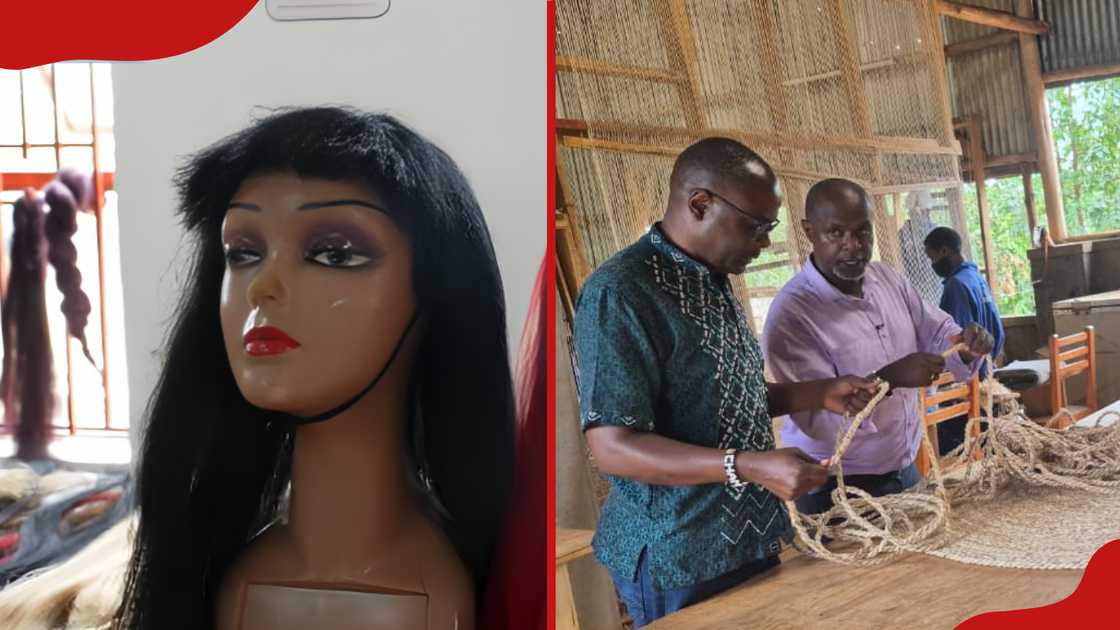
Today, his company produces bags, carpets and biodegradable hair extensions from banana fibres, proving that innovation can emerge from the most unlikely of materials.
In an interview on Daring Abroad, he disclosed that what started as a small experiment has grown into a business employing 42 people, with plans to increase the workforce to 60 by the end of 2026.

Read also
William Ruto shows off flourishing crops at expansive farm, Kenyans react
He told journalist Alex Chamwada that the path to entrepreneurship was shaped by an academic career that took him beyond Kenya’s borders.
After teaching Fine Arts at Kapropita High School, Muturi relocated to Uganda following an invitation from the then Institute of Teacher Education Kyambogo (ITEK) to establish a course in textile weaving.
In 2005, ITEK became what is now known as Kyambogo University, where he continues to teach textile design. While training students, he noticed a significant challenge facing the sector.
“There was a shortage of textiles,” he explained. Rather than simply identifying the problem, he began searching for locally available raw materials that could help bridge the gap.
The answer was growing all around him, as Uganda is one of Africa’s leading banana-producing countries.
After harvesting the fruit, farmers typically leave the stems behind. In most cases, the stems are discarded despite being rich in strong natural fibres.
Recognising their potential, Dr Muturi developed a process to extract and transform the fibres into textile materials.
Once farmers deliver the stems, they are split open to access the fibres hidden inside, then washed thoroughly to remove the sticky sap before being dried and aired.

Read also
Meru governor wants hair made from banana stems, claims synthetic hair causes cancer
After processing, the material is woven and converted into a variety of products.
The finished textiles are sold within Uganda and exported to international markets, where demand for sustainable and biodegradable products continues to grow.
The venture has not only provided a new source of income for farmers but has also created employment opportunities for dozens of workers involved in fibre extraction, processing, weaving and product development.
For Muturi, the enterprise is a demonstration of how local resources can be harnessed to solve challenges while supporting environmental sustainability.
As global industries increasingly seek alternatives to synthetic materials, banana fibre textiles are attracting attention as a renewable and biodegradable option.
And for the former Kenyan teacher who crossed the border to share his expertise, the success of the venture stands as proof that innovation often begins with a simple observation and the willingness to see value where others see waste.
Source: NGBREAKINGNEWS