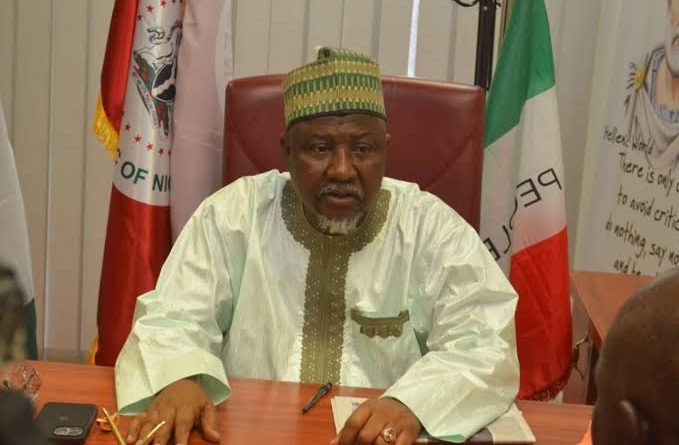
Senator Garba Maidoki has raised concerns over Nigeria’s public finances, questioning the management of government revenue despite reports that key revenue-generating agencies have exceeded their collection targets.
Speaking during a public engagement, the lawmaker criticized what he described as inconsistencies in government spending and project financing, while expressing concern over the country’s rising debt profile.
According to Maidoki, it is difficult to understand how a nation can effectively operate without a properly implemented budget or through what he described as selective financing of projects.
“How does a country run without a budget or selective financing of projects? We have borrowed so much. All the revenue-generating agencies in Nigeria said that they have exceeded their targets. Where is the money going?” he asked.
The senator’s remarks come amid ongoing national discussions over Nigeria’s fiscal management, public debt, budget implementation, and the allocation of government resources.
Nigeria has continued to rely on domestic and external borrowing to finance budget deficits and major infrastructure projects. At the same time, agencies such as the Federal Inland Revenue Service (FIRS), the Nigeria Customs Service (NCS), and other government revenue institutions have announced record revenue collections in recent years.
Despite these reported increases in revenue, concerns have persisted among lawmakers, economists, and civil society groups regarding the transparency of public spending, the growing cost of debt servicing, and the impact of government expenditure on the lives of ordinary Nigerians.
Economic analysts have repeatedly called for greater accountability, improved budget implementation, and prudent management of public funds to ensure that increased revenues translate into improved infrastructure, social services, and economic development.
Senator Maidoki’s comments have since attracted attention on social media, with many Nigerians joining the debate over government borrowing, revenue generation, and the need for greater transparency in the management of public finances.
The federal government has consistently maintained that borrowing is undertaken within approved legal frameworks and is directed toward financing critical infrastructure and developmental projects aimed at stimulating economic growth. However, questions surrounding revenue utilization and fiscal accountability remain central to the national conversation.
As discussions continue, stakeholders are urging stronger oversight, transparent reporting, and efficient use of public resources to build confidence in Nigeria’s fiscal management and promote sustainable economic development.