He had only gone there to say hello to a friend.
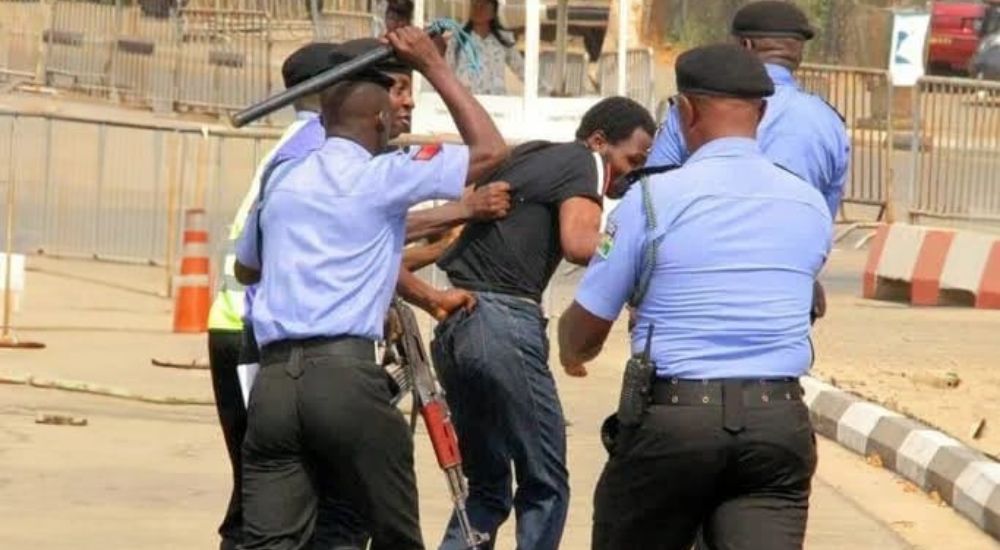
“I was sitting down with this female friend, Ugochi,” Matthew narrated to THE WHISTLER. “I saw them making calls outside. After that, they came inside, and I thought they were coming to buy phone accessories. Only for them to tell me that I was under arrest.”
Matthew stated that he was taken to Byazhin Divisional Police Station, Kubwa, where his ordeal began.
The shock came when he found out who ordered the arrest. It was Ugochi. The same friend he was sitting with in her shop when the arrest happened.
The reason sounded ridiculous to him.
“I have this male friend,” Matthew explained. “When he heard I was friends with Ugochi, he told me he had dated her before and wanted to marry her, but for her unsavoury ways with men. So during our casual gist, because we are very close, I just asked Ugochi if she knew my friend.”
Ugochi, who denied knowing the man, insisted Matthew must arrange a meeting with the man immediately so she could ask him herself.
When Matthew could not arrange the meeting as fast as she wanted, she called the police.
“The arrest was not really the problem,” Matthew said. “It was what followed.”
The police refused to let him go. They said it was a defamation case and that he must sleep in the cell. According to him, Ugochi was pressuring them to keep him there.
“I refused. I called my lawyer. I had to pay N40,000 bail before they allowed me to leave the station late that night,” he said.
But that was not the end.
The police told him to keep coming to the station every Monday. They said he must produce a male friend.
And one of the policemen, ASP Etim Arikpo, made it personal.
“The day they arrested me, Arikpo kept communicating with Ugochi,” Matthew said. “He was pleading with her to allow them to release me as the case was a bailable offence. He also hailed her that she had shown me that she is a woman.”
For two Mondays, Matthew reported as instructed. Each time, Arikpo threatened to put him in a cell and take him to court.
Later, his lawyer went to the station. He spoke with the police and they agreed Matthew should write an apology letter to Ugochi and the case would be closed.
“Even though I felt I didn’t do anything to warrant an apology, I wrote one because my lawyer said I should,” he said.
Still, Arikpo did not stop. He kept calling and threatening Matthew.
“He said Ugochi did not accept the apology and that the DPO of the station wanted to see me. He told me he knows my house and that if he comes to my house, it will not be easy for me,” he narrated.
Frightened, Matthew told his lawyer about the threats. The only advice he got was to leave his house.
“I really did not understand my lawyer telling me to leave my house, but I thought I should listen,” he said.
So for two days, Matthew ran from his own home.
Then he decided enough was enough. He called a senior lawyer who gave him a number: the Complaint Response Unit of the Nigeria Police Force.
“I called the number. Superintendent of Police Afolabi Taiwo Raymond, the Desk Officer in charge of Investigation, picked the call,” Matthew said. “He asked for the details and immediately swung into action. He called Arikpo and asked him to explain the defamation charge. Arikpo couldn’t explain because there was no single ingredient of defamation in the case.”
After that call to the CRU, the threats and harassment stopped.
“I have heard about the CRU of the police before,” he said. “But I didn’t know that it works. This one was an eye-opener for me.”
Matthew’s case is not an isolated one. Many Nigerians have had different experiences with the police; some good, some bad.
To address this, the Nigeria Police set up the Complaint Response Unit. The CRU was created to receive and deal with reports of police misconduct. It gives citizens a direct way to report abuse, corruption and unethical conduct so that complaints are not ignored.
The unit also gets support from the United Nations Office on Drugs and Crime, which is working with it to improve how it receives, investigates and responds to complaints.
According to the CRU Annual Report, 3,701 complaints were received between 2022, 2023 and 2024. Not all involve extortion. Some are about illegal detention. Others are about harassment, abuse of power, demand for bail payment, tampering with evidence and inaction.
The responsibility of the unit, established under Section 131 of the Police Act, is to receive complaints, investigate them, provide redress, and monitor police conduct across the country.
While Matthew’s case was that of harassment, Ifeanyi Kevin’s was a case of extortion. The CRU meant the difference between freedom and police extortion.
“Police officers met me on the road and arrested me,” he said. “They handcuffed me and asked me to send them N5m. I did not commit any offence. They met me around Obi-Igbo junction in Imo State. They told me to open my boot. When they didn’t see anything, they told me to transfer money to them.”