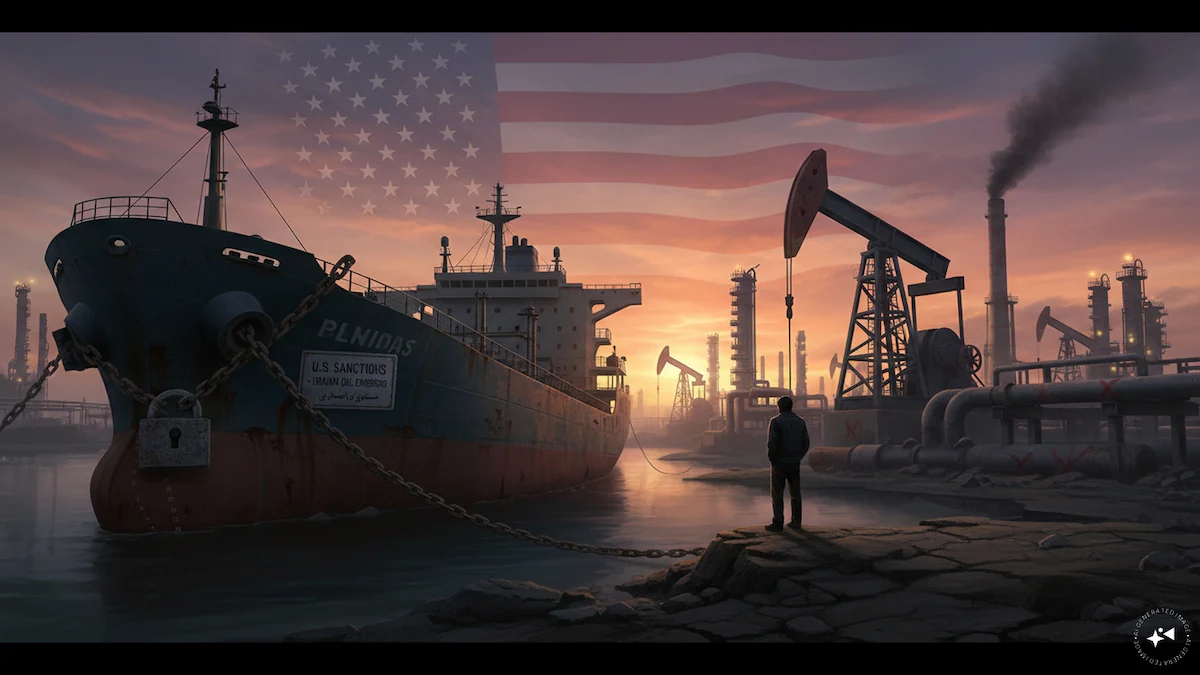
Iran’s foreign ministry said the US would bear “full responsibility” for the consequences of what it described as a violation of its commitments, noting that the sanctions relief was revoked after the Islamabad MoU was signed.
Also Read: US-Iran War Live Updates: US forces complete new round of retaliatory strikes against Iran
The US Treasury Department confirmed earlier in the week that it would not permit new sales of Iranian oil, reversing an important point of the interim agreement. A US official said Iran’s actions in the Strait of Hormuz were “wholly unacceptable” and would be met with consequences, following attacks on tankers in the strategic waterway.
The tanker attacks that triggered Washington’s move were not mentioned in Iran’s statement. According to the British navy-affiliated agency UKMTO, three tankers were struck by unidentified projectiles in and near the Strait of Hormuz in the days preceding the revocation.
There was no immediate claim of responsibility from Tehran. CNBC reported that Iran had committed to safe passage for vessels through the strait under the Islamabad deal but has since pushed for ships to use a northern route under its own control rather than the US Navy-approved corridor along Oman’s coast, hinting at the country’s attempt to pressure Gulf producers away from routes it does not control.
Also Read: US Military launches retaliatory strikes after vessels attacked in Strait of Hormuz
The US’ Office of Foreign Asset Control’s (OFAC) General License X, had been issued on June 22 in partial implementation of the Islamabad MOU. It authorised the production, sale, delivery and offloading of Iranian crude oil, petrochemical and petroleum products through August 21, and had allowed Iranian crude to be imported into the US with payment to Tehran in dollars a provision that could be a major concession to Iran.
Also Read: Explained: Why oil prices aren’t rising despite fresh attacks near the Strait of Hormuz
Under Article 10, Washington had said that immediately upon signing, and until sanctions were fully terminated, the Treasury would issue waivers covering the export of Iranian crude oil, petroleum products and derivatives, along with associated banking, insurance and transport services which did not state an exception for security incidents, hinting at Tehran’s response to the revocation.
The 14-point Islamabad MOU underlines both Iranian statements.
In its statement, Iran’s Foreign Ministry said it had acted in complete good faith since the MoU was signed, using all its capacities to fulfil its commitments. It accused the US, directly and through what it called “the Zionist regime’s” actions against Lebanon, of repeatedly committing violations of the memorandum’s provisions over the same 20 day period.
Deputy Foreign Minister Kazem Gharibabadi, in a post on X denounced both the oil waiver’s revocation and recent US attacks on Iran. He said the actions amounted to “blatant violations” of Articles 1, 2 and 10 of the Islamabad MOU, invoking Article 1 and 2 to frame Israeli strikes in Lebanon and threats against Iran as attributable to the US side of the agreement, since Israel was not a signatory to the memorandum. He attributed the pattern of US violations to Israeli actions in Lebanon and threatening statements against Iran.
Article 1 sets out the permanent termination of military operations on all fronts, including Lebanon, and a mutual pledge to refrain from the threat or use of force. Article 2 commits both sides to respect each other’s sovereignty and territorial integrity and to refrain from interfering in each other’s internal affairs.
Both Iran’s foreign ministry and Gharibabadi warned of consequences arising from the breach. Gharibabadi said that Iran while issuing a serious warning regarding the consequences of America’s breach of the agreement, would take decisive actions to safeguard its national interests and security.
Oil exports remain a critical revenue source for Iran, funding government spending and supporting an economy weakened by years of US sanctions. Tehran has expanded shipments in recent years, largely to China, despite the restrictions.