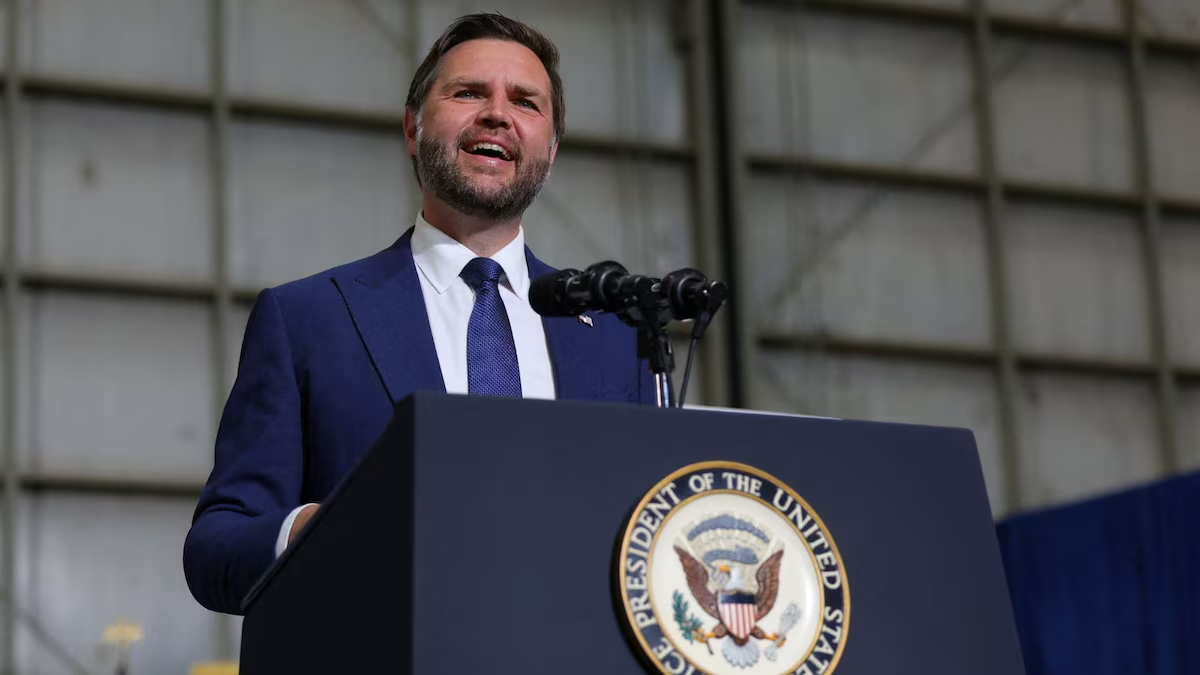
Vance made the remarks in a lengthy interview with podcaster Joe Rogan, in which he said the United States was “moving in the right direction with Iran,” though he cautioned that the process would be complicated.
Destroying Iran’s nuclear sites and its capacity to rebuild them had been a short-term objective, but that a lasting resolution would require a formal agreement, he said.
Explained: Why experts believe the US and Iran will avoid an all-out war
He mentioned that Washington’s immediate priority was keeping the Strait of Hormuz open and securing the flow of global oil and gas supplies, noting that military force alone was ill-suited to the task given the threat posed by low-cost drones.
Vance argued that critics of negotiations with Tehran had offered no alternative beyond “endless and ineffective bombing,” and said West Asia could not be viewed solely through the lens of an Iran-Israel confrontation.
The US, he said, remained close to both Israel and the Arab states in the Gulf region despite differences between them, and the era of deploying large US troop numbers to determine other countries’ political futures had ended.
Also Read: India bars deployment of seafarers on ships passing through Strait of Hormuz
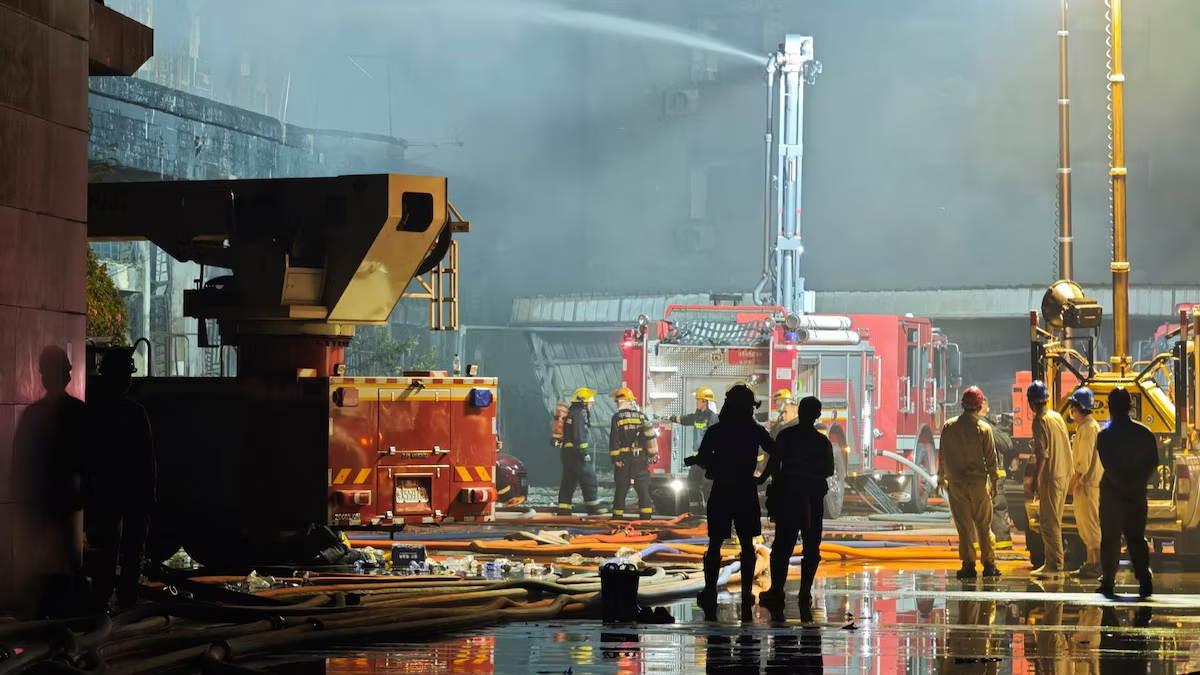
The comments came as US Central Command said it had struck Iranian command centres, air-defence sites, and coastal surveillance facilities in Bandar Abbas and elsewhere on Wednesday evening, following an earlier strike on coastal defence and cruise-missile sites on Greater Tunb Island.
Trump said the strikes will continue, and could extend into Iran’s interior, if a deal was not struck in the coming days.
Vance’s remarks on Hormuz reflect the scale of disruption at stake. Lloyd’s List reported that non-Iranian shipping had virtually disappeared from the strait, with most vessels now transiting dark, while Tehran has warned it could widen its campaign to Gulf oil export pipelines.
Also Read: 11:11 | Hormuz vessel traffic drops; HSBC upgrades India equities, ICICI Lombard plunges 14%
The International Monetary Fund (IMF) said the crisis had already cut off roughly 20 million barrels a day of crude and refined products, with more than 1.1 billion barrels failing to reach markets by the end of May — a shortfall exceeding the 1973 oil shock.
The IMF warned that the buffers that had kept prices at $90 to 100 a barrel, including drawn-down inventories and higher non-Gulf output, were now largely spent. Moody’s Analytics said the economic damage was already done regardless of when the strait reopens, citing reaccelerating inflation.
Tehran, meanwhile, said it no longer considered itself bound by the June 17 memorandum of understanding with Washington, with foreign ministry spokesman Esmaeil Baghaei telling Mehr news agency that Iran had “no plans for negotiations” and was focused on defence instead.