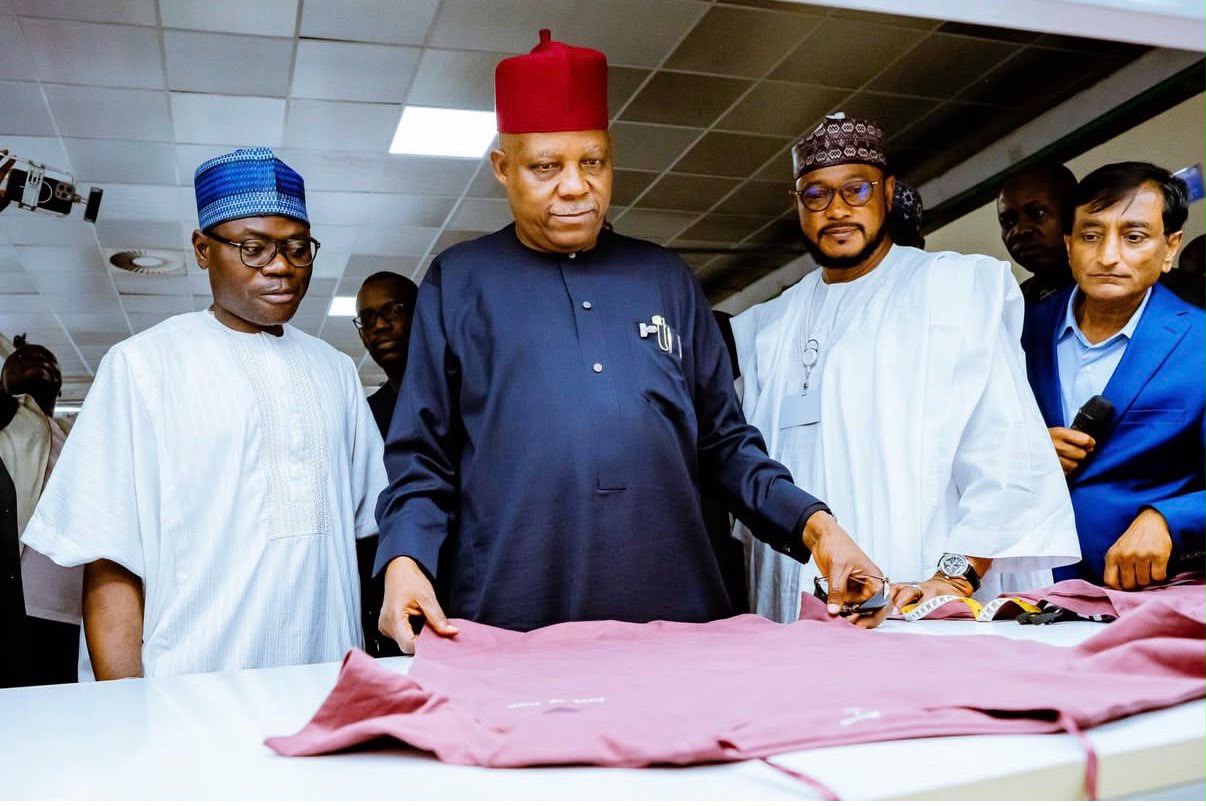
Governor Dauda Lawal of Zamfara State has identified the Glo-Djigbé Industrial Zone (GDIZ) in the Republic of Benin as a practical blueprint for fast-tracking Zamfara’s agricultural industrialisation, following a high-level working visit led by Vice President Kashim Shettima.
The visit, which brought together governors from Imo, Plateau, Kwara, Katsina and Jigawa States, offered a first-hand look at one of West Africa’s most ambitious agro-industrial ecosystems a 1,640-hectare platform where raw agricultural produce is transformed into export-ready goods at scale.
From Farm to Factory: A Working Model
At GDIZ, the delegation toured fully integrated value chains:
Cotton processed into yarn, fabric, and finished garments
Cashew and soybean transformed into export-grade products
Seamless linkage between farming, processing, and manufacturing
Developed through a partnership between the Beninese government and ARISE Integrated Industrial Platforms, the zone has generated over 25,000 jobs since 2021, positioning it as a benchmark for industrial agriculture in Africa.
Lawal: Zamfara Has the Land, Now Needs the Value Chain
Governor Lawal reiterated that Zamfara’s strength lies in its vast arable land and crop diversity:
> “We grow all crops in the state… we have the land and it is fertile.”
His administration is now pushing to transition from primary production to value addition, ensuring that crops like cotton are not just harvested but processed into finished goods within the state.
The governor is particularly focused on tapping into the $370 billion global cotton market, with plans to:
Revive dormant textile hubs
Build agro-processing clusters
Create large-scale employment opportunities
Expand non-oil export revenues
Aligning with National and State-Level Reforms
The visit also feeds into Nigeria’s Special Agro-Industrial Processing Zones Programme (SAPZ), with GDIZ serving as a real-world case study for:
Investment mobilisation
Industrial infrastructure development
Export-driven production systems
For Zamfara, the lessons align directly with its 10-Year Development Plan (2025–2034), which aims to reposition the state as a continental leader in agro-industrial growth through:
Mechanised farming
Public-private partnerships
Rural processing infrastructure
Job creation and poverty reduction
Multi-State Collaboration for Industrial Takeoff
Other governors on the trip Hope Uzodimma, Caleb Mutfwang, AbdulRahman AbdulRazaq, Dikko Radda, and Umar Namadi are expected to adapt elements of the GDIZ model within their respective states.
The broader outcome of the visit is expected to include:
Establishment of garment training centres
Development of processing hubs near farming communities
Strengthening of Nigeria’s agro-export capacity
Zamfara is looking beyond farming—and toward full-scale industrial agriculture. If successfully replicated, the GDIZ model could mark a turning point in Nigeria’s shift from raw commodity dependence to value driven economic growth.