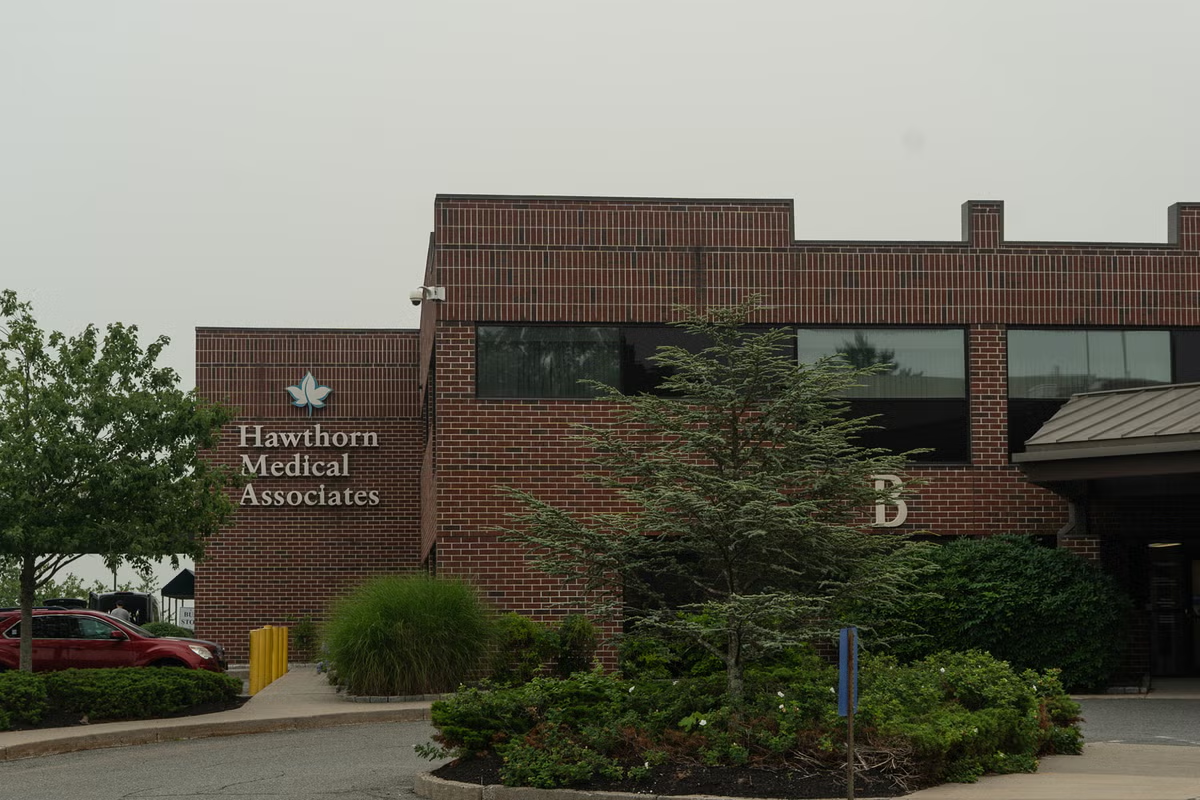
Out of medication and without a doctor — her former physician had left Hawthorn Medical Associates three months earlier — Fairhaven resident Noelle Aubin was given a 60-day prescription and sent on her way. If she couldn’t find a new doctor before it ran out, she says the practice told her, she could get refills at urgent care or the emergency department.
Finding a new primary care doctor has been easier said than done. Aubin has been trying to do so since November 2025, to no avail. None of the providers Hawthorn suggested are near Aubin, and even if she were willing to make the trip, they couldn’t get her in until August. When she called Southcoast Health, she said she was told that no doctors were available and was placed on a waitlist.
“I’ve been calling around and practically begging my friends and family to ask their doctors to take me in,” Aubin told The Light in an email. “These large corporations are not focusing on primary care — they are focusing on finding doctors who can make the corporation more and more money.”
Aubin is among 30% of Massachusetts residents who have had difficulty accessing primary care, according to a 2025 report from the Center for Health Information and Analysis.
A bill the Senate passed in June is trying to change this. It now awaits action in the House, with a deadline of July 31. House leadership hasn’t said whether it will take up the bill, but three House members from New Bedford said they support it.
The bill could benefit New Bedford. Only 36 primary care clinicians are practicing in the city, and between 20,000 and 25,000 New Bedford residents have no primary care provider, a report said last year.
In recent years, investment in specialty healthcare has “skyrocketed,” because it is generally more profitable than primary healthcare, according to a Senate fact sheet. Medicare and commercial insurers reimburse specialty services at higher rates. A common procedure, such as a colonoscopy, can generate more revenue in a couple of hours than a primary care physician earns in a full day of work.
Meanwhile, only 6.6% of commercial healthcare spending in Massachusetts was directed to primary care in 2024, according to a report from the Center for Health Information and Analysis.
What the bill would do
The bill seeks to require hospitals and other “health care entities” to incrementally increase primary care spending. It would require them to invest 15% of their total expenditures in primary care by 2030, without increasing overall spending or insurance premiums.
After 2030, the state’s Health Policy Commission would set the target based on the “ever-changing health care cost landscape,” the bill says. The commission would also enforce this mandate, including issuing fines starting at $500,000 or prohibiting the provider from accepting new patients.
Insurance reimbursement gaps are especially tough on community health centers, which provide essential primary care services in medically underserved areas, including New Bedford. Commercial insurers pay physicians, nurse practitioners and physician assistants who work in offices more than those who work in community health centers.
In response, the bill would require commercial insurance companies to reimburse community health centers at least the same rates that MassHealth does for the same services.
New Bedford Community Health wouldn’t see much benefit from this proposal, since over 80% of its revenue comes through Medicaid, according to the practice’s president and CEO, Cheryl Bartlett. Still, Bartlett said, it’s “a great thing.”
The Senate’s proposal also aims to address the shortage of primary care providers. It would re-establish the state’s Medicaid graduate medical education program, which was cut in 2010. If Massachusetts were to use Medicaid dollars to finance medical fellowships and residencies, the federal government would provide one-to-one matching funds.
The bill stipulates that the postgraduate training must take place in community-based healthcare settings and focus on primary care, behavioral health or other areas with provider shortages.
This effort builds on a state law passed in early June that allocated $10 million in scholarships for UMass Chan Medical School students who agree to practice family medicine in underserved communities in Massachusetts after they graduate.
Senators also aim to address primary care providers’ administrative burdens, which can lead to burnout and reduce patient care hours. The legislation would reduce billing, payment and prior-authorization paperwork.
Bartlett said primary care providers’ administrative workload is a significant challenge in the profession. On top of patient notes, they are inundated with paperwork regarding specialist referrals, workers’ compensation, family and medical leave, visiting nursing services and more, she said.
“(Primary care providers) spend more time on the administrative side than (they) do in the clinical relationship,” Bartlett said. “People go to medical school to be caregivers, so it’s frustrating for them.”
The bill would also create a streamlined payment system. Insurers would pay providers a flat monthly fee based on patients’ needs, rather than on the number of times they see each patient.
An amendment adopted during the Senate debate would eliminate insurance companies’ prior authorization requirements for medication to treat serious mental illness, reducing delays that can “impede (patients’) ability to effectively treat their disease,” a Senate news release says.
The bill would also increase reporting on primary care to ensure transparency.
Senators say increasing access to primary care would not only improve health outcomes, but would “significantly” lower overall healthcare spending. The fact sheet cites a 2022 study that found each in-person primary care visit reduces costs by $721 per patient per year.
The Massachusetts Health & Hospital Association is less confident about the bill. The Association represents every hospital and healthcare system in the commonwealth, according to its website.