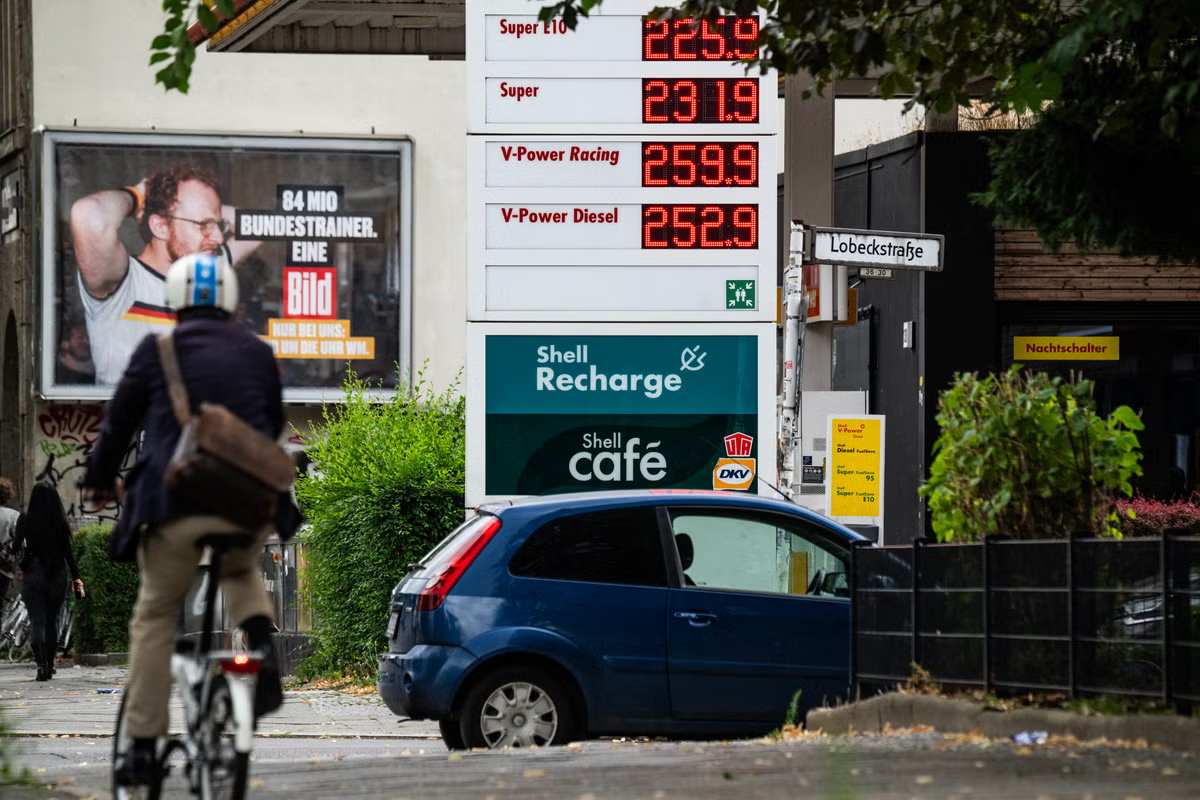
Brent crude climbed above $90 a barrel on Monday, its highest in more than a month, as intensifying US-Iran hostilities choked off oil shipments through the Strait of Hormuz.
The international benchmark rose 2.37 per cent to $90.19 at 2.41 GMT, its highest since 11 June, having jumped 15.9 per cent last week in its biggest weekly gain since April.
US West Texas Intermediate crude was up 2.07 per cent at $84.20 a barrel.
The rise followed a weekend of escalation which saw US forces carry out a ninth straight night of strikes against Iran and Iran retaliate against American allies Kuwait and Bahrain.
The oil price is now about a fifth more than it was before the latest flare-up.
Both sides are escalating attacks on shipping in the Strait of Hormuz, the waterway between Iran and Oman through which about a fifth of the world’s oil normally passes.
The US reimposed a naval blockade on Iranian ports earlier this month and Iran said it would target any vessels that broke its rules on navigating the strait.
The Islamic Revolutionary Guard Corps said on Monday that it targeted and disabled a pair of tankers after they tried to use an “unsafe” southern route through the strait, claiming that the US military had encouraged the vessels to take the passage near Oman.
The UK Maritime Trade Operations agency reported on Monday that a third vessel was currently on fire northwest of Kumzar at the tip of Oman. The agency, run by the Royal Navy, monitors shipping in the region.
The number of ships passing through the strait is down sharply. Four vessels made the transit on Sunday, down from eight the day before, according to data from LSEG.
The US military said its latest strikes were aimed at degrading Iran’s ability to attack commercial vessels in the strait. Centcom claimed its forces struck Iranian coastal surveillance, air defences, maritime assets, and missile and drone stores, and targeted Revolutionary Guard units it linked to a 17 July attack on US personnel in Jordan.
Analysts warned the oil market could be underestimating the risk to supply from the latest escalation in the Middle East.
“ICE Brent broke above $90 per barrel this morning with no letup in the escalation in the Gulf,” analysts at the Dutch bank ING said in a note.
“The US and Iran continue to exchange strikes, which are proving deadly for both sides. If this escalation goes unchecked, we could return to an environment of wide-scale attacks across the Gulf.”
Amarpreet Singh, an analyst at Barclays, warned that oil markets were “still too complacent about the potential fallout for inventories which, unlike at the beginning of the war, are at the tightest of the past five years”.
The US-Israeli war on Iran, launched on 28 February, has already been the most disruptive to oil supply in years. Prices briefly returned to pre-war levels earlier in the summer after Washington and Tehran signed a memorandum of understanding to help end the fighting, before renewed attacks sent them climbing again. Brent traded above $100 a barrel at the height of the war in March, the highest since 2022.