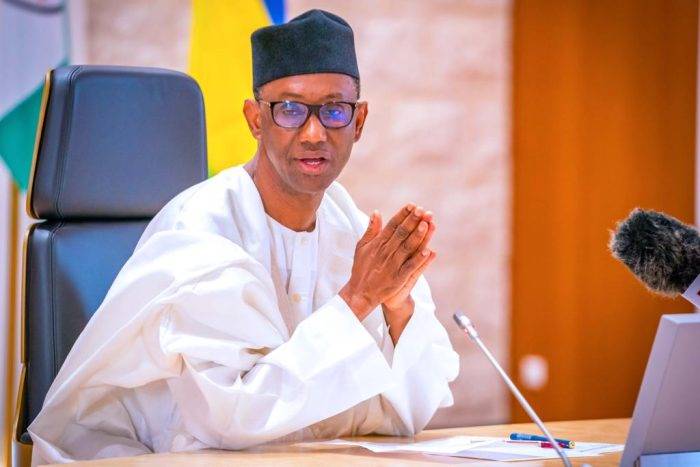
The House of Representatives Ad-hoc Committee investigating the alleged illegal establishment of the Presidential Foreign Investment Promotion Council (PFIPC) has summoned the National Security Adviser (NSA), Nuhu Ribadu, to explain why his office failed to act after identifying the council as unlawful.
The committee also summoned the Minister of Foreign Affairs over the controversial operations of the council despite concerns about its legitimacy.
The directive followed a memorandum submitted by the Permanent Secretary of the Ministry of Foreign Affairs, Dunoma Umar Ahmed, who stated that the ministry had no official dealings with the council and had raised concerns over its authenticity.
Ahmed told lawmakers that Prince Adeniyi Matthew Adeyemi, who presented himself as Director-General of the Presidential Economic Advisory Council/Presidential Foreign Investment Promotion Council (PEAC/PFIPC), approached the ministry three times seeking endorsement to organise a World Investment Summit in Nigeria.
According to him, the requests—dated June 26, 2025; August 5, 2025; and June 5, 2026—were ignored due to discrepancies in the correspondence and ongoing concerns about the council’s legitimacy.
“Guided by extant rules and the need for due diligence, the ministry did not act on the requests,” Ahmed said, adding that the ministry observed inconsistencies and refrained from engagement.
The ministry further revealed that it wrote to the Office of the National Security Adviser on October 16, 2025, seeking clarification on Adeyemi’s status.
In its response dated November 26, 2025, the NSA’s office reportedly confirmed—after consultations with the Office of the Secretary to the Government of the Federation and the Office of the Chief of Staff—that Adeyemi was unknown to any federal government office.
Despite this, lawmakers questioned why no decisive action was taken to stop the activities of the council.
A committee member, Abubakar Hassan Fulata, queried whether the ministry formally notified Adeyemi that the organisation was illegal after receiving confirmation from relevant authorities.
Responding, the committee chairman said while the ministry acted appropriately by escalating the matter, the NSA must now explain what actions were taken afterward.
“What did the NSA’s office do after confirming the agency was illegal? They should have taken action,” the chairman said.
Lawmakers also expressed concern over how the alleged council managed to engage foreign diplomats despite lacking official recognition, describing the situation as a major lapse in inter-agency coordination.
“Our responsibility is to make laws, yet a strange agency emerged, conducted diplomatic activities, and bypassed established institutions. This is unacceptable,” the chairman added.
In response, the Foreign Affairs Ministry acknowledged that some organisations sometimes bypass official diplomatic channels but maintained that it regularly issues circulars reminding stakeholders to follow due process.
While commending the ministry’s cooperation, the committee said the investigation is ongoing and directed both the NSA and the Minister of Foreign Affairs to appear before it.
The panel also issued a final ultimatum to other relevant Ministries, Departments, and Agencies (MDAs) to appear before it.t