The Senate on Tuesday expanded the scope of its ongoing investigation into the Safe Schools Initiative to include the Tertiary Education Trust Fund (TETFund), Nigerian Education Loan Fund (NELFund), Universal Basic Education Commission (UBEC), Federal Ministry of Humanitarian Affairs and Poverty Alleviation, and National Social Investment Programme Agency (NSIPA), while extending by three weeks the lifespan of the ad hoc committee handling the probe.
The Red Chamber said the expansion was aimed at conducting a comprehensive investigation into the funding, implementation, and accountability of education and social intervention programmes linked to the safety and welfare of students across the country.
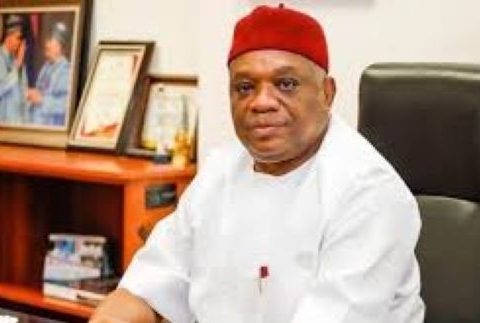
This followed a motion moved by the Chairman of the Senate Ad hoc Committee on the Safe Schools Initiative, Senator Orji Uzor Kalu.
The representative of Abia North Senatorial District on the platform of the All Progressives Congress (APC) made the resolution pursuant to Orders 41 and 51 of the Senate Standing Orders, 2026 (as amended), seeking an expansion of the committee’s terms of reference and additional time to conclude its assignment.
Presenting the motion, Kalu told lawmakers that preliminary investigations had revealed strong links between the implementation and funding of the Safe Schools Initiative and several government agencies responsible for educational funding, student welfare, humanitarian interventions, and social investment programmes.
According to him, limiting the investigation to the Safe Schools Initiative alone would prevent the Senate from carrying out a comprehensive assessment of issues affecting school security and educational interventions.
He said: “The issues surrounding student security, educational infrastructure funding and social intervention schemes for vulnerable learners across the country are deeply interwoven.
“Investigating the Safe Schools Initiative without reviewing these complementary bodies will result in fragmented legislative oversight.”
Kalu added that broadening the committee’s mandate had become necessary to enable the Senate to produce a comprehensive report that could strengthen accountability, safeguard students, and improve transparency in the management of intervention funds.
Under the expanded mandate, the committee will evaluate financial flows, operational challenges, and accountability mechanisms across the Safe Schools Initiative and the affected agencies.
It will also review social safety net allocations linked to school feeding programmes, emergency relief for displaced students and educational rehabilitation initiatives implemented through the Federal Ministry of Humanitarian Affairs and Poverty Alleviation and NSIPA.
The panel is further expected to audit infrastructure and security-related intervention projects funded by TETFund in tertiary institutions, assess NELFund’s disbursement processes, operational readiness, administrative efficiency, and students’ access to education loans, and examine UBEC’s interventions in basic education.
Seeking the Senate’s approval, Kalu said the committee required additional time because some critical aspects of the investigation had yet to be completed due to its extensive workload and other legislative engagements.
He said: “We’re supposed to submit our report, and there are four key areas that were not done.
“I needed the permission of the Senate so that we can conclude it in the next two or three weeks and come back with a report.”
With the expanded mandate, the Senate committee is expected to present a broader assessment of how education, security, and humanitarian intervention funds are being utilised, with recommendations aimed at strengthening accountability, improving transparency, and ensuring that these programmes effectively address the safety, welfare, and educational needs of Nigerian students.