By Daniel Oluwatobiloba Popoola
The Senate has warned that Nigeria could review its diplomatic relations with South Africa if renewed xenophobic attacks against Nigerians persist, even as it ordered a fresh investigation into the reported targeting of Nigerian citizens and businesses
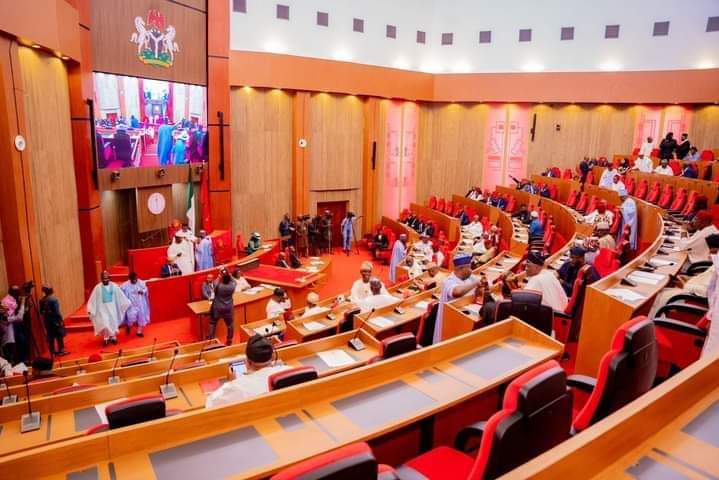
The resolution was adopted on Tuesday, 7 July, 2026 during plenary following a motion sponsored by Senator Asuquo Ekpeyong, who drew the attention of the Red Chamber to the June 30, 2026 ultimatum allegedly issued to Nigerians residing in South Africa, describing it as a serious threat to their lives, businesses and means of livelihood.
The debate came against the backdrop of recurring xenophobic attacks that have claimed the lives of several Nigerians, destroyed businesses and repeatedly strained diplomatic ties between both countries.
During the debate, lawmakers urged the Federal Government to engage the South African authorities and secure firm guarantees for the safety of Nigerians living in the country.
Senator Salihu Mustapha (Kwara Central) called for a stronger diplomatic response, saying Nigeria could no longer remain passive while its citizens were being attacked.
“We cannot continue to fold our arms while Nigerians are being killed and their businesses looted. This is the starting point for a very robust engagement. I suggest we sever all diplomatic relations with South Africa,” Mustapha said.
However, former Senate Leader, Senator Yahaya Abdullahi, urged caution, arguing that the attacks could be linked to broader political developments within South Africa.
Recalling his involvement in Nigeria’s National Committee Against Apartheid and support for liberation movements, including the African National Congress (ANC), SWAPO and FRELIMO, Abdullahi said the situation should not be viewed in isolation.
“This is a coordinated effort to destabilise the government of South Africa and to remove the ruling party, the ANC, from office.
“There is an attempt from the right wing of the white South Africans and now coming up from the black ones to delegitimise the government as quickly as possible. We should tread with great caution and carefully consider this conspiracy,” he said.
Abdullahi also decried the poor funding of Nigeria’s foreign missions, saying it had weakened the country’s ability to adequately protect Nigerians abroad.
Following extensive deliberations, the Senate directed the Federal Government, through the Ministry of Foreign Affairs and the Nigerian High Commission in South Africa, to obtain written assurances from the South African government on the safety of Nigerians and ensure that those responsible for the attacks are arrested and prosecuted.
The upper chamber also mandated the Ministry of Foreign Affairs, the Nigerians in Diaspora Commission (NiDCOM) and the Nigerian High Commission to compile a comprehensive record of Nigerians who suffered death, injuries, displacement, unlawful detention or loss of property, with a view to pursuing legal redress and compensation.
Lawmakers further urged the Federal Government to collaborate with other affected African countries and the African Union to establish an early warning and accountability mechanism to prevent future xenophobic attacks across the continent.
In addition, the Senate directed its Committees on Foreign Affairs and Diaspora Affairs to review the implementation of its May 5, 2026, resolution on xenophobic attacks, as well as previous bilateral agreements between Nigeria and South Africa, and report back within two legislative weeks.
The debate became more intense when Senator Abdul Ningi proposed that President Bola Tinubu should begin the process of severing diplomatic relations with South Africa if the attacks continue.
Similarly, Senator Adams Oshiomhole (Edo North) suggested that Nigeria should appropriate the profits of South African companies operating in the country, including financial institutions, and channel the funds towards compensating Nigerian victims of xenophobic attacks.
“We can’t allow our people to suffer while South African investment and profit are being taken away here. The facts are self-evident. We don’t need further investigation,” Oshiomhole said.
Deputy Senate President Jibrin Barau, who presided over the session, however, urged restraint and persuaded both lawmakers to withdraw their proposals pending the outcome of the committee’s investigation.