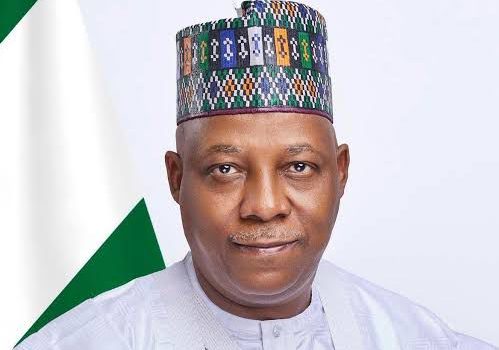
Vice President Kashim Shettima will depart Abuja on Thursday for a high-level working visit to the Republic of Benin, accompanied by some state governors and senior officials of the Federal Government.
The delegation will visit the Glo-Djigbé Industrial Zone, GDIZ, near Cotonou, where it will engage representatives of the Beninese government, investors and private-sector operators involved in the development and management of the industrial hub.
The visit is aimed at strengthening the implementation of Nigeria’s Special Agro-Industrial Processing Zones Programme and drawing practical lessons from Benin’s approach to agricultural value addition, industrial infrastructure, investment mobilisation, skills development and export-oriented production.
Particular attention will be given to the GDIZ textile park, which operates an integrated production system covering cotton spinning, weaving, fabric processing and garment manufacturing.
The industrial zone covers about 1,640 hectares and is designed to move agricultural commodities from the supply of raw materials through processing to the export of finished products.
The visit comes at a time when the federal government is seeking to rebuild a textile industry that remains economically significant despite years of factory closures, weak local processing and intense competition from imported fabrics and garments.
According to the National Bureau of Statistics’ figures, Nigeria’s textile, apparel, and footwear industry was valued at approximately ₦8.15 trillion at current prices in 2024.
The industry generated another ₦2.45 trillion in nominal output during the first quarter of 2025.
The visit will therefore provide an opportunity to examine how Nigeria can develop stronger linkages among cotton farmers, ginneries, spinning mills, textile manufacturers, fashion businesses and export markets.
Nigeria possesses a large domestic market for fabrics, ready-made garments, school uniforms, workwear, medical textiles, footwear, home furnishings and fashion products.
Developing local capacity across these segments could reduce dependence on imports, conserve foreign exchange and create employment across farming, manufacturing, logistics, design and retail.
The delegation is also expected to explore opportunities for technology and industrial training, modern machinery, reliable energy systems, common processing facilities and stronger public-private partnerships.
These interventions are considered necessary to improve the quality and competitiveness of Nigerian cotton, fabrics and finished garments.
The engagement will further examine how lessons from GDIZ can support Nigeria’s agro-industrial zones, including the development of garment-training facilities and dedicated infrastructure for processing agricultural raw materials close to production communities.
The African Development Bank is already supporting plans for a garment-training centre within Nigeria’s SAPZ programme in Ogun State.
The visit aligns with President Bola Ahmed Tinubu’s Renewed Hope Agenda, particularly its priorities of industrial revival, economic diversification, agricultural transformation, import substitution, job creation and the expansion of Nigeria’s non-oil exports.
On the Vice President’s entourage are the governors of Imo State, Hope Uzodimma; Zamfara State, Dauda Lawal; Plateau State, Caleb Mutfwang; Kwara State, AbdulRahman AbdulRazaq; Katsina State, Dikko Umar Radda; and Jigawa State, Umar Namadi.