By Daniel Oluwatobiloba Popoola
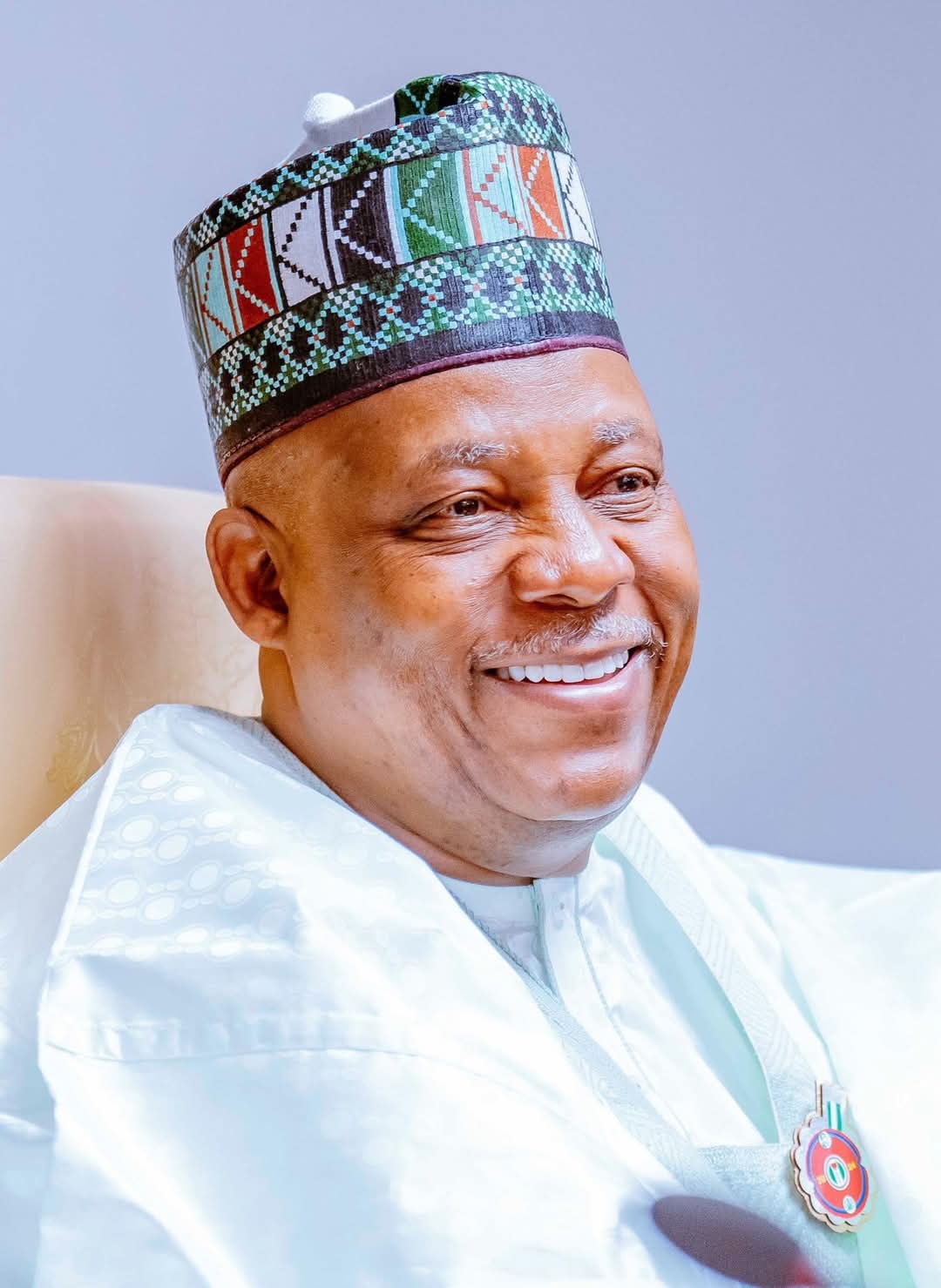
Vice President Kashim Shettima has called on African countries to strengthen collaboration and present a common position in global discussions on artificial intelligence, telecommunications and digital governance, saying no nation on the continent can achieve its digital ambitions in isolation.
Shettima made the call on Thursday, 23 July ,2026 while declaring open the Seventh Ordinary Session of the Conference of Plenipotentiaries of the African Telecommunications Union (ATU) at the Bola Ahmed Tinubu International Conference Centre, Abuja.
Represented by the Deputy Chief of Staff to the President, Senator Ibrahim Hadejia, the Vice President said the conference offered African countries the opportunity to harmonise their priorities ahead of the 2026 International Telecommunication Union (ITU) Plenipotentiary Conference and rally support for African candidates seeking elective positions within the global body.
He stressed that greater cooperation among African countries would enhance the continent’s influence in shaping policies, standards and regulations governing emerging technologies.
According to him, digital technologies have become central to economic competitiveness, efficient public service delivery and job creation, particularly for Africa’s youthful population.
Shettima noted that broadband infrastructure, artificial intelligence, cloud computing, satellite communications and secure digital infrastructure have become as critical to development as roads, railways, power and ports.
He urged African countries to work together to expand affordable internet access, strengthen cybersecurity, harmonise technical standards, improve spectrum management, promote responsible artificial intelligence governance and accelerate digital trade across the continent.
The Vice President also maintained that Africa must move beyond merely participating in global technology conversations and begin influencing decisions that will shape the future of digital development.
He observed that global technology policies had, for too long, evolved without adequate representation of African interests and priorities, adding that a united African voice would command greater influence and protect the continent’s collective interests.
Shettima further reaffirmed Nigeria’s commitment under President Bola Ahmed Tinubu’s administration to broadband expansion, artificial intelligence, digital public infrastructure, cybersecurity, innovation and the development of a globally competitive technology workforce.
He linked Africa’s digital aspirations to the African Union’s Agenda 2063 and the Digital Transformation Strategy for Africa, stressing that technology must translate into jobs, improved education, quality healthcare, financial inclusion and greater participation by women and young people in the digital economy.
Also speaking, the Minister of Communications, Innovation and Digital Economy, Dr Bosun Tijani, urged African countries to approach the forthcoming ITU conference united, prepared and credible.
He said Africa possesses a unique opportunity to shape the next phase of the global digital economy because of its youthful population, expanding entrepreneurial base and rapidly growing technology ecosystem.
Tijani disclosed that the African Telecommunications Union now has 52 member states and has continued to strengthen its legal framework while making significant progress in implementing its 2023–2027 Strategic and Financial Plan.
The Minister also announced the expansion of Nigeria’s N-ATLAS artificial intelligence initiative into a continental project known as the ATLAS Network.
He explained that fewer than two per cent of African languages are meaningfully represented in modern artificial intelligence systems despite the continent accounting for nearly one-third of the world’s languages.
According to him, Nigeria launched N-ATLAS, Africa’s first government-backed open-source large language model, during the 2025 United Nations General Assembly.
He said the ATLAS Network would bring together governments, researchers, universities, innovators and technology partners across Africa to develop artificial intelligence systems that reflect African languages, cultures and indigenous knowledge.
Tijani invited all ATU member states to participate in the initiative, maintaining that Africa should not limit itself to adopting artificial intelligence but should also play a leading role in determining its future direction.