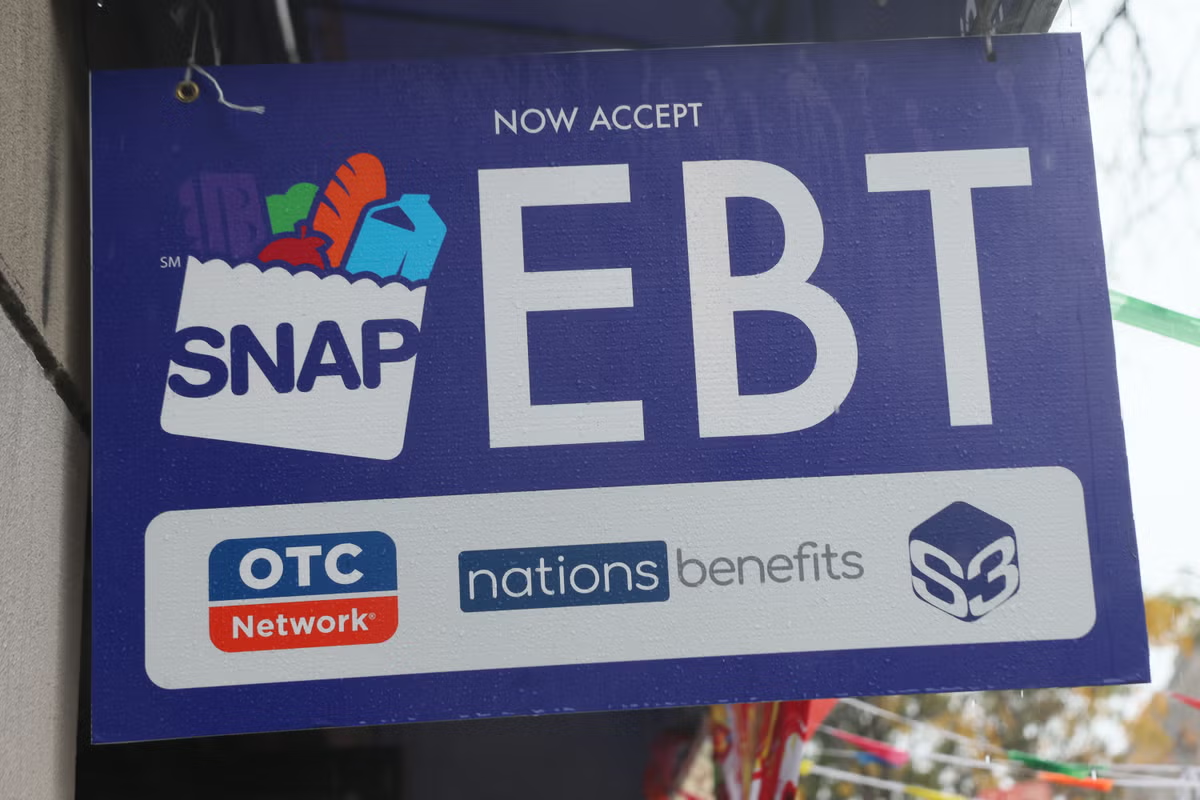
Americans on food stamps could soon be allowed to purchase hot rotisserie chickens from grocery stores as lawmakers weigh changing federal regulations.
The U.S. House of Representatives approved the change in a 384-35 vote as part of its version of the farm bill, and a bipartisan group of senators introduced a standalone version. However, the rule change faces hurdles. The initial Senate draft left the provision out during broader debates over overall funding, meaning the final outcome depends on upcoming negotiations.
Under current guidelines governing the Supplemental Nutrition Assistance Program, or SNAP, participants are prohibited from buying foods that are sold hot at the register. Shoppers can purchase a pre-cooked rotisserie chicken using food assistance only if it has already been cooled and refrigerated, according to the National Chicken Council.
The policy stems from an established framework designed to prevent federal food benefits from being used at fast-food restaurants or on ready-to-eat hot takeout items.
Food security advocates suggest the rule adjustment would offer practical relief to families working with limited budgets – as some chickens can be bought for just $5.
As reported by Harvest Public Media, Robin Manthie, director of Neighborhood Services at the Minnesota-based food bank Second Harvest Heartland, said that families frequently expressed a desire for convenient, nutritious choices.
Manthie said that rotisserie chickens fit both requirements, and that the change would not increase overall monthly benefit amounts but would allow participants to make practical choices with their daily allotments.
“This is a change to what people can access, and they’re still going to have to make smart decisions with the roughly $6 a day that a person in Minnesota who’s on SNAP on average gets,” Manthie said. “That’s a very low amount to feed yourself on, and so people are making smart decisions to stretch something like rotisserie chicken into multiple meals.”
Grocery groups and industry analysts support a uniform federal standard. Gary Huddleston, a retail consultant for the Texas Retailers Association, told Harvest Public Media that consistent rules across state lines helped grocery stores economically and eliminated confusion for shoppers.
The grocery industry is already adapting to state-level updates, as the federal government has approved localized SNAP changes across 23 states. However, industry representatives say that allowing hot chicken sales would not open the door for fast-food or restaurant eligibility.
Dan Shaul, president of the Midwest Retail and Grocery Alliance, told the organization that although the grocery sector wanted to maximize the value of SNAP allocations on grocery staples, it opposed expanding the program to include fast-food dining.
The push for a national standard comes as rising grocery prices continue to stretch household budgets. Data from the Consumer Price Index shows grocery costs rose 3.1 percent over a recent 10-month period.
According to U.S. Department of Agriculture data, more than 42 million Americans rely on SNAP, and industry analysts say that this change would offer those shoppers more flexibility rather than extra money.