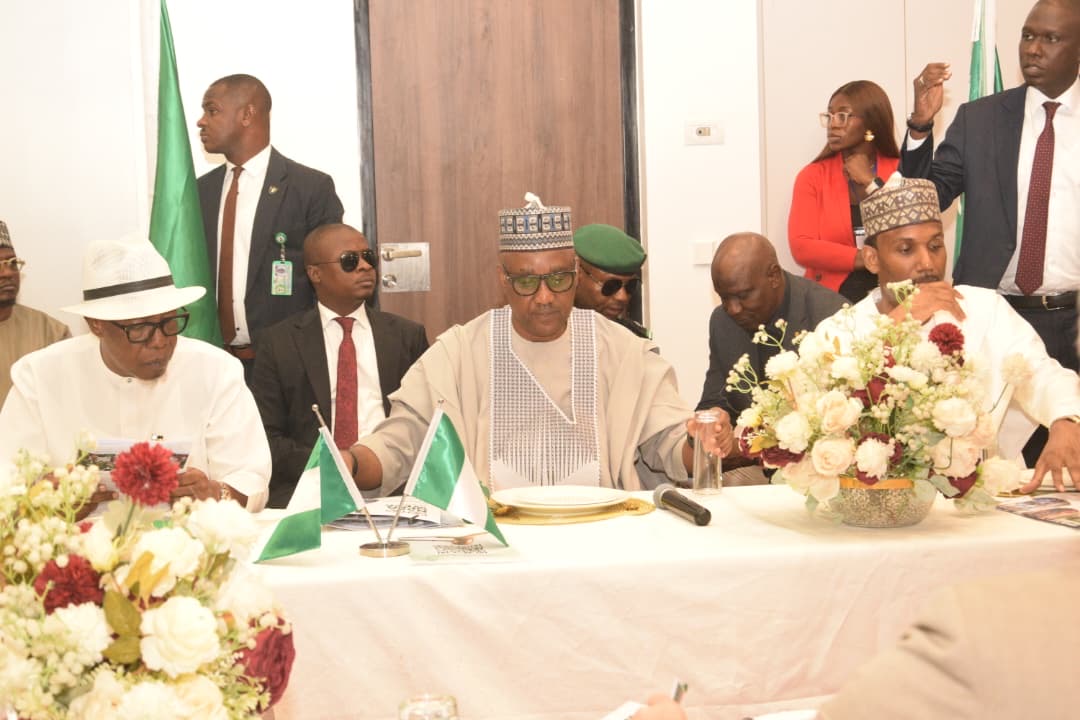
The Speaker of the House of Representatives has announced that lawmakers will collaborate closely with the private sector to improve Nigeria’s investment climate and support economic transformation.
The Speaker of the House of Representatives, Abbas Tajudeen, has pledged that the National Assembly will repeal outdated laws that hinder investment and introduce reforms to make Nigeria’s business environment more competitive.
Mr Tajudeen gave the assurance on Thursday at the Legislative Business Breakfast, held at the National Assembly as part of the 2026 National Assembly Open Week. He stated that the House will focus on providing regulatory certainty, reducing the cost of doing business, expanding access to finance, and strengthening oversight of agencies tasked with implementing economic reforms.
“We will repeal the obsolete laws that frustrate enterprise and legislate to support local manufacturing, agriculture, and our readiness for the continental market,” the Speaker said.
He also promised greater legislative predictability for investors, adding, “Laws affecting business will be stable, transparent, and created with your input so that no investor is ever ambushed by a rule they could not foresee.”
Mr Tajudeen noted that these commitments followed extensive engagement with business leaders and emphasised that Parliament must first understand the private sector’s challenges before enacting legislation. He acknowledged concerns raised by business leaders, including high borrowing costs, foreign-exchange volatility, multiple taxation, unreliable electricity supply, insecurity, and policy uncertainty.
“These are not idle complaints. They are the honest testimony of the men and women who create our jobs, and this House has heard them,” he said.
While admitting that recent federal economic reforms have imposed short-term hardship, Mr Tajudeen maintained that they were necessary to restore macroeconomic stability. “The decisions this country took… were long avoided but could no longer be postponed. They have been hard, and I will not pretend otherwise,” he said.
He added that the National Assembly has actively backed these reforms through legislation, including the tax reform laws, the Electricity Act, and the Investments and Securities Act. Looking ahead, the Speaker proposed establishing a permanent National Assembly and Business Executive Roundtable to meet twice yearly and sustain dialogue between lawmakers and the private sector. He urged business leaders to participate more actively in public hearings and provide evidence-based recommendations to improve legislation.
House Leader Julius Ihonvbere also called for stronger collaboration between lawmakers and the private sector, describing sustained engagement as critical to economic growth and democratic development.
Similarly, the Chairman of the House Committee on Commerce, Ahmed Munir, stated that the House is considering several bills to modernise Nigeria’s commercial framework, including legislation on the African Continental Free Trade Area (AfCFTA), digital economy reforms, and sustainable finance.
“The National Assembly can no longer make laws in isolation and is committed to working closely with businesses to eliminate bureaucratic bottlenecks, improve regulatory certainty, and create a more predictable environment for enterprises to thrive,” he said.
The Minister of Industry, Trade and Investment, Jumoke Oduwole, urged lawmakers to sustain support for economic reforms, noting that strong legislation would improve investor confidence and help achieve the government’s goal of building a $1 trillion economy.
Ms Oduwole cited recent data from the Nigerian Economic Summit Group’s Business Confidence Monitor, which showed that Nigeria’s business environment remained in “expansion territory” for the sixth consecutive month in June 2026, with the Business Performance Index rising to 104.6 points. She highlighted key reforms undertaken by the Tinubu administration—including foreign exchange reforms, fuel subsidy removal, and new fiscal and tax policies—as essential measures to create a more conducive regulatory environment for investors.
The Executive Secretary of the Policy and Legal Advocacy Centre (PLAC), Clement Nwankwo, identified insecurity and multiple taxation as major obstacles to investment. He urged the National Assembly to strengthen its oversight of government agencies to protect businesses. He further criticised the growing tendency of government agencies to prioritise revenue generation at the expense of business growth, noting that multiple taxes, levies, and charges remain major disincentives despite ongoing reform efforts.
Mr Nwankwo called on the House Committee on Commerce and other relevant committees to ensure that businesses are not subjected to excessive taxation and other practices that hinder economic expansion.