The electric airport shuttle introduces a low-emission transport option linking the airport to the city, but limited routes, waiting time, and low awareness continue to shape passenger uptake and competition with traditional taxis.
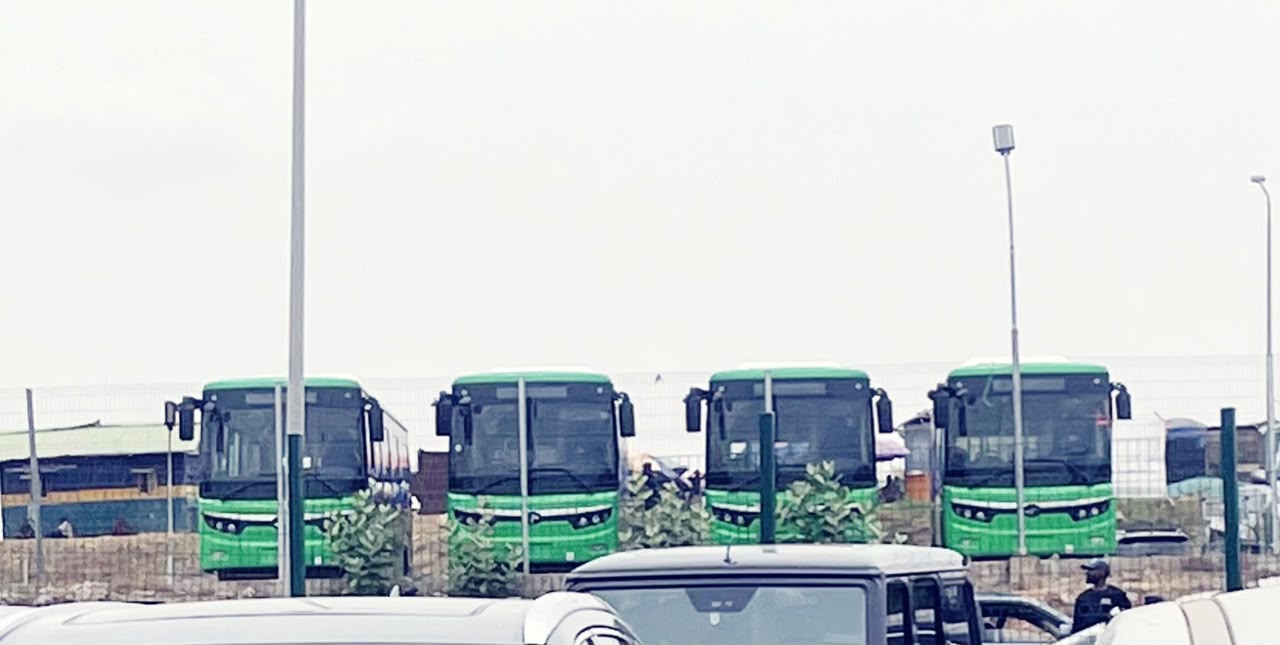
A green, silent bus idled at the park, outside the domestic arrival terminal of Nnamdi Azikiwe International Airport, with doors open and seats mostly empty.
A few metres away, taxi drivers called out for passengers while travellers wheeled their luggage past without a second glance—some heading for car hire services, some to their personal cars or family, others opening ride-hailing apps, and one of many passengers making her way toward the green shuttle bus.
Inside the bus, Anita Mathew sat waiting.
“Well, I am using the bus for the first time to try it out. They told me about it at the exit door, so I said let me try it,” she said, glancing at the bus door at intervals.
But even as she settled in, she was uncertain if she would return.
“From the airport to the city, it is cheaper, but it is not going to take me to my final destination… when I get there and calculate everything I spent, then I will know.”
Her hesitation reflects a broader reality: months after its introduction, Abuja’s electric airport shuttle buses are still struggling to win over passengers.
The electric shuttle service was launched on 30th January by the Federal Airports Authority of Nigeria as part of efforts to cut carbon emissions and reduce reliance on fossil fuels in airport operations.
At the commissioning, FAAN said the initiative aligned with its renewable energy agenda, which also includes solar-powered lighting systems, energy-efficient upgrades, and waste reduction efforts across airports.
The project was developed in partnership with Possible Electric Vehicles (Possible EVS), introducing zero-emission buses for passenger movement between the airport and the city.
FAAN’s Board Chairman, Abdullahi Ganduje, and Managing Director, Olubunmi Kuku, described the initiative as part of efforts to modernise airport infrastructure and promote cleaner energy use.
Despite operating within the airport, FAAN Head of Commercial, Matawal Solomon Moses, told PREMIUM TIMES that the buses are not owned by FAAN.
“They are not owned by FAAN. It is owned by a private investor, Possible Electric Vehicles (Possible EVS). FAAN only granted them the opportunity to operate and do business at the airport, just like other car hire services, so it is strictly business.”
He noted that the company assigned 10 buses to the airport, currently in operation.
Under the arrangement, the company runs the service between the airport and its terminal in Wuse 2.
“They pick passengers from the airport and go straight to their business park, unlike car hire services that take you to your doorstep,” he added.
Passengers can book online or simply board at the airport, where staff promote the service at the arrival exit.
Beyond the airport arrangement, Possible EVS is a Nigerian electric mobility company focused on developing clean transport systems.
The company buys its electric buses from NEV Electric Company, which assembles the buses locally in Nigeria.
According to Abimbola Oduwole Gyer, Head of Operations at Possible EVS, “Our goal is to change the way Nigerians see commercial transport. We want to make mass transportation green and reduce carbon emissions.”
She said the company finances and deploys electric vehicles sourced locally as part of efforts to promote cleaner alternatives to fuel-powered transport.
Industry reports place Possible EVS within Nigeria’s emerging electric mobility ecosystem focused on electric buses, taxis, and charging infrastructure.
The buses operate on a structured schedule.
From the airport, departures run every hour between 8 a.m. and 6 p.m., whether or not the buses are full. From Wuse 2 to the airport, operations run from 7 a.m. to 7 p.m.
Each bus waits a maximum of 30 minutes before departure.
“We move even if passengers are less than five. Even if it is one or two passengers, as long as they enter the bus, we will carry them,” said driver John Machunga, one of the green bus drivers.
The service currently runs only between the airport and Wuse 2, with three designated stops:
Bovas Filling Station, Lugbe, Federal Secretariat and Wuse 2; No. 7 Hombari Crescent.
From Wuse 2, passengers can connect to electric taxis for onward journeys. The trip takes about 45 minutes to the city centre.
However, usage remains low but fluctuates.