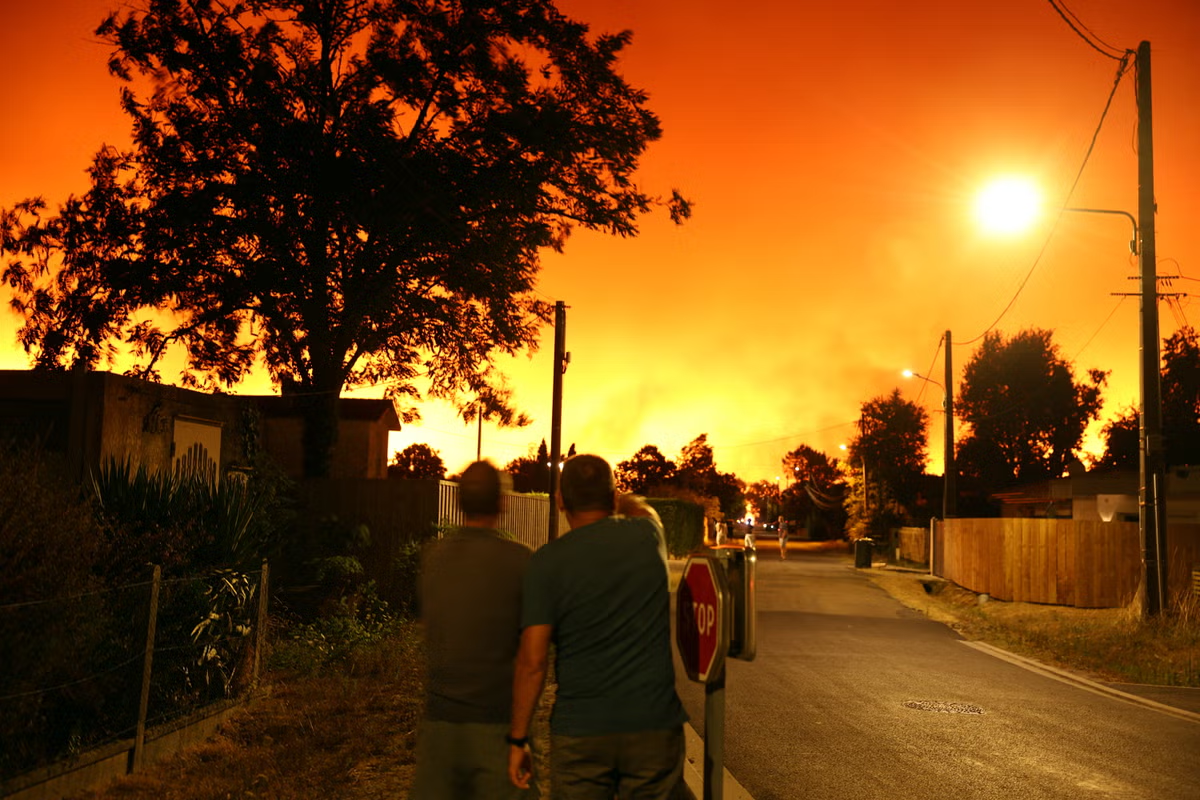
More than 10,000 people have been evacuated from their homes and holiday stays in southwestern France as a rapid wildfire scorched through 2,000 hectares of land west of Bordeaux.
Five hundred firefighters are battling to control the blaze, the prefecture said, adding that the wildfire was very rough, but that no one has been injured so far.
The wildfire is located near the Arcachon Bay area, a tourist hotspot, and many of those evacuated are tourists staying in camping sites.
A map of the Arcachon Bay area:
It comes as wildfires have burnt more land in Europe already this year than the annual average in the past two decades, data shows, as the world’s fastest-warming continent has endured three stifling, virtually back-to-back heatwaves so far this year.
Meanwhile in central Spain firefighters battled a wildfire on Wednesday that has burned over 32,000 hectares (79,000 acres) in one of the country’s largest blazes on record.
The fire in rural Guadalajara comes less than two weeks after a deadly blaze devastated a small expat community in southern Spain.
A Google map of wildfire warnings in Spain:
That small but extremely virulent fire killed 13 people, including several foreigners, in one of the southern European country’s deadliest wildfires.
Spanish Prime Minister Pedro Sánchez on Wednesday visited the fire-ravaged area in Guadalajara, and called for a pact between political parties to fight climate change.
“Year after year we clearly see how climate change kills and destroys wealth in our communities,” Sánchez said in the village of Tamajón, located less than two hours by car northeast of Madrid.
“This isn’t politics. It is science, it’s about facts.”
Some 34 villages have been evacuated in the area but there are no reported serious injuries or deaths.
Over 200 firefighters were supported by land vehicles and aircraft on Wednesday.
Spain this year has already suffered 22 major forest fires, defined as a fire that burns over 500 hectares (1,235 acres.)
The Guadalajara blaze is the second-largest on record in Spain’s history after some 37,000 hectares (91,000 acres) were burned last year in the northwest of the country, according to data from the ecological transition ministry, as cited by EFE news agency.
Scientists warn that climate change is exacerbating the frequency and intensity of heat and dryness especially in southeastern Europe, making the region more vulnerable to health impacts and wildfires.
In Sicily, firefighters said they had carried out more than 1,000 operations since Saturday and have put all the Italian island’s fire departments on double shifts to cope with the blazes.
The latest was a wildland-urban blaze in Agrigento, in central western Sicily that required the evacuation of 100 people from homes and a clinic, with 22 patients transferred to other facilities, the national service said.
For days, Italy’s Civil Protection agency has declared all of Sicily at the highest risk for wildfires. Winds and temperatures near or above 40C (100F) have fueled blazes from near Palermo on the northern coast to Catania in the east and now Agrigento in the west.
Greece was also sweltering under what was forecast to be the last of a four-day heat wave. Temperatures were predicted to top 42 C (107 F), while several regions in southern and central Greece, including the wider Athens area, were on the highest alert level for wildfire danger.
Cyprus, meanwhile, issued a warning for high temperatures expected to reach 43 C (109 F).
In Britain, it hasn’t rained in more than a month in some areas, and much of the southern half of England is in a state of “prolonged dry weather,” one step before a drought. Thames Water, the country’s biggest water company, has banned its 10 million customers from using hoses to water lawns or wash cars starting Thursday.