- Unveils cocoa value addition accord framework as stakeholders sign Abuja Declaration
•Enoh says inability to retain value remains country’s biggest challenge not production
•Olusi: BoI disbursed N164bn to 3,500 agro-processing businesses in 2025, bank to finance bankable cocoa projects
James Emejo and Deborah Adekoya in Abuja
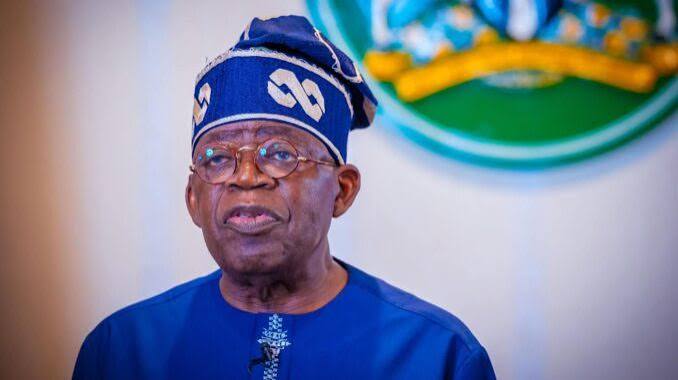
President Bola Tinubu yesterday declared that going forward, government will no longer condone export of raw cocoa beans while importing finished chocolate products.
The president said value addition must become the cornerstone of the country’s industrial strategy if Africa is to capture a greater share of the global cocoa economy.
He spoke at the opening of the 2026 Cocoa Value Addition Summit with the theme, “From Bean to Brand” in Abuja.
The summit witnessed the signing of the framework establishing the Cocoa Value Addition Alliance, also known as the Abuja Declaration between Cameroon, Côte d’Ivoire, Ghana and Nigeria – growers of about two thirds of the world’s cocoa – all committing to speak with one voice in global cocoa
The federal government, cocoa states, farmers, processors and financiers also signed Nigeria’s national compact on cocoa value addition under Cocoa Value Addition Accord framework.
Represented by Minister of Agriculture abd Food Security, Senator Abubakar Kyari, Tinubu said although Africa produces about 70 per cent of the world’s cocoa, the continent retains barely six cents of every dollar generated by the global chocolate industry, now valued at between $130 billion and $165 billion.
He described the imbalance as unacceptable, saying Nigeria was determined to move from exporting raw commodities to manufacturing finished products.
He said more than 300,000 farming families cultivate cocoa across over 1.4 million hectares across the country, making the country responsible for about six to seven per cent of global cocoa output.
According to him, soaring international cocoa prices, which climbed above $10,000 per tonne, earned Nigeria over N3 trillion and contributed almost 25 per cent of non-oil exports.
The minister however, pointed out that the earnings still came largely from exports of raw beans.
He said, “We export the bean at one price and import it back as a chocolate bar at 20 times that price. That is not trade. That is tribute, and the era of tribute is over.”
Tinubu said under the Renewed Hope agenda, value addition now sits at the heart of the country’s industrial policy, stressing that the country had chosen to sell what it makes rather than merely what it grows.
He pointed to ongoing investments, including a 70,000-tonne cocoa processing facility in Sagamu, while noting that Nigeria’s national grinding capacity has now exceeded 120,000 tonnes annually.
The president also highlighted the recent rollout of one million improved cocoa seedlings by the Cocoa Research Institute of Nigeria (CRIN), saying higher yielding and disease-resistant varieties would guarantee sustainable supplies for domestic processors.
He added that the Bank of Industry (BoI) was prepared to deploy financing to bankable cocoa projects, with investment agreements expected to be concluded during the summit.
Tinubu also urged cocoa-producing countries—including Ghana, Côte d’Ivoire and Cameroon—to deepen collaboration, noting that together the four countries account for nearly three-quarters of global cocoa production – able to reshape the global market through coordinated action.
Earlier, Minister of State for Industry, Trade and Investment, Senator John Owan Enoh, said Africa’s biggest challenge was no longer cocoa production but the inability to retain value from what it produces.
Drawing from his personal background as a cocoa farmer, Enoh described the current structure of the global cocoa trade as “an injustice,” arguing that while producers bear the greatest risks, most of the profits are captured outside Africa.
He said the summit would mark the beginning of that correction through the adoption of a cocoa value addition accord, dedicated financing windows, a national traceability system and the establishment of a Cocoa Value Addition Alliance involving Nigeria, Ghana, Côte d’Ivoire and Cameroon.
Enoh also warned that Africa must collectively engage emerging global regulations such as the European Union’s Deforestation Regulation, insisting that standards affecting African producers should not be designed without Africa’s participation.
He said the extreme price swings—from over $11,000 per tonne in late 2024 to about $3,100 in March 2026 before rebounding to around $5,000—proved that farmers receive only a fraction of price increases but absorb most of the losses.
The minister warned that “when a market delivers the risk to one end of the chain and the reward to the other, that is not a market failure. That is a market design. And what has been designed can be redesigned.”
He said closing the gap between the bean and the brand was the single most important industrial assignment of the current generation, adding that history had aligned in Africa’s favour, citing strong global demand, AfCFTA, higher Nigerian cocoa exports and new global traceability rules.
Enoh further announced the Cocoa Value Addition Accord, saying it would contain “names, numbers and dates” and would be monitored annually through a Delivery Council which he would chair personally.
He pledged that the accord would not become another government document left on the shelf, saying, “I did not enter government to sign documents that sleep in drawers. This one will be awake.”
He announced dedicated BoI financing windows for cocoa processors and investors and committed Nigeria to building a national traceability system that identifies every farmer and maps every cocoa farm to meet international standards while ensuring premiums reach producers.
He said the Abuja Declaration would unite Nigeria, Ghana, Côte d’Ivoire and Cameroon so they speak with one voice on sustainability, traceability and global cocoa trade negotiations.
The minister stressed that Africa would no longer accept rules made without its participation, declaring that “a rule made about Africa without Africa is not a standard. It is a sentence.”
He said the alliance would ensure the cost of sustainability is shared across the value chain rather than imposed on smallholder farmers.
He challenged investors to “Build here. Grind here. Brand here,” saying the first movers in African chocolate would become the continent’s equivalent of the pioneers of African banking and telecommunications.
He pledged that at least 40 per cent of opportunities created under the Accord would be reserved for young people and women.
Managing Director/ Chief Executive, BoI, Dr. Olasupo Olusi, said financing would determine whether the country succeeds in transforming cocoa from a commodity into an industrial value chain.
He recalled that cocoa once financed landmark public infrastructure such as Cocoa House, free primary education and other development projects in the old Western Region, arguing that the crop could again become a major driver of industrialisation.
Olusi said Nigeria currently produces over 300,000 tonnes of cocoa annually but processes only a fraction locally, describing the country’s limited grinding capacity as one of the widest gaps between production and processing among major cocoa-producing nations.
He disclosed that BoI had disbursed over N164 billion to over 3,500 agro-processing businesses in 2025 and secured a €60 million European Investment Bank facility to support cocoa sector development.
According to him, the bank would provide long-term financing for processing plants, packaging facilities, laboratories and traceability infrastructure while mobilising additional private capital into the industry.
He said cocoa financing cannot be treated like ordinary commercial lending because the biology of the cocoa tree and the economics of processing require specialised financial products.
Olusi argued that Nigeria’s next cocoa century will be built not on producing more beans, but on what the country does to the beans.
He said Nigeria should not attempt to compete across the entire value chain at once but should enter strategically, beginning with grinding, cocoa powder and industrial ingredients before building globally recognised brands.
He described Nigeria’s importation of cocoa powder while exporting raw beans as “an absurdity we can fix within the next two to five years.”
According to him, cocoa powder production alone would immediately support import substitution, while exports of cocoa butter, liquor and ingredients would boost foreign exchange earnings.
He announced that the bank would support seven-to-10-year financing for cocoa processing plants, recognising that commercial banks rarely provide capital with such long tenors.
He added that BoI would convene commercial banks and development partners to establish structured commodity finance, including warehouse receipt systems, export pre-payment facilities and seasonal working capital tailored to cocoa processors.
He also revealed plans to finance shared Cocoa Value Addition Parks equipped with processing lines, quality laboratories, reliable electricity, wastewater treatment facilities and digital traceability systems, allowing even small processors to access world-class infrastructure.
He stressed that the bank would combine finance with technical advisory services, enterprise development, quality improvement and export documentation support, saying access to capital alone does not build globally competitive businesses.
Drawing lessons from neighbouring countries, he said Côte d’Ivoire had shown how incentives can attract global processors, while Ghana demonstrated that governments should not carry commodity price risks alone, adding that Nigeria would adapt both models.
He said BoI views cocoa not as a lending programme but as an ecosystem, financing everyone from nurseries and cooperatives to grinding plants, packaging factories, laboratories and chocolate manufacturers.
Also, in his rematprks, Chief Executive, Ghana Cocoa Board (COCOBOD), Dr. Ransford Abbey, called for a united African approach to cocoa value addition and price sovereignty.
He lamented that although Ghana, Côte d’Ivoire, Nigeria and Cameroon produce about 75 per cent of global cocoa, they earn less than 10 per cent of the wealth generated by the global chocolate industry.
Abbey urged Nigeria and Cameroon to join the Côte d’Ivoire-Ghana Cocoa initiative, stressing that a four-country alliance would command about three-quarters of global cocoa output, strengthen collective bargaining with multinational buyers and ensure fairer returns for African farmers.
He added that Africa must move beyond exporting raw beans to processing, branding and consuming more cocoa products locally, insisting that the continent needed “equity, not charity,” in the global cocoa value chain.