Schools in a town in Estonia have been forced to take measures to protect children against exploding drones.
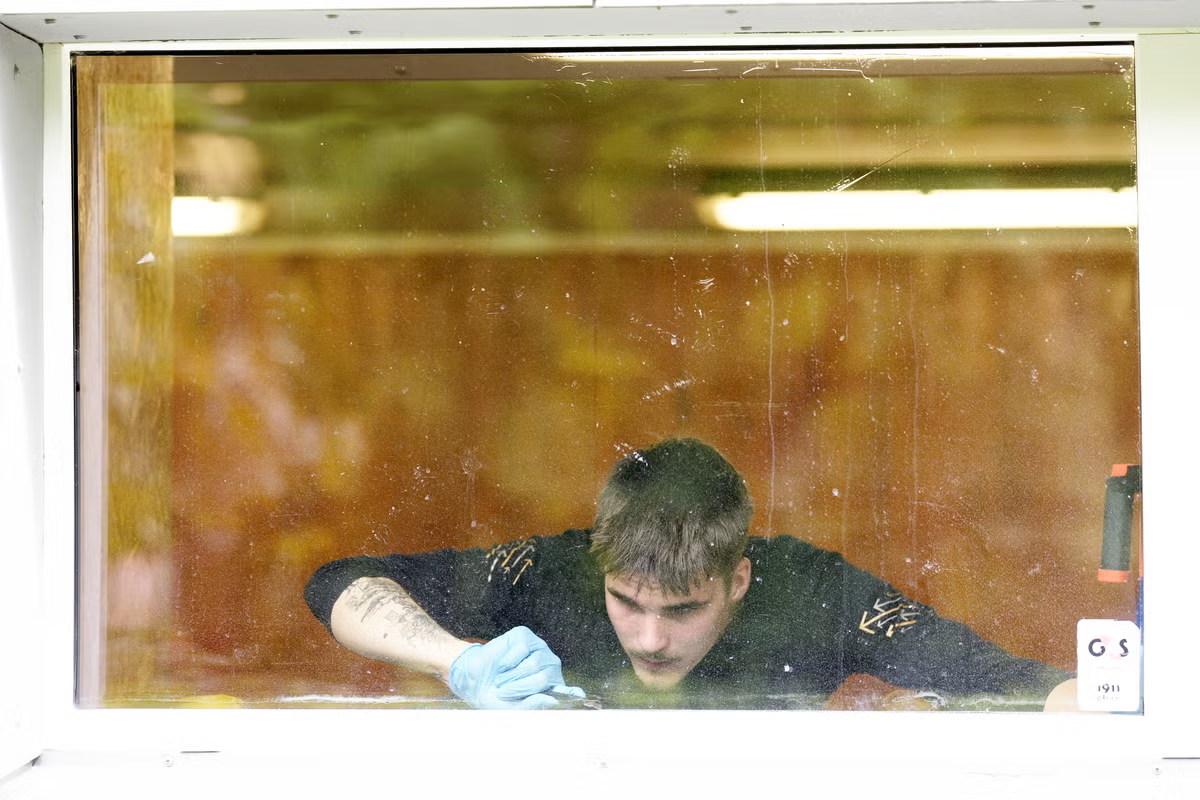
The buildings in Tartu, in Eastern Estonia, have already experienced a drone heading towards them from the Russian border. They are now putting protective film on windows in case another comes their way.
In June, schools in Tartu, which is 45 km (28 miles) from the Russian border, were told to bring their children to shelters as a drone was approaching.
Stray Ukrainian drones, carrying bombs intended for targets in Russia but diverted from their paths, have entered the NATO and European Union country several times this spring.
Ukraine blames Russian electronic jamming for sending its drones off course.
“We didn’t know what to do because we were not prepared. We were actually quite scared ourselves,” the head of Tartu’s Kivilinna secondary school, Karin Lukk, said.
They did not head to shelters as they had neither the training nor designated spaces for the children, said Lukk. So over the summer holidays, her school, as well as all other schools and kindergartens in Tartu are preparing premises for children to hide if danger reappears, such as school gyms and pools.
In Ukraine, more people have died from glass broken by explosions than from explosions themselves, Lukk said. So protective film is being applied to windows of the designated shelters to protect children from shards in case of a nearby exploding drone.
Lukk’s school plans drills to teach children how to react to a drone alert, and will put games and books in the basement to keep them entertained while hiding.
“I feel much better when I know that the school is doing something. I think, in our world now, there must be preparations,” said the mother of an 11-year-old girl at the school, Airin Treiman Kiveste. “It’s easier for children too”.
The town’s 30 schools and 38 kindergartens are being secured, and generators distributed to residential buildings to keep people warm in winter during any power cuts, Tartu deputy mayor Martin Bek told Reuters.
Other Estonian towns are thinking of following Tartu’s example, said Bek, as the Baltic state considers measures that have long been widespread in Ukraine: “Unfortunately these are the times we are living in. We have to do something”.