• Blames blocked drains, refuse dumping, building on waterways
•Sanwo-Olu: Lagos’ geographical location makes seasonal flooding inevitable
Emmanuel Addeh in Abuja
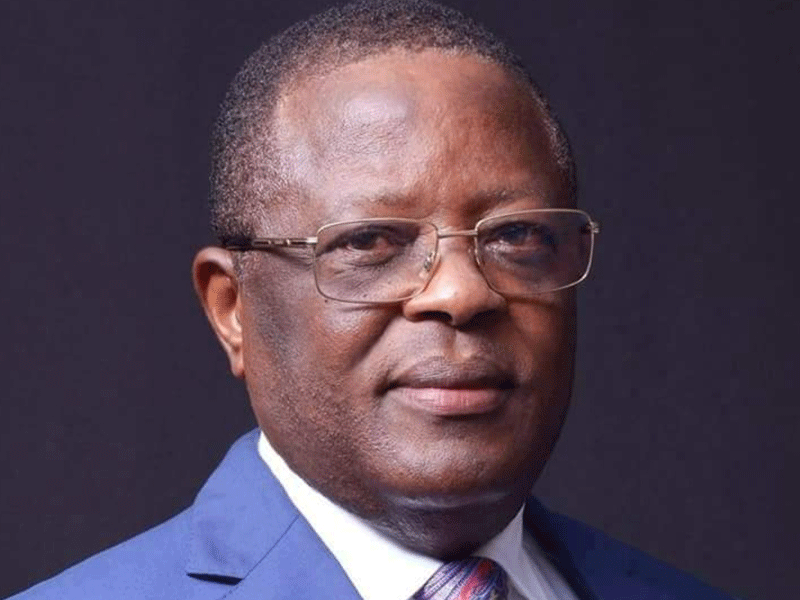
Minister of Works, David Umahi, yesterday dismissed claims that the Lagos-Calabar Coastal Highway is responsible for flooding in parts of Lagos, insisting that the project was specifically designed to reduce flood risks through extensive drainage and coastal protection measures.
Speaking during an interview on ARISE News, Umahi said the highway’s Environmental and Social Impact Assessment (ESIA) anticipated flooding risks and incorporated engineering solutions, including multiple culverts, drainage channels and water evacuation corridors, to protect surrounding communities from both ocean surge and stormwater.
According to him, flooding in Victoria Island and adjoining areas long predates the coastal highway, stressing that the road has instead created a barrier against seawater while improving the evacuation of floodwater into the lagoon.
“The coastal highway is addressing flooding within this corridor. Before the project, ocean surges threw water into residential areas. What we have done is raise the highway to a mitigated level and introduce multiple culverts and evacuation channels. It has nothing to do with causing flooding,” Umahi said.
The minister attributed much of the flooding witnessed in Lagos to human activities, including indiscriminate refuse disposal, blocked drainage systems and construction on natural waterways.
“What is happening is that residents are blocking the culverts, dumping refuse inside the manholes and building on waterways. You cannot eat your cake and have it back. Let the residents stop blocking the culverts, stop dumping refuse into drainage channels and stop building on waterways,” he stated.
Besides, Umahi added that the ESIA for the project had undergone local and international scrutiny and adequately addressed environmental concerns. He explained that the final environmental certification would be issued after construction once all mitigation measures had been fully implemented.
The minister also disclosed that over 70 per cent of the 750-kilometre Lagos-Calabar Coastal Highway corridor had either been procured or was under construction, describing the project as one of the Tinubu administration’s legacy infrastructure initiatives aimed at improving connectivity, stimulating investment and strengthening climate resilience along Nigeria’s coastline.
Separately, the Lagos State Governor, Mr. Babajide Sanwo-Olu, has dismissed claims that the ongoing Lagos-Calabar Coastal Highway was responsible for flooding in parts of Lagos, describing the narrative as misinformation being spread on social media.
The governor spoke during a courtesy visit by the minister alongside members of the National Assembly.
Sanwo-Olu, who welcomed the minister of works and lawmakers from both chambers of the national assembly, commended the federal government for embarking on what he described as a transformative infrastructure project that would improve the economy and the quality of life of Nigerians.
He said the coastal highway, which many initially dismissed as a political promise, has become a reality.
He said: “Two years ago, it felt like it was just a political conversation, but today people are already using the road. We thank Mr. President for this landmark project. Lagos has been the first major beneficiary, and we are indeed grateful because it will enhance the quality of life of our people and improve the economy of the country.”
Addressing concerns over flooding, Sanwo-Olu explained that Lagos’ geographical location makes seasonal flooding inevitable.
According to him, Lagos occupies less than 0.4 per cent of Nigeria’s landmass, with about one-third of the state covered by water, while its rapidly growing population continues to exert pressure on available land and infrastructure.
“Lagos is a coastal city. When people say Lagos has flooded, without mincing words, we will always experience some level of flooding. We only pray that it will not be severe. These are natural occurrences associated with coastal environments across the world,” he stated.
The governor noted that intense rainfall could temporarily overwhelm drainage systems regardless of their size but insisted that floodwaters usually receded after some time.
He accused social media users of creating misleading impressions by circulating photographs taken during peak flooding without showing conditions after the water had subsided.
“We cannot allow social media to define who we are. That does not mean we ignore our challenges. Whenever there are problems, we must confront them and solve them, but we must also understand the realities of our environment,” he added.
The governor also blamed indiscriminate refuse disposal for worsening flooding across the state, saying blocked drainage channels remained one of the major causes of urban flooding.
He recalled that the Lagos State Government had banned the use of styrofoam because of its harmful environmental impact and disclosed that additional environmental regulations would soon be introduced.
The governor further revealed that the state had commenced a major clean-up of the Lagos-Badagry Expressway to protect public infrastructure, stressing that the government would enforce zero tolerance against activities capable of damaging roads and drainage systems.
On maintaining the coastal highway, Sanwo-Olu disclosed that the state had signed an agreement with a mechanised street-cleaning company that would deploy specialised six-lane sweeping machines to clean the highway daily.