The National Highway Traffic Safety Administration said Thursday that it would begin the process to impose a new federal rule, granting a petitioner’s request that the agency “mandate a robust and obvious door egress system in all motor vehicles,” according to a regulatory filing. All new vehicles in the US would be subject to any new requirements, if finalised.
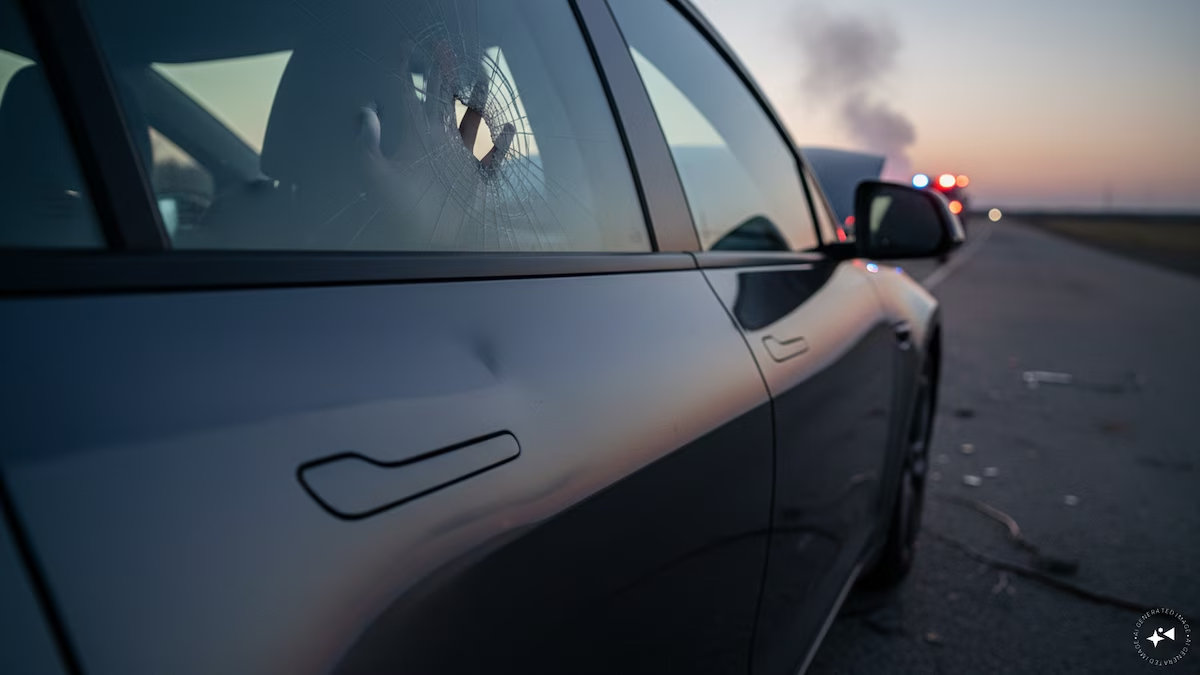
Vehicles designed with flush, electrically operated door handles made by Tesla Inc. and other carmakers have been involved in a series of incidents in which occupants have been trapped inside their cars after the vehicles lost power, including after a crash. In several instances, occupants of Tesla vehicles survived the initial impact of a high-speed crash only to die or sustain serious injury from subsequent fires after being unable to exit.
Bloomberg News has reported extensively on the modern door systems, uncovering at least 15 deaths in a dozen incidents in which occupants or rescuers were unable to open the doors of a Tesla that had crashed and caught fire. Bloomberg also reported late last year that Chief Executive Officer Elon Musk insisted on electric doors even after potential safety concerns were raised internally.
A Silicon Valley engineer submitted a petition to NHTSA in November asking the agency to issue new federal safety standards to address the safety risks. The action is needed, the petitioner wrote, to “address a critical, life-threatening safety gap” stemming from electronic or “hidden” door latching and release systems, which are common on electric vehicles.
NHTSA on Thursday said in the filing that it has granted the petition and will begin the rulemaking process. The decision was revealed in a filing that also denied a separate petitioner’s request for a safety defect investigation.
“NHTSA will gather additional information and data, and solicit public comments, to determine if a rulemaking for a new safety standard is appropriate under the requirements of the Vehicle Safety Act,” the agency said in an email to Bloomberg.
Tesla didn’t respond to a request for comment.
“It’s very significant that they are going to begin the rulemaking process, since this is the initial step that must be taken to create or modify Federal Motor Vehicle Safety Standards to strengthen areas related to electric doors and egress,” said Michael Brooks, executive director of the Centre for Auto Safety. But given how long the process can take, “I wouldn’t expect to see a final compliance date for manufacturers before 2030 even if the rulemaking proceeds swiftly.”
The agency said it would decide whether to impose new requirements based on the information developed during the rulemaking process. It can take years to develop and finalise a new rule, and industry often pushes back against new safety mandates that impose additional costs.
Still, the decision adds to growing fallout over the incidents tied to electric door handles. US Representative Robin Kelly, an Illinois Democrat, introduced legislation earlier this year that would require manual door releases in new cars and means for first responders to gain access to vehicles when power is lost.
NHTSA in September opened a defect investigation into certain Tesla Model Y vehicles after receiving several complaints about children being trapped in vehicles.
“It may be true that this particular issue is best addressed through rulemaking, but new rules would apply only to new vehicles,” said William Wallace, director of safety advocacy for Consumer Reports. “Consumers with a problematic vehicle today are left in the lurch if there’s no defect investigation when one is needed.”