The 1952 disaster claimed 52 lives and led to major changes in aviation safety, including the introduction of mandatory pre-flight passenger safety briefings, CNN reported.
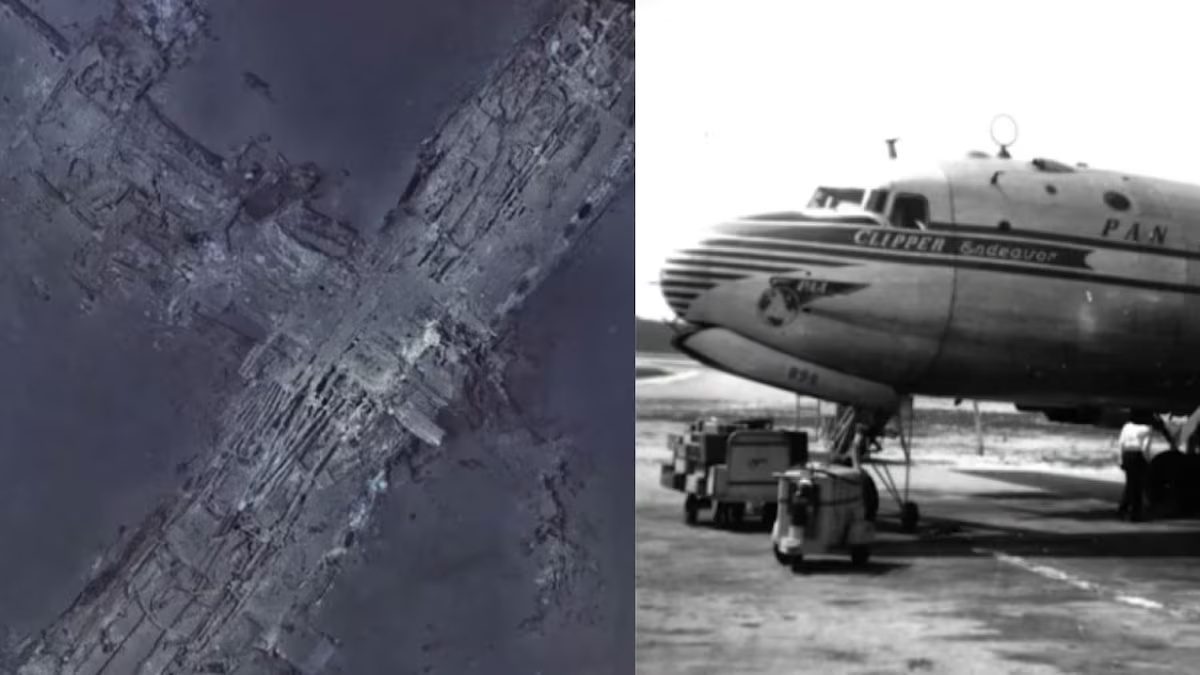
The aircraft, Pan Am ‘Clipper Endeavor’, was discovered on the ocean floor nearly 2,000 feet below the surface by the Air/Sea Heritage Foundation, working with Deep Sea Vision and the Discovery Channel’s Expedition Unknown.
After locating the wreckage with high-resolution sonar on June 2, the team carried out a photographic survey that conclusively identified the aircraft. The photographs clearly showed the Pan American winged logo and the aircraft’s name, confirming its identity, CNN reported citing Discovery’s release.
The Douglas DC-4 crashed shortly after taking off from Puerto Rico on April 11, 1952, while operating a flight to New York. It was carrying 64 passengers and five crew members. Although everyone survived the initial impact, the aircraft sank within minutes, leaving only 17 survivours. The remaining 52 people died.
“We are all stunned and elated by this discovery yet also humbled to remember what happened in that place so long ago,” said Russ Matthews, president and co-founder of the Air/Sea Heritage Foundation.
According to Discovery, the search used an autonomous underwater drone and high-resolution sonar to locate the wreckage. The effort also received an unexpected boost when a research vessel carrying one of the world’s most advanced sonar systems passed through the team’s search area and stopped for 48 hours to assist.
“It went down for about 30 hours and scanned the sea floor in our target area, came back to the surface, and there it was,” said Expedition Unknown host Josh Gates.
Images captured during a follow-up survey confirmed the aircraft’s identity, with investigators able to clearly identify the Pan American winged logo and the aircraft’s name on the wreckage. The plane was found split into two sections. Discovery Channel plans to feature the finding in a future episode of Expedition Unknown later this year.
The aircraft lost both engines on its right side shortly after take-off, forcing the crew to attempt an emergency landing on the water, as per the Pan Am Historical Foundation.
Although the aircraft carried life rafts and life jackets, the absence of pre-flight safety briefings, language barrier and the lack of an organised evacuation contributed to the high death toll. The aircraft reportedly sank in less than three minutes.
Following the crash, the Civil Aeronautics Board proposed changes to civil aviation regulations to improve safety on flights over water. Among the measures that were later implemented were pre-flight passenger briefings explaining the location and use of life vests, life rafts and emergency exits.