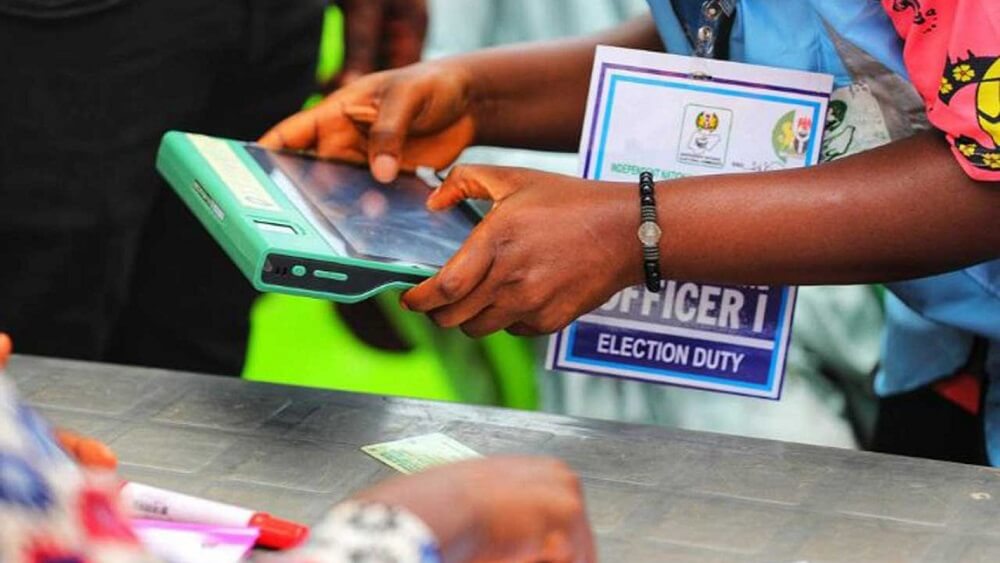
The exercise comes against the backdrop of controversies surrounding the 2023 elections in Abia, where the commission’s Resident Electoral Commissioner, Prof. Sylvia Uchenna Agu, previously disclosed an alleged discrepancy between electronically recorded voter accreditation figures and manually recorded results in Obingwa Local Government Area.
The development raises fresh questions about whether INEC’s upgraded electoral technology and new verification safeguards will prevent similar discrepancies during the forthcoming elections.
INEC Chairman, Prof. Joash Amupitan, announced the November 28 exercise on Thursday during a dialogue at Chatham House in London, organised in partnership with the Kimpact Development Initiative.
He said the nationwide simulation would test the commission’s upgraded Bimodal Voter Accreditation System (BVAS) and electronic results transmission to establish their readiness for the 2027 presidential election.
According to Amupitan, INEC has introduced additional technical safeguards to ensure that inaccurate polling-unit results and figures reflecting over-voting are not uploaded to its Result Viewing Portal (IReV).
He explained that the commission’s review of the 2023 elections identified collation centres as a major source of problems in election result management.
The chairman said INEC had consequently strengthened its verification procedures to ensure that results are checked for accuracy before transmission.
The November 28 exercise is expected to simulate the accreditation and voting processes across the states, allowing the commission to identify technical and operational weaknesses before the actual elections.
For Abia, the exercise carries particular significance given the concerns previously raised by the state REC over discrepancies between BVAS accreditation records and manually recorded figures during the 2023 elections.
Agu had explained that BVAS captured 27,000 accredited voters in the affected local government area, while the figure was allegedly written manually as 102,000.
She credited the electronic accreditation system with exposing the discrepancy, describing the technology as instrumental in protecting the integrity of the electoral process.
The commission is now seeking to strengthen the same technological framework ahead of the next general elections.
Amupitan also disclosed that INEC had procured additional BVAS machines and reduced the maximum number of registered voters assigned to each device from 1,250 to 850.
Under the revised arrangement, polling units with more than 850 registered voters will receive additional devices to improve accreditation efficiency.
He further disclosed that the commission was establishing climate-controlled storage facilities across states to protect the machines from extreme temperatures.
The INEC chairman acknowledged that the controversies surrounding the 2023 presidential election had damaged public confidence in the commission, admitting that it had yet to fully recover from the resulting trust deficit.
The November 28 simulation will therefore be an important opportunity for INEC to demonstrate that its technological improvements can deliver accurate accreditation and reliable electronic results transmission.
However, the commission has yet to publicly provide details of the specific polling units selected for the exercise in Abia or the operational arrangements for monitoring the test across the state’s 17 local government areas.
The presidential and National Assembly elections are scheduled for January 16, 2027, while governorship and State Houses of Assembly elections will hold on February 6.