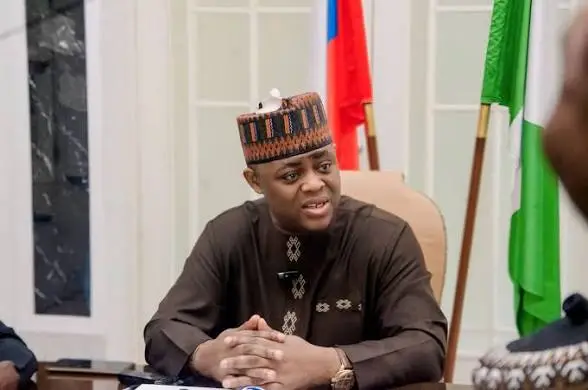
A fresh diplomatic disagreement has erupted between Nigeria and South Africa after President Cyril Ramaphosa’s spokesperson, Vincent Magwenya, accused Nigeria’s High Commission of spreading false information over claims that the South African leader intervened in the exclusion of Ambassador Femi Fani-Kayode’s speech from a televised diplomatic ceremony.
Magwenya maintained that Ramaphosa neither intervened in the editorial decisions of the South African Broadcasting Corporation (SABC) nor possessed the constitutional authority to interfere with the broadcaster’s editorial independence.
He described the Nigerian diplomatic mission’s account of the incident as false, escalating the disagreement between both countries.
The controversy intensified on Saturday after the Nigerian High Commission stood by Fani-Kayode’s account, insisting that the Nigerian ambassador was treated with contempt and that Ramaphosa personally intervened after the complaint was raised.
Reacting in a strongly worded post on X, Magwenya declared: “Even when it’s institutionalised, a lie remains a lie.”
He added that there was no presidential intervention in the matter, insisting that such interference would not take place.
“There was no such intervention from the President or the Presidency and there will never be,” he said.
The presidential spokesperson also challenged the Nigerian mission to familiarise itself with South Africa’s Constitution, relevant laws and the SABC editorial code.
“Read our constitution and laws and familiarise yourself with the SABC editorial code. Stop disgracing yourself and your country,” Magwenya stated.
He had earlier criticised Fani-Kayode’s account of the incident, arguing that the ambassador wrongly attributed the resolution of his complaint to presidential intervention.
According to Magwenya, Ramaphosa merely directed the Nigerian envoy to Sophie Mokoena, whom he identified as the appropriate official to address the grievance.
He claimed that Fani-Kayode declined to engage Mokoena, who could have explained the circumstances surrounding the broadcast.
Magwenya also described the ambassador’s approach to the matter as grossly inappropriate, considering it a minor operational issue, and advised him to establish a professional working relationship with the public broadcaster.
However, the Nigerian High Commission rejected the criticism, maintaining that the incident was an affront to both Fani-Kayode and Nigeria.
In its response, the mission said the ambassador was treated with contempt and disdain, adding that Ramaphosa had acted appropriately by addressing the complaint.
“Our Ambassador, H.E. Chief Femi Fani-Kayode, was treated with contempt and disdain and by extension so was Nigeria,” the High Commission stated.
It further maintained that the South African President, whom Nigeria holds in high regard, did the right thing by intervening.
“We got the result we wanted. End of story,” the mission added.
The disagreement followed Friday’s diplomatic ceremony at the Presidential Guest House in Pretoria, where Ramaphosa received letters of credence from 15 ambassadors and heads of diplomatic missions.
Fani-Kayode had protested that while the introductions and speeches of 14 other diplomats were broadcast live, Nigeria’s presentation was excluded from the television transmission.
The former Nigerian minister alleged that the livestream was deliberately suspended when it was his turn to speak and resumed after he had delivered his address.
He subsequently claimed that he raised the matter directly with Ramaphosa during a photograph session following the ceremony.
According to Fani-Kayode, the South African President summoned the officials responsible for the broadcast and directed them to resolve the issue immediately.
“Right there in my presence he questioned them and directed them to resolve the issue immediately. Sadly, by then it was too late and Nigeria had been left out,” he said.
The Nigerian ambassador had also expressed appreciation to Ramaphosa for what he described as a timely intervention, despite his disappointment over the exclusion of his speech.

