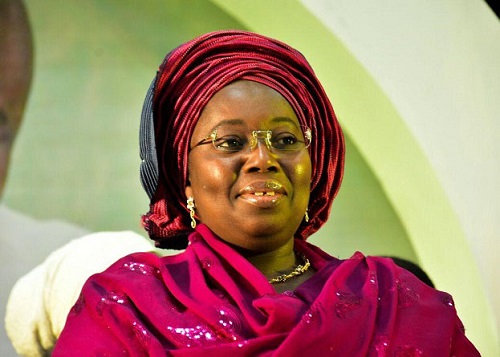
Her death comes amid persistent concerns over the low participation and representation of women in Nigerian politics, despite years of advocacy for greater gender inclusion in governance.
The death of the senator representing Lagos West, Idiat Adebule, has further reduced women’s representation in Nigeria’s Senate, leaving only three women in the 109-member legislative chamber.
The development also affects the number of female candidates contesting senatorial seats in the 16 January 2027 general elections, as Ms Adebule was seeking reelection on the platform of the All Progressives Congress (APC).
Her death comes amid persistent concerns over the low participation and representation of women in Nigerian politics, despite years of advocacy for greater gender inclusion in governance.
PREMIUM TIMES earlier reported that Ms Adebule, 56, died on Saturday after a brief illness in Lagos.
Before her death, women occupied only four seats in the Senate, representing 3.7 per cent of the chamber’s statutory membership. That figure has now dropped to three, representing 2.8 per cent.
In the House of Representatives, women occupy 16 of the 360 seats, representing 4.4 per cent.
Together, women now occupy only 19 of the 469 seats in the National Assembly, representing about four per cent.
Data from the Independent National Electoral Commission (INEC) showed that women accounted for 124 of the 1,303 senatorial candidates listed for the 2027 general elections, representing 9.5 per cent.
With Ms Adebule’s death, the number of female senatorial candidates drops to 123, pending any replacement by her political party.
Meanwhile, 350 of the 3,569 candidates contesting seats in the House of Representatives are women, representing 9.8 per cent.
Across both legislative chambers, the number of female candidates has consequently dropped from 474 to 473, pending any changes to the candidate list.
Despite accounting for nearly half of Nigeria’s population, women remain significantly underrepresented in elective offices at both the federal and state levels.
None of Nigeria’s 36 states currently has a female governor, while women’s representation in the National Assembly remains far below the 35 per cent affirmative action target outlined in the National Gender Policy.
Ms Adebule was among the few Nigerian women who had occupied senior political offices at both the state and federal levels.
An educationist and former public servant, she served as deputy governor of Lagos State between 2015 and 2019 alongside former Governor Akinwunmi Ambode.
She was elected to represent Lagos West in the Senate in 2023.
In a statement issued on Saturday by his spokesperson, Bayo Onanuga, President Bola Tinubu described her death as a painful loss to Lagos State, the National Assembly and Nigeria.
“President Tinubu also noted the deceased’s political journey, which reflects years of commitment to public administration, education, and empowering citizens, particularly women and the youth.
“He lauded her legislative contributions, noting that she continued to demonstrate dedication to democratic governance and the representation of her constituents.”