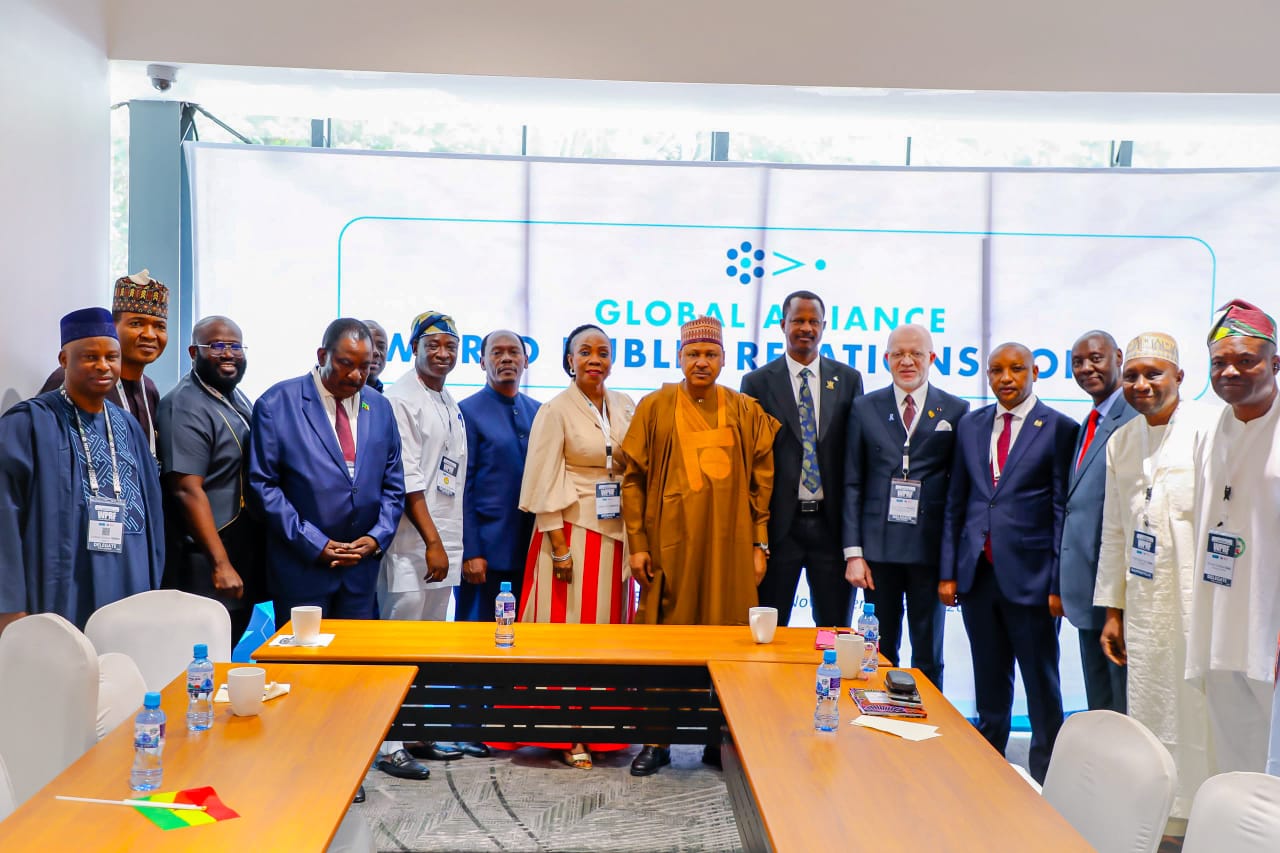
African Ministers of Information have called for a common continental communication framework to tackle misinformation, strengthen public trust and amplify Africa’s voice on the global stage….
African Ministers of Information have called for a common continental communication framework to tackle misinformation, strengthen public trust and amplify Africa’s voice on the global stage.
The resolution emerged from a high-level roundtable on responsible communication at the World Public Relations Forum (WPRF) in Abuja on Wednesday, where ministers and representatives from Nigeria, Kenya, Congo-Brazzaville, Zimbabwe and Ghana advocated stronger cooperation among African governments.
Nigeria’s Minister of Information and National Orientation, Mohammed Idris, called for the revival of the Annual Conference of African Ministers of Information to promote policy coordination and provide a platform for collective action on issues affecting the continent.
Idris said the growing influence of digital platforms and artificial intelligence had made credible public communication a strategic priority for governments.
Citing Nigeria’s experience with manipulated videos and misinformation, he warned that false narratives could distort public events, trigger panic and undermine public confidence in government.
“Technology has come to stay. AI is here to help us if we use it properly. The challenge is to ensure that what we communicate is credible and honest,” he said.
The minister stressed that African countries would achieve more through collective engagement than isolated efforts.
“Collectively, we are stronger if we are united. There is a need to establish a robust system that enables us to look at Africa as one and speak with one voice once again,” Idris added.
He also urged African countries to support Nigeria’s UNESCO Category 2 International Media and Information Literacy Institute in Abuja, describing it as an opportunity to strengthen media literacy, particularly among young people.
Idris further called for closer collaboration among public media organisations, including the Nigerian Television Authority (NTA), Federal Radio Corporation of Nigeria (FRCN), News Agency of Nigeria (NAN) and Voice of Nigeria (VON), to promote content exchange and African narratives.
Kenya’s Cabinet Secretary for Information, Communications and Digital Economy, William Kabogo Gitau, highlighted his country’s National Communication Policy, adopted in August 2026, and plans to establish a National Communication Centre to provide verified government information and receive feedback from citizens.
He also advocated professional regulation of public relations and stronger cross-border cooperation against misinformation.
“Trust between a state and its citizens is built through ordinary interactions: a question answered accurately, a service delivered as promised, and the same message from every part of the country. One government, one message, consistent,” Kabogo said.
Similarly, the Minister of Communication and Media and Government Spokesperson of Congo-Brazzaville, Thierry Lézin Moungalla, called for a continental framework for ministerial consultations, professional training, public-private media partnerships and joint content production.
He maintained that government communication should be integrated into the strategic operations of public administration rather than treated solely as a public relations responsibility.
Zimbabwe’s Deputy Minister of Information, Publicity and Broadcasting Services, Omphile Marupi, highlighted the country’s 16 community radio stations and grassroots information structures as important tools for inclusive communication.
He called for stronger media literacy, ethical journalism and greater African ownership of the continent’s narratives.
Ghana’s parliamentary representative, Abed-Nego Lamangin Bandim, also urged African governments to increase investment in public communication, expand rural connectivity and improve journalists’ welfare.
Bandim, Chairman of the Information and Communications Committee of Ghana’s Parliament and Member representing Bunkpurugu Constituency, disclosed that Ghana had earmarked 10 million Ghana cedis in its 2027 budget for journalists’ training, professional development and welfare.
He argued that adequate funding and improved working conditions were essential to producing credible and independent journalism.
The roundtable ended with a shared commitment to strengthen communication cooperation across Africa, with Nigeria indicating its readiness to host the next meeting of African Ministers of Information.
The proposed revival of the annual continental gathering is expected to provide a platform for African governments to coordinate responses to misinformation, improve public engagement and promote the continent’s perspectives in international discourse.
