The push for an explicit commitment to transition away from fossil fuels remained one of the biggest obstacles to consensus at the conference
Abdulkareem Mojeed, Fortune Eromonsele and Uchenna Igwe
The ongoing Climate negotiations in Antalya, Türkiye, are nearing a final agreement after talks spilled beyond the initially scheduled conclusion period of 20 November. Negotiators spent the weekend struggling to bridge divisions over fossil fuel phase-out, climate finance and other contentious issues.
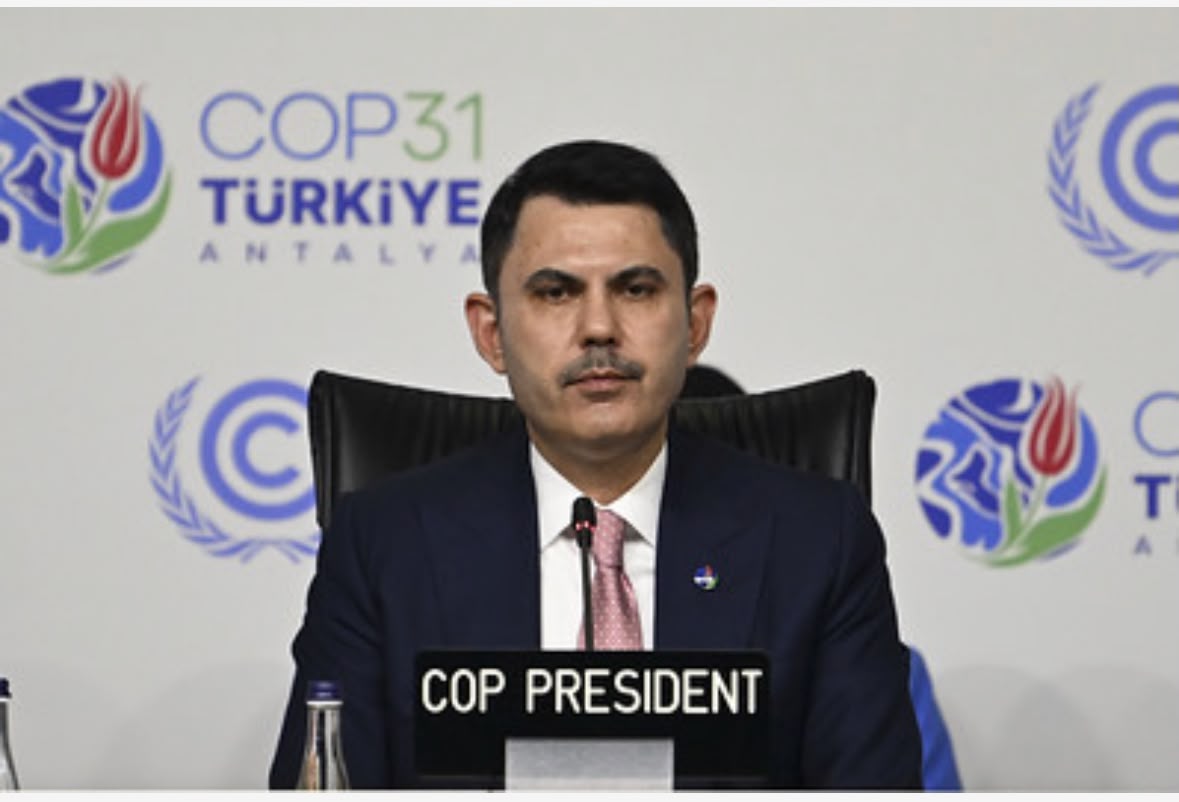
The COP31 co-presidents, Australia’s Chris Bowen and Türkiye’s Murat Kurum, held consultations with delegations from nearly 200 countries late into Saturday, with countries and campaigners increasingly frustrated by the lack of progress.
The talks stalled amid disagreements over demands by a coalition of countries to include a clear commitment to transitioning away from fossil fuels in the final outcome, as well as calls by developing nations for stronger guarantees on climate finance to help them adapt to worsening climate impacts.
Many frustrated participants and delegates have since vacated the venue. PREMIUM TIMES observed on Saturday that the venue, which was filled by nearly 100,000 participants, was almost empty, as parties failed to reach consensus on critical issues.
However, the conference appeared to move closer to a deal on Sunday after the presidency released a revised draft outcome, which it hopes will secure consensus among parties.
“We believe that we have put forward a text which all the parties can agree upon,” Mr Kurum told a late-night plenary session, adding that the conference would reconvene on Sunday morning to consider and approve the agreement.
The latest draft followed intensive consultations between Australia, which is leading the negotiations, Türkiye, the host country, and delegations representing countries across the economic and political spectrum.
The COP31 presidency published its third draft at about 3 a.m. on Sunday, several hours after the release was initially expected on Friday.
PREMIUM TIMES observed that the latest draft is a 94-paragraph, 10-page document, which is expected to form the basis of the final agreement. It is basically a revision of the previous drafts, which were criticised for lacking ambition, particularly over fossil fuel transition and climate finance.
Although Mr Kurum described the text as a final version, further changes could still be made during the closing plenary.
The latest draft, however, has raised concerns among campaigners and some negotiating parties over the absence of explicit commitments on fossil fuel transition, adaptation finance and timelines for the next Intergovernmental Panel on Climate Change (IPCC) assessment reports.
On adaptation finance, the draft does not include the $120 billion target demanded by developing countries. Instead, it proposes discussions on an implementation pathway towards tripling adaptation finance under the climate finance work programme.
It also encourages countries to voluntarily provide or continue providing climate finance while calling for further efforts to mobilise resources for the loss and damage fund.
On fossil fuels, the draft makes no direct reference to transitioning away from them but recalls the outcome of COP28 in the United Arab Emirates, which called for a “just, orderly and equitable” transition away from fossil fuels.
It also omits reference to the Brazil-led global roadmap for transitioning away from fossil fuels, a key demand of several countries and campaign groups.
The draft retains the “35 by 35” electrification target promoted by the COP31 presidency, which seeks to increase the share of electricity in global energy consumption to 35 per cent by 2035. However, the goal is included among a range of options for global cooperation rather than as a firm commitment.
It also retains provisions on limiting the magnitude and duration of global temperature overshoot beyond 1.5 degrees Celsius, while proposing a high-level dialogue at COP32 on the science of overshoot.
On carbon capture, utilisation and storage, the draft drops numerical targets but retains a call to accelerate the technology towards an aspirational global scale of one gigatonne by 2035.
Other provisions include a two-year work programme on mountains and climate change, discussions on reforming the COP process, and references to the cross-border impacts of trade measures, particularly on developing countries.
The push for an explicit commitment to transition away from fossil fuels remains one of the biggest obstacles to a consensus at the conference.
A coalition of about 130 countries has insisted that the final outcome must include language on phasing out fossil fuels, arguing that they remain the primary drivers of global warming.
Maina Talia, climate minister of Tuvalu, a low-lying Pacific island nation highly vulnerable to rising sea levels, said the issue was a red line for his country.
“This [inclusion of a reference to fossil fuels] is a red line for us. We’re talking about the root cause of all this. [Without it] we are wasting our time here,” he said.
Mohamed Adow, director of the Power Shift Africa think tank, said countries came to Antalya expecting progress on public climate finance, adaptation and fossil fuels, but were instead struggling to prevent governments from retreating from previous commitments.
“We came to Antalya needing progress on public climate finance, adaptation and fossil fuels. Instead, we are fighting to stop governments retreating from promises they have already made. Rich countries have spent two weeks finding reasons not to deliver the [financial] support they promised. It feels like this meeting is unravelling,” he said.
The disagreement over fossil fuels also intersected with debates over carbon capture and storage (CCS), a technology strongly supported by Saudi Arabia and other fossil fuel-dependent countries.
While some nations argue that CCS could help reduce emissions, others fear it could prolong reliance on oil, gas and coal by allowing continued production under the guise of emissions reduction.
Negotiators have explored possible compromises, including weakening references to CCS while strengthening commitments to electrification.