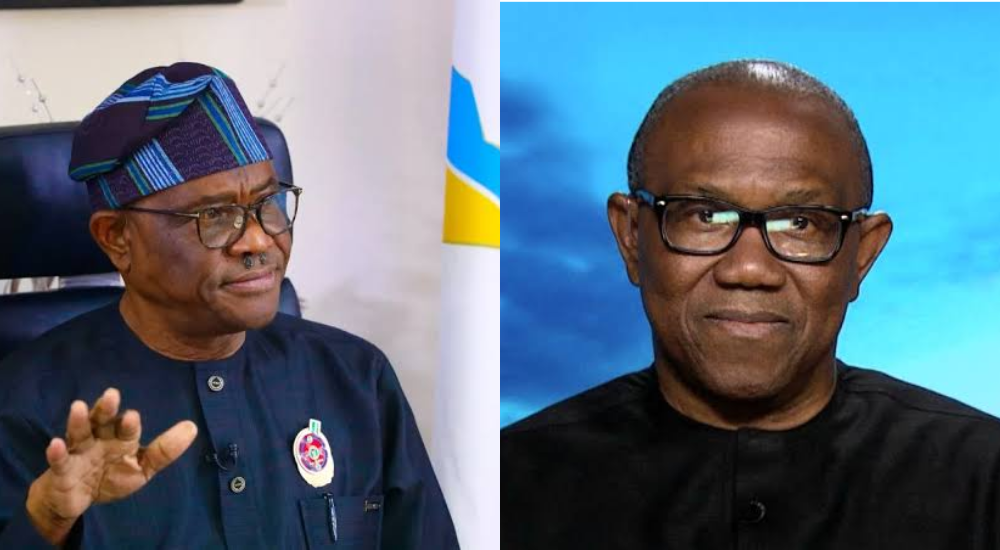
The party accused Obi of prioritising political theatrics and nostalgia over national development, arguing that his conduct raised concerns about his judgment, respect for national institutions and readiness to lead a country of over 200 million people.
The Lagos APC spokesman, Seye Oladejo, made the position known in a statement on Saturday, describing the incident as evidence of a political movement struggling to distinguish nostalgia from national progress.
Obi, the NDC presidential candidate, had joined Funso Doherty, the party’s Lagos governorship candidate, and other supporters in reciting the old national anthem, Arise, O Compatriots, during the party’s town hall meeting on Thursday.
In a video from the event, Obi and other attendees declined to stand when the current national anthem, Nigeria, We Hail Thee, was introduced, prompting the event anchor to switch to the old version, which they subsequently sang.
Reacting to the development, Oladejo said national symbols should not be deployed selectively for partisan convenience, adding that the country had adopted a new national anthem through a lawful process.
He argued that although Nigerians were entitled to their personal preferences and historical sentiments, deliberately turning an abandoned national symbol into a political statement raised questions about the judgment and priorities of those involved.
The APC spokesman further questioned Obi’s leadership independence, alleging that the former Anambra State governor appeared susceptible to the emotional impulses of his political supporters.
“For a man seeking the enormous responsibility of leading a nation of over 200 million people, such apparent susceptibility to the emotional impulses of his crowd is a major and worrisome leadership concern,” he said.
Oladejo maintained that the presidency required maturity, independent judgment, intellectual discipline and the courage to provide direction even when it conflicted with the immediate expectations of supporters.
He also criticised what he described as Obi’s inconsistent political alignments, shifting political positions and incoherent policy agenda, insisting that Nigerians deserved more than political symbolism and emotional mobilisation.
According to him, the old national anthem might evoke nostalgia among some Nigerians, but it could not address unemployment, infrastructure deficits, insecurity and the economic difficulties facing citizens.
The APC spokesman also described political parties as platforms expected to provide ideas, direction and credible alternatives for national advancement rather than stage symbolic rebellions against established national conventions.
The development has also attracted criticism from the Minister of the Federal Capital Territory, Nyesom Wike, who questioned Obi’s patriotism over the incident.
Wike, speaking on Friday at a stakeholders’ town hall meeting in Ogu-Bolo Local Government Area of Rivers State, accused the NDC presidential candidate of disrespecting Nigeria by remaining seated during the current national anthem but standing when the old version was introduced.
“A whole national anthem of a country is being sung. A man who wants to be President of Nigeria would disobey and sit down. And then not only that, when a different national anthem that is not being used for Nigeria was sung, he stood up,” Wike said.
He further argued that Obi’s conduct raised questions about his commitment to national unity and should disqualify him from being considered for the presidency.
President Bola Tinubu signed the National Anthem Bill into law on May 29, 2024, restoring Nigeria, We Hail Thee, which was used from independence in 1960 until 1978, when it was replaced with Arise, O Compatriots.
The Lagos APC spokesman, however, insisted that Nigeria needed leaders who would prioritise national cohesion, institutional integrity, sound judgment and practical solutions over what he described as emotional grandstanding.
He urged Nigerians to scrutinise Obi’s leadership philosophy and decide whether the country needed leadership driven by coherent ideas and demonstrable commitment to national progress or one vulnerable to the shifting emotions of political crowds.