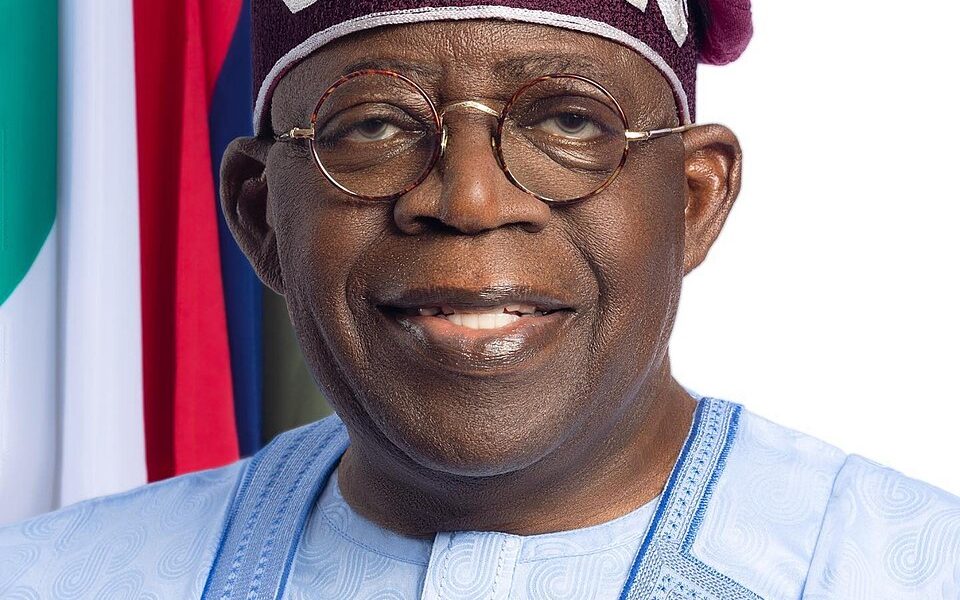
Residents in Bauchi State have reportedly expressed support for President Bola Ahmed Tinubu, chanting “Ba Ma Yi Atiku, Sai Tinubu” (We don’t want Atiku, only Tinubu) during a gathering captured in a video circulating on social media.
The chant, which references former Vice-President Atiku Abubakar, comes amid increasing political activities and mobilisation ahead of the 2027 presidential election.
In the footage, a crowd gathered at what appears to be a public event can be heard chanting the slogan in support of President Tinubu.
The development comes as the ruling All Progressives Congress (APC) intensifies efforts to consolidate its political support across the country, particularly in Northern Nigeria, ahead of the next general election.
It also comes amid internal challenges confronting the opposition African Democratic Congress (ADC), including factional disputes involving Nafiu Bala Gombe, ongoing court cases, disagreements within its leadership and calls by some youths for the suspension of the party’s National Secretary, Rauf Aregbesola.
President Tinubu is seeking re-election for a second term on the APC platform, while Atiku remains one of the prominent opposition figures associated with the emerging 2027 presidential contest.
Bauchi, a politically significant state in the North-East, is expected to feature prominently in the political calculations of parties seeking to strengthen their support bases ahead of the election.
The reported chant has also drawn attention to the administration’s economic policies, infrastructure investments and social intervention programmes, which are expected to feature prominently in the ruling party’s campaign messaging.
According to the National Bureau of Statistics (NBS), Nigeria’s real Gross Domestic Product grew by 4.43 per cent in the second quarter of 2026, compared with 3.89 per cent in the first quarter. The growth was attributed to improved performances in the oil and non-oil sectors, including agriculture, manufacturing, financial services and information and communications technology.
Similarly, headline inflation reportedly declined to 14.63 per cent in September 2026 from 15.39 per cent in August, although the cost of living remains a major concern for households across the country.
Another major initiative of the Tinubu administration is the Nigerian Education Loan Fund (NELFUND), established to provide financial assistance to students pursuing tertiary education.
As of November 9, 2026, the fund had reportedly disbursed approximately N375.28 billion to students and 320 tertiary institutions, with more than 1.67 million beneficiaries recorded.
On infrastructure, the administration has embarked on several major road projects, including the Lagos-Calabar Coastal Highway, Sokoto-Badagry Superhighway, Calabar-Ebonyi-Abuja Highway and the dualisation of the Akwanga-Jos-Bauchi-Gombe-Biu-Maiduguri road corridor.
The latter is particularly significant to the North-East and North-Central regions, with the proposed improvements expected to facilitate agricultural transportation, commercial activities and the movement of people and goods.
The administration has also pursued electricity sector reforms under the Electricity Act 2023, which provides a framework for states to establish and regulate their electricity markets.
In the petroleum sector, the removal of fuel subsidy and the unification of the foreign exchange markets remain among the administration’s most consequential economic decisions. While the government has defended the policies as necessary to address structural weaknesses in the economy, critics continue to raise concerns about their impact on household purchasing power and the general cost of living.
For the APC, Northern Nigeria remains a strategically important political region because of its voting strength and influence in presidential elections.
The party is expected to rely on its record in government, ongoing infrastructure projects, economic reforms and social intervention programmes as major components of its argument for another four-year mandate.
However, opposition parties are also expected to focus on the challenges confronting Nigerians, particularly insecurity, unemployment, inflation, poverty and the broader state of the economy.
Although the circulating video does not independently establish the political preferences of the entire Bauchi population, the chant reflects the campaign messaging and political mobilisation emerging ahead of the 2027 presidential election.
As the political atmosphere gathers momentum, the contest is expected to revolve around competing claims over economic management, infrastructure development, national security, social welfare and the overall performance of the Tinubu administration.
The coming months will provide a clearer picture of how political parties intend to consolidate their support across the North and what issues will shape voters’ decisions in 2027.