By Folorunsho Hamsat
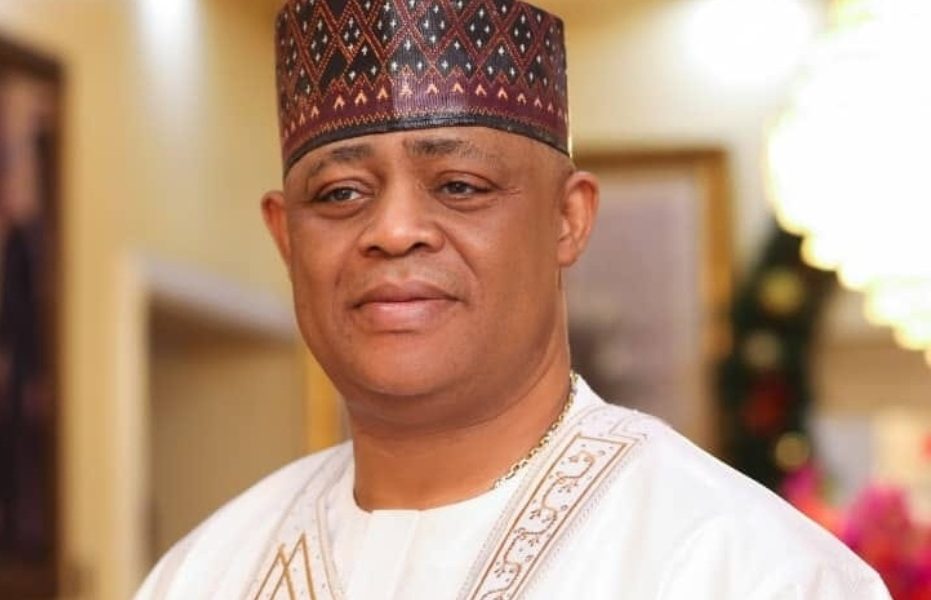
Few figures in Nigerian public life have polarized opinion as consistently as Femi Fani-Kayode, newly-accredited Nigeria’s ambassador to SouthAfrica.
Over the past two decades, the former aviation minister has built a reputation defined by fiery rhetoric, shifting partisan loyalties, and deeply contentious commentary on Nigeria’s ethnic and political fault lines. Yet, following a dramatic diplomatic standoff in Pretoria this week, he finds himself buoyed by a wave of solidarity from an unexpected quarter: the Igbo diaspora and commentators from Nigeria’s South-East. The spark was a formal ceremony at the Sefako Makgatho Presidential Guest House on Friday, November 13, 2026, where Fani-Kayode joined ambassadors from 14 other nations to present his Letter of Credence to South African President Cyril Ramaphosa.
According to the Nigerian representative’s personal account of the event, while the introductions and speeches of the other 14 envoys were broadcast on the South African Presidency’s official livestream, the feed was abruptly suspended as it reached his turn, resuming only after he had concluded his remarks. However, rather than absorbing the omission quietly in the tradition of career diplomats, Fani-Kayode turned down a post-event interview with the South African Broadcasting Corporation (SABC) in protest, discussed the protocol lapse directly with President Ramaphosa, and then publicly declared that he would not tolerate any flippant or disrespectful treatment of the country he is representing or its citizens.
Meanwhile, Ramaphosa’s spokesperson, Vincent Magwenya, had barely pushed back against the Nigerian mission’s complaints, than the diplomatic spat spilled onto social media for-and-against debates.
For most observers of Nigerian public affairs, the most striking aspect of the controversy is the immediate wave of support Fani-Kayode’s stance drew from an unexpected quarter, the Igbo community, a tribe that has long been among his fiercest critics.
Explicitly, to understand why the resulting applause from many Igbo quarters is so striking, one must look at the Ambassador’s turbulent political history with the South-East.
For years, Fani-Kayode’s relationship with Igbo political interests and public opinion has been strained by fierce partisan battles, controversial historical commentaries, and personal disputes that drew sharp criticism from prominent South-Eastern leaders and youth groups. Even when his appointment as High Commissioner was announced, critics across the country questioned whether his combative temperament was suited for a sensitive posting that required quiet bridge-building, while many South-Easterners viewed him primarily through the prism of domestic political antagonism.
However, geopolitics has a way of scrambling domestic alliances, and when Nigerians look toward South Africa, internal ethnic rivalries frequently give way to a shared sense of national vulnerability. For over a decade, Nigerians living in South Africa have borne the brunt of recurring xenophobic violence, business-targeted attacks, and bureaucratic hostility, with Igbo entrepreneurs, traders, and professionals making up one of the largest and most economically visible segments of the Nigerian diaspora in cities like Johannesburg, Pretoria, and Cape Town. To many in this demographic, the Pretoria livestream omission, whether caused by technical failure or deliberate protocol slight, mirrored the everyday institutional dismissiveness they feel they encounter in South Africa.
In that context, Fani-Kayode’s refusal to smile through a perceived public snub struck a chord, making his combative style suddenly look less like a liability and more like a shield where traditional career envoys had often been accused of prioritizing diplomatic niceties over forceful advocacy.
This unusual convergence highlights three critical dynamics in Nigerian public consciousness. First, domestic political grudges lose their potency when citizens feel their collective national dignity is challenged abroad, meaning Fani-Kayode ceased to be a partisan lightning rod from Osun State in Pretoria and became the physical embodiment of the Nigerian green passport. Second, after four years without a substantive Nigerian High Commissioner in South Africa, diaspora communities, including groups like the Igbo Union South Africa and Ohanaeze South Africa, who were among the bodies welcoming him upon his arrival, have been eager for assertive representation willing to push back visibly against institutional slights. Finally, there is a clear irony of temperament; the very trait that made Fani-Kayode controversial in Abuja, his unwillingness to back down from a public confrontation, is precisely what earned him praise from a section of Nigerians frustrated by years of perceived diplomatic timidity in Southern Africa.
Still, viral solidarity on social media does not guarantee diplomatic success, as diplomacy is ultimately measured not by winning a war of words with a host country, but by securing tangible protections, visa ease, and business security for citizens on the ground. Fani-Kayode has already demonstrated that he will not allow Nigeria to be sidelined quietly. Now, having captured the unexpected backing of some of his fiercest domestic critics, his real test begins; translating that defiant posture into quiet, effective leverage that protects every Nigerian, Igbo, Yoruba, Hausa, and beyond, living and working in South Africa.
-Folorunsho Hamsat is a Lagos based journalist. He can be reached via 08051000485