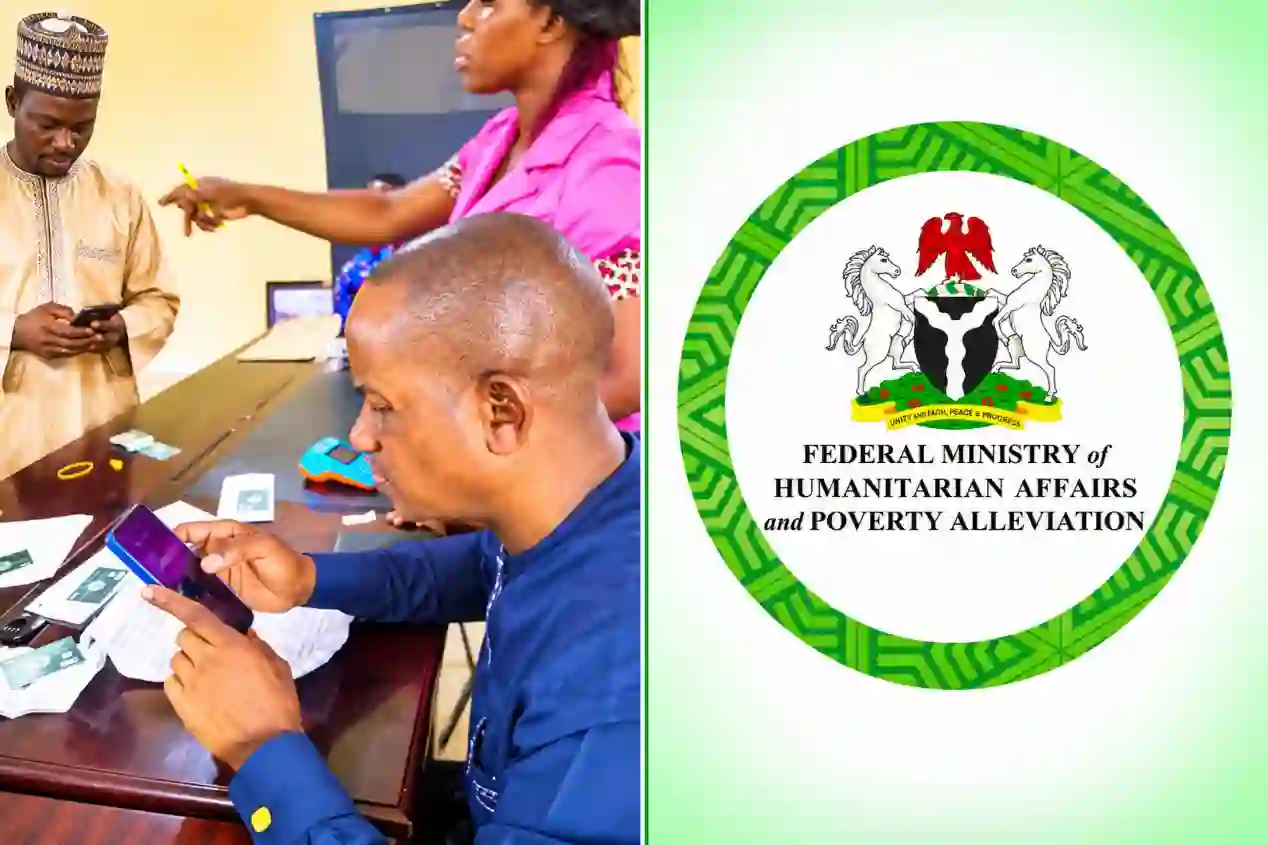
The Federal Government has reviewed the process of identifying and verifying Nigerians for social intervention programmes, including the ₦25,000 Conditional Cash Transfer (CCT) designed to support poor and vulnerable households.
Details of the selection process were provided at the 2026 National Social Protection Knowledge and Learning Forum, which began on Monday, November 23, in Abuja.
The three-day forum brought together government officials and development partners to discuss ways of improving the delivery of social protection programmes across the country.
The Minister of Humanitarian Affairs and Poverty Reduction, Dr Bernard Doro, reaffirmed the government’s commitment to improving coordination among institutions responsible for implementing the interventions.
Represented by the Director of Social Development, Akwa Bassey, the minister highlighted efforts to expand social registers and improve cooperation among agencies responsible for assisting vulnerable Nigerians.
The minister also disclosed that the recently approved One Humanitarian-One Poverty Response System (OHOPRS) would help government institutions identify intended beneficiaries more effectively and prevent duplication of assistance.
Under the cash transfer programme, eligible households receive ₦75,000 in three instalments of ₦25,000 each to help them cope with economic hardship.
Speaking at the forum, the Head of the National Social Register at the National Social Safety Nets Coordinating Office (NASSCO), Mohammed Dikko Bala, explained that beneficiaries were drawn from the National Social Register (NSR).
The register contains information on households identified as poor or vulnerable through exercises conducted within their communities.
The Communications Manager of the National Cash Transfer Office (NCTO), Shikfu Shimang, explained that households captured in the register were assessed according to their circumstances.
He noted that different interventions had separate eligibility requirements, meaning that a household could qualify for one programme without necessarily qualifying for another.
The register is used for identifying potential recipients of the ₦50,000 National Emergency Relief and Stabilisation Intervention (NERSI), which provides financial assistance through designated payment providers.
According to the October 2026 update released by NASSCO, the register contained information on 21,114,531 households comprising 83,162,654 individuals across the 36 states and the Federal Capital Territory (FCT).
The office reported that 15,653,374 National Identification Number (NIN) records had been verified during its identity integration exercise.
How FG selects beneficiaries
The selection process begins with identifying local government areas and communities experiencing high levels of poverty and inadequate access to basic amenities.
Within the identified communities, trained teams work with residents to determine households requiring assistance. Information about these households is subsequently collected and entered into the social register.
The information is assessed using Proxy Means Testing (PMT), which considers household characteristics and living conditions to determine their relative poverty levels.
Households ranked within the first six poverty deciles are considered for inclusion in the National Beneficiary Register (NBR), from which eligible cash transfer recipients can be selected.
Beneficiary verification involves checking NIN records, residential geographical coordinates and financial information associated with recipients’ bank accounts or debit cards.
These measures enable the relevant agencies to confirm recipients’ identities and establish where registered households are located.
For Nigerians already captured in the register, selection depends on the eligibility criteria of the particular intervention being implemented and the outcome of the verification process.
The November forum also examined how agencies could document the experiences of beneficiaries and make information about the impact of government interventions more accessible to Nigerians.
The discussions focused on improving existing systems for identifying households, coordinating assistance and ensuring that public resources reach the people for whom the programmes were designed.