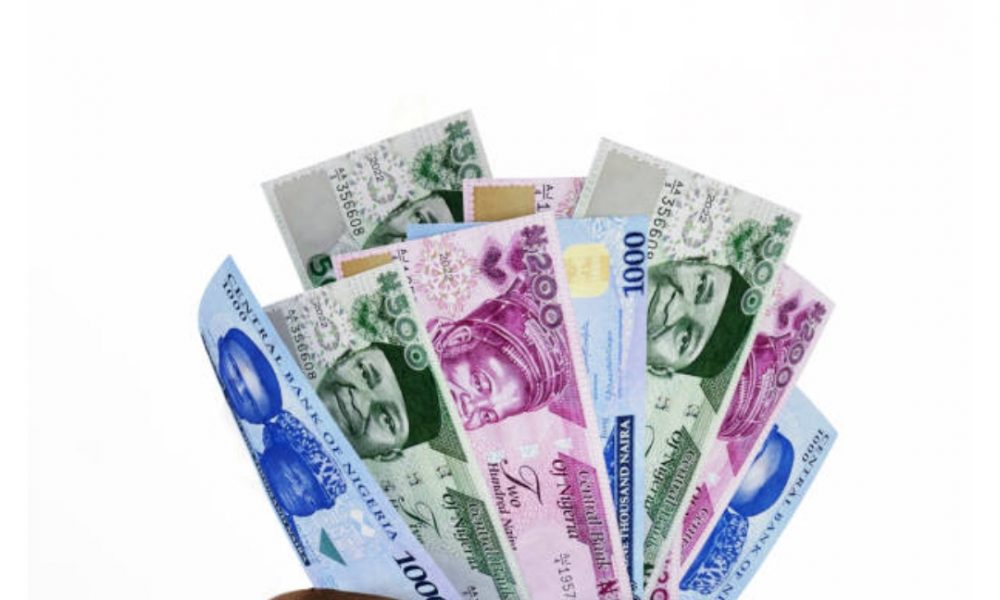
The naira depreciated marginally against the United States dollar at the Nigerian Foreign Exchange Market on Tuesday, November 24, even as foreign exchange turnover plunged by 82.4 per cent, indicating a sharp slowdown in trading activity.
The local currency closed at N1,394.12/$1, compared with N1,394.01/$1 on Monday, representing a loss of 11 kobo.
The depreciation followed a relatively stable session on Monday, when the naira recovered marginally to N1,393/$1 from N1,394/$1 on Friday.
Trading activity recorded a significant decline, with interbank foreign exchange turnover falling to $164.28 million from $931.23 million in the preceding session.
The number of transactions also dropped to 135 from 223 deals, reflecting a substantial reduction in the volume of reported interbank trading.
The latest figures came amid concerns over increased foreign exchange demand associated with pre-election spending and festive-season imports, which could add pressure to an already constrained market.
At the GTBank foreign exchange desk, the naira weakened by N5 to N1,403/$1 from N1,398/$1 in the previous session.
The parallel market recorded a different movement, with the currency appreciating by N10 to N1,440/$1 from N1,450/$1 on Monday.
Against other major currencies, the naira also depreciated in the official market. It lost N3.63 against the British pound to close at N1,826.30/£1, compared with N1,822.67/£1 previously. The currency also weakened by N3.88 against the euro to N1,528.79/€1 from N1,524.91/€1.
The currency movement coincided with the Monetary Policy Committee’s decision to retain the benchmark interest rate at 23 per cent, maintaining the Central Bank of Nigeria’s tight monetary policy stance.
CBN Governor Yemi Cardoso said the committee considered the decision necessary to protect progress made in moderating inflation while retaining flexibility to respond to changing economic conditions.
“The committee noted that maintaining the current policy stance is appropriate to safeguard the gains of disinflation so far achieved while remaining data dependent and vigilant in taking further measures,” Cardoso said.
He added that improved food supply and sustained stability in the foreign exchange market would support further moderation in inflation.
However, inflation at 14.06 per cent remains above the central bank’s single-digit target, leaving monetary authorities with limited room to ease policy without risking a reversal of recent gains.
The decision to retain the rate also signals the CBN’s preference to sustain its restrictive monetary stance amid continuing concerns about inflation and exchange-rate stability.
Meanwhile, major cryptocurrencies traded lower amid weakness across several economically sensitive commodities, including oil, copper, zinc, nickel and aluminium.
Bitcoin declined by 1.9 per cent to $58,136.13, while Ethereum fell by 2.4 per cent to $1,657.97.
Other digital assets also recorded losses, with Solana dropping 4.1 per cent to $68.66, Cardano declining 3.4 per cent to $0.1433 and Ripple shedding 3.3 per cent to $0.9173.
Dogecoin fell by 2.9 per cent to $0.0546, while Binance Coin also lost 2.9 per cent to $571.77. TRON declined marginally by 0.2 per cent to $0.3086.
The stablecoins Tether and USD Coin remained unchanged at $1.00 each.
The cryptocurrency market weakness was also linked to expectations of tighter US monetary policy, with traders anticipating a possible 25-basis-point Federal Reserve rate increase in December.