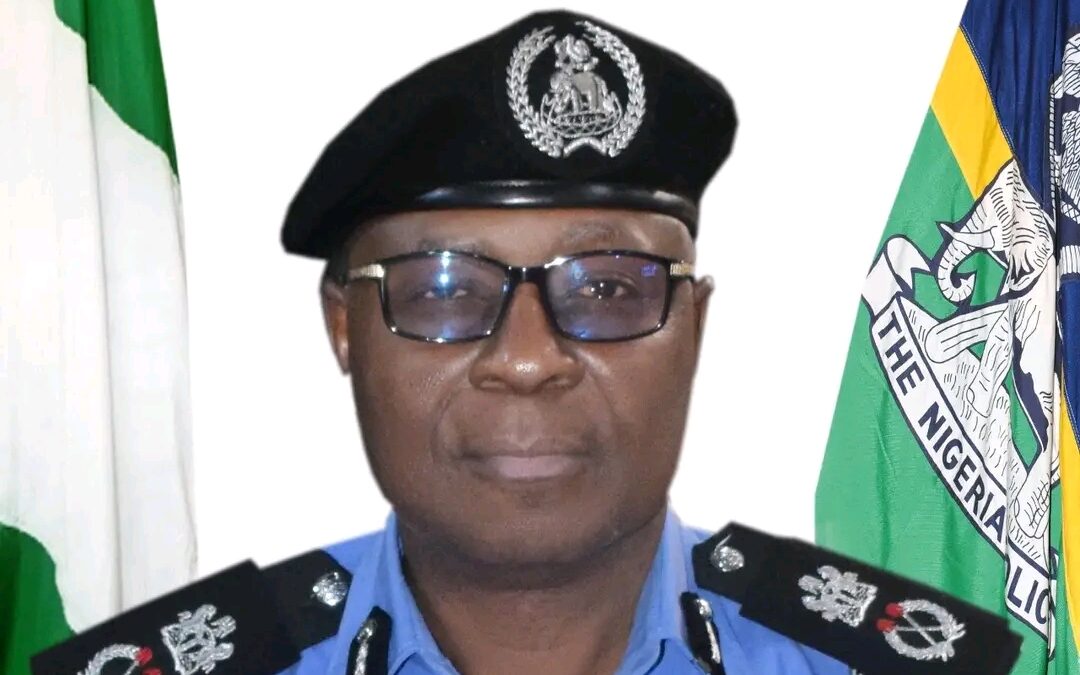
In a society where shortcuts, compromise and bending the rules have become convenient for some people, a police officer who insists on doing things by the book will inevitably attract criticism, resistance and sometimes outright attacks.
This is the reality facing Assistant Inspector-General of Police Olohundare Moshood Jimoh, whose commitment to professionalism, integrity, accountability and impartial law enforcement appears to have unsettled those who are uncomfortable with the strict application of the law.
Since his assumption of office as the AIG in charge of Zone 2, comprising Lagos and Ogun States, AIG Jimoh has remained committed to what policing is supposed to represent: the protection of lives and property, the enforcement of the law without favouritism, and the preservation of public confidence in the justice system.
Yet, rather than appreciate the courage required to discharge such responsibilities, some critics have chosen to attack him, particularly on social media.
From VeryDarkMan to other social media commentators, there appears to be a growing tendency to raise their voices against the AIG whenever he is seen professionally performing his duties. The question is: why should an officer who insists on impartiality, fairness and accountability become a target of relentless criticism?
Perhaps the answer lies in the discomfort that integrity creates for those accustomed to the business of cutting corners.
The Inspector-General of Police, IGP Olatunji Rilwan Disu, deserves commendation for creating an enabling environment that allows Assistant Inspectors-General of Police, particularly AIG Olohundare Jimoh Moshood, to effectively propagate and implement his vision and mission for the Nigeria Police Force.
Effective leadership is not only about articulating a vision but also about empowering officers at various levels of command to translate that vision into concrete actions and measurable results.
By providing the necessary institutional support, direction and operational latitude, IGP Disu has demonstrated confidence in his senior officers and strengthened the drive towards a more professional, accountable, proactive and people-oriented Police Force.
Significantly, all the activities, initiatives and operational engagements of AIG Jimoh Moshood Olohundare have remained firmly aligned with the vision and mission of IGP Disu. His commitment to effective policing, operational efficiency, intelligence-led security, professionalism, discipline, public trust and the protection of lives and property reflects the broader leadership philosophy of the Inspector-General of Police.
This alignment underscores the importance of a united command structure in which strategic vision at the top is faithfully translated into action across operational formations. Indeed, AIG Jimoh’s approach demonstrates that IGP Disu’s vision is not merely a statement of intent but a practical policing agenda being pursued with commitment, consistency and determination.
When Integrity Becomes Uncomfortable
A police officer’s responsibility is not to satisfy social media expectations, please influential individuals or succumb to public pressure. His duty is to uphold the Constitution, protect citizens, investigate offences and ensure that the law is applied fairly to everyone, irrespective of status.
AIG Jimoh has demonstrated a determination to make professionalism the standard of policing in Zone 2. Courage, integrity and accountability are not merely words to be displayed on official posters; they are principles that must be reflected in daily decisions, especially when those decisions attract controversy.
The law cannot be selectively applied because a suspect has a large social media following, possesses wealth, enjoys political connections or commands public sympathy. Equally, nobody should be above the law simply because they can mobilise online outrage.
AIG Moshood’s approach reinforces the principle that every citizen deserves equal dignity before the law. Whether rich or poor, influential or ordinary, popular or unpopular, everyone must be treated fairly and subjected to the same legal standards.
Doing What Is Right, Even When Nobody Is Watching
One of the defining characteristics of an ethical police officer is the willingness to do what is right even when there is no public applause, camera or audience. Integrity is not measured by how loudly an officer speaks about his values but by the consistency of his conduct.
Since his resumption as AIG in Zone 2, Jimoh has continued to project the image of an officer who is unwilling to compromise his professional responsibilities. Refusing corruption, rejecting bribery, maintaining accountability and taking ownership of mistakes are essential qualities of leadership in law enforcement.
An officer who refuses to compromise a case for money, influence or personal convenience will naturally become unpopular with individuals whose interests are threatened by such firmness. But that is precisely why the Nigeria Police Force needs officers who can stand their ground.
The public deserves police officers who cannot be bought, intimidated or manipulated. It deserves officers who understand that their loyalty belongs to the law, the Constitution and the people they are sworn to serve.
Courage Beyond the Uniform
Police courage is often understood in terms of physical bravery—the willingness to confront dangerous situations, protect vulnerable citizens and place oneself in harm’s way in the service of others. But true courage in policing goes beyond physical risks.
There is also moral courage: the ability to speak up against misconduct, resist improper pressure, reject unethical practices and hold oneself and colleagues accountable when necessary.
AIG Jimoh embodies the kind of leadership that demands both physical and moral courage. An officer must be prepared to confront criminals on the streets, but he must equally be prepared to confront wrongdoing within the institution, regardless of who is involved.