SEN. TOLU ODEBIYI, CON, FCRM
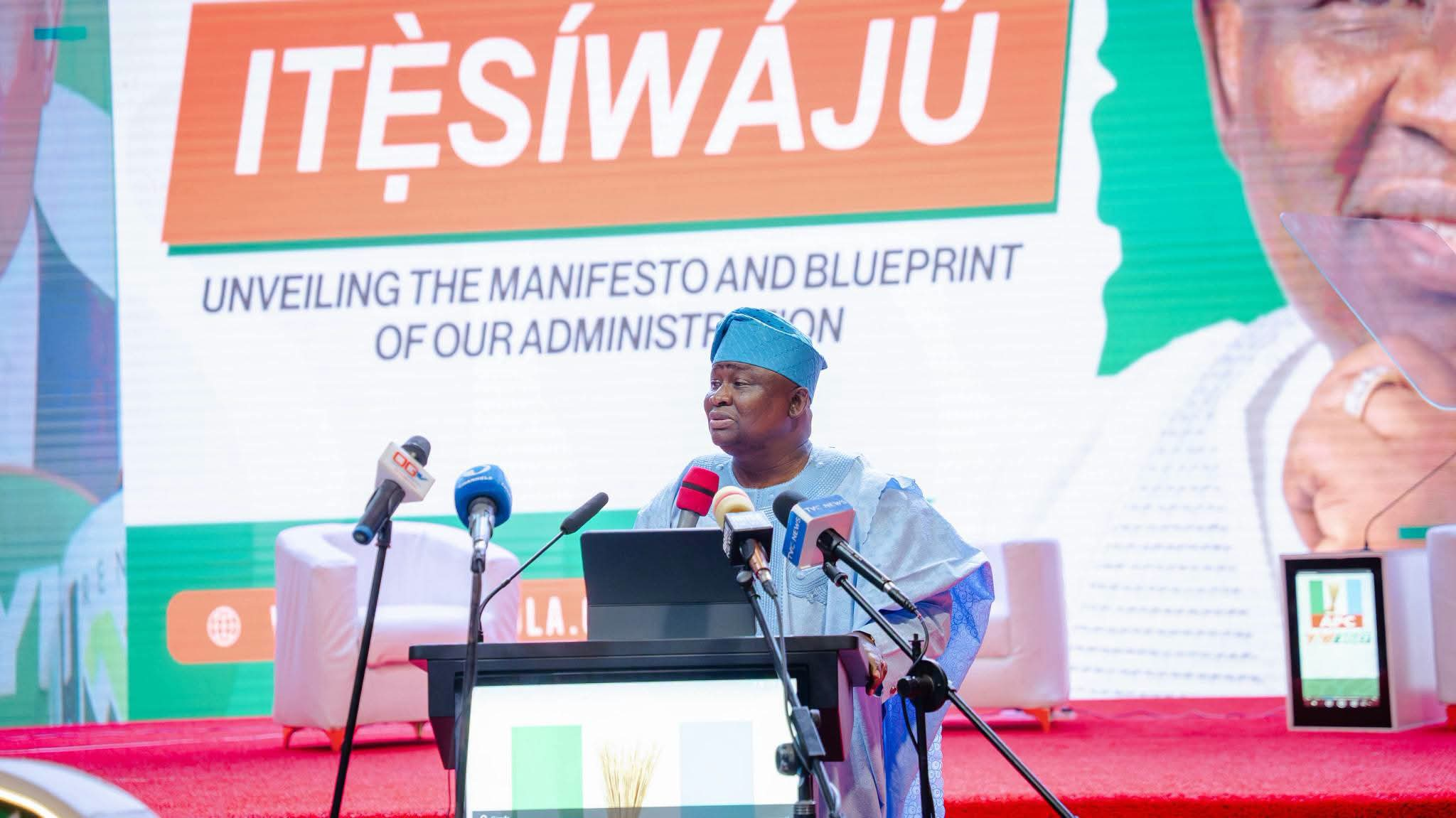
The unveiling of Senator Solomon Olamilekan Adeola’s ITESIWAJU Manifesto represents an important contribution to the ongoing conversation about the future of Ogun State and the kind of leadership, vision and development strategy required to unlock its enormous economic potential.
Having taken time to examine the broad policy direction and development priorities articulated in the manifesto, I am particularly encouraged by its ambition, comprehensive outlook and recognition that sustainable development must go beyond the provision of basic infrastructure. It must create wealth, stimulate economic activities, generate employment, strengthen institutions and improve the quality of life of the people.
In my considered opinion, the manifesto offers a compelling development framework and deserves commendation for the breadth of issues it seeks to address and the opportunities it identifies for repositioning Ogun State.
A Vision Anchored on Economic Transformation
Ogun State occupies a uniquely strategic position in Nigeria’s economic landscape. Its proximity to Lagos, considerable industrial base, agricultural potential, extensive land resources and emerging maritime opportunities provide advantages that few states can match.
However, these advantages must be deliberately harnessed through strategic planning, infrastructure investment, industrial development and effective economic governance.
One of the most encouraging aspects of the ITESIWAJU agenda is its recognition of the need to integrate infrastructure, industrialisation, agriculture, transportation and investment promotion into a coherent development strategy.
The proposed development of the Gateway Deep Sea Port, operationalisation of the Gateway International Agro-Cargo Airport, expansion of road infrastructure, dry ports and improved rail connectivity could collectively reposition Ogun as a major logistics, manufacturing and commercial destination.
These are not merely infrastructure projects. Properly integrated, they have the potential to stimulate investment, reduce the cost of doing business, expand regional trade and create substantial employment opportunities.
I particularly appreciate the economic possibilities that could emerge from connecting these strategic assets to industrial estates, agricultural processing centres and export-oriented businesses.
Industrialisation: The Engine of Prosperity
I have always maintained that the long-term prosperity of any state must be anchored on a productive economy.
The emphasis on industrialisation and job creation in the manifesto is therefore particularly significant.
Ogun already possesses an established industrial ecosystem. What is required is a deliberate strategy to deepen this advantage through the attraction of new investments, expansion of existing industries, development of specialised industrial clusters and stronger participation of indigenous businesses.
The state must increasingly position itself as a preferred destination for manufacturing, energy, logistics, technology and agro-processing investments.
Equally important is the need to ensure that local entrepreneurs and businesses become active participants in this economic expansion.
A prosperous Ogun should not simply be a destination for foreign and domestic investors; it should also produce successful indigenous enterprises capable of competing nationally and internationally.
The manifesto’s emphasis on employment generation, enterprise development and private-sector participation is therefore a welcome direction.
Agriculture and the Opportunity for Food Security
The agricultural component of the manifesto also deserves recognition.
Ogun has considerable agricultural potential, and the opportunity to develop commercially viable agricultural value chains is enormous.
However, the future of agriculture must extend beyond subsistence farming. We must embrace mechanisation, modern irrigation, improved seedlings, agricultural financing, storage, processing and access to domestic and international markets.
The proposed development of commodity-based agricultural clusters offers an opportunity to transform agriculture into a major economic activity.
More importantly, agricultural development must be linked to industrialisation. Agro-processing provides the bridge between farming and manufacturing, creating additional value, employment and export opportunities.
With the right investment framework, Ogun can become a major contributor to Nigeria’s food security and agricultural export ambitions.
Human Capital: Investing in the Future
No development agenda can be sustainable without deliberate investment in people.
I am particularly encouraged by the manifesto’s attention to education, vocational training, digital skills, healthcare, women empowerment and youth development.
The world of work is changing rapidly. Artificial intelligence, automation, digital technology and new industrial processes are redefining employment opportunities.
Ogun must prepare its young population for this changing economic environment.
Beyond conventional education, there is a compelling need to strengthen technical and vocational institutions, develop partnerships with industries and introduce practical skills programmes that respond directly to labour-market requirements.
The proposed initiatives for youth and women empowerment should also be supported by access to finance, mentorship, business development services and sustainable market opportunities.
Empowerment should not end with training. It must lead to productive economic participation.
Healthcare, Security and Social Development
The attention given to healthcare delivery, community security and social welfare reflects an appreciation that economic development must be inclusive.
Accessible healthcare, particularly at the primary level, is fundamental to the wellbeing and productivity of the population.
Similarly, security is indispensable to investment, commerce and community development.
Ogun’s industrial corridors, agricultural communities, border areas and expanding urban centres require coordinated security arrangements supported by intelligence, technology and effective community participation.
The manifesto’s proposals in these areas provide an opportunity to strengthen the relationship between security, public welfare and economic prosperity.
Tourism and the Creative Economy
Ogun’s cultural heritage and historical attractions remain underexploited economic assets.
From Olumo Rock to the Ojude Oba Festival and other significant cultural destinations, the state has opportunities to develop a vibrant tourism and hospitality industry.
The proposed development of tourism destinations and creative industry infrastructure should be approached as a serious economic investment.
With appropriate private-sector participation, improved destination infrastructure and effective international marketing, tourism can create employment, support small businesses and diversify the state’s revenue base.
The Importance of Implementation and Accountability
While the breadth of the ITESIWAJU manifesto is commendable, its greatest value will ultimately be determined by implementation.
Ambitious development objectives require careful sequencing, sustainable financing, institutional coordination and measurable performance indicators.
I would particularly encourage the development of a detailed five-year implementation framework that clearly identifies funding sources, project timelines, responsible institutions and expected outcomes.
The private sector must also be positioned as a strategic partner in delivering major infrastructure and industrial projects.
Government should provide the enabling environment, establish policy consistency, facilitate investment and strengthen public institutions.
Equally important is the need for transparent monitoring and periodic reporting so that citizens can assess progress against stated commitments.
These considerations should be viewed not as reservations about the manifesto but as essential requirements for translating its ambition into lasting achievements.
Ogun State at a Defining Moment
Ogun State stands at an important point in its development journey.
Its geographical advantage, industrial heritage, agricultural resources and emerging infrastructure opportunities provide a foundation for a new phase of economic growth.
What is required is a development philosophy that connects these advantages, encourages enterprise, attracts investment and ensures that prosperity reaches communities across all three senatorial districts and the twenty local government areas.
The ITESIWAJU Manifesto recognises many of these opportunities and provides a broad framework for addressing them.
I particularly welcome its emphasis on integrated infrastructure, industrialisation, agricultural transformation, human capital development and institutional accountability.
These are the building blocks of a modern, productive and economically competitive state.
A Welcome Vision for Ogun’s Future
Having considered the proposals and the strategic direction of the ITESIWAJU Manifesto, I believe it represents a worthwhile and ambitious contribution to the development discourse in Ogun State.
Senator Solomon Olamilekan Adeola deserves commendation for articulating a broad development agenda that places economic transformation, social inclusion and infrastructure development at the centre of its priorities.
The task ahead is to ensure that the vision is translated into practical programmes, sustainable investments and measurable improvements in the lives of the people.
Ultimately, the true measure of any development blueprint is not the number of promises it contains, but the opportunities it creates, the lives it improves and the enduring institutions it builds.
Ogun State has the resources, geographical advantages and human capital to become one of Nigeria’s leading economic destinations. A well-executed development vision can help unlock that potential.
The ITESIWAJU Manifesto provides an encouraging framework towards that aspiration, and I welcome its contribution to the conversation about a more prosperous, inclusive and economically vibrant Ogun State.
Sen. Tolu Odebiyi, CON, FCRM
