Protocols.
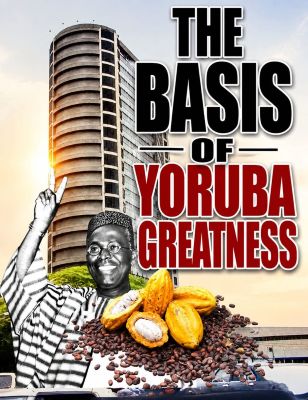
It is a great honour to chair this distinguished colloquium marking the 162nd birth anniversary of one of Nigeria’s foremost nationalist pioneers, Papa Herbert Samuel Heelas Macaulay, who was born on 14 November 1864.
I commend the Herbert Macaulay Descendants for this laudable initiative and thank them for the privilege of being part of an occasion that celebrates not only an extraordinary Nigerian but also an important chapter in our national history.
The theme, ‘Nationalism and Nation Building,’ is particularly significant. It invites us to reflect on the struggles that shaped our political consciousness, the ideals that inspired our independence and, more importantly, the responsibilities we bear in building the Nigeria of our collective aspirations and dreams.
Herbert Macaulay was a man of remarkable intellect, courage and conviction. An engineer, journalist, political activist and public intellectual, he distinguished himself as one of the earliest voices to challenge colonial injustice and demand greater political participation and self-determination for Nigerians.
Through his advocacy and political engagement, he helped awaken a consciousness that Nigerians had both the right and the capacity to participate in governing their affairs.
Distinguished ladies and gentlemen, as we celebrate this great nationalist, I believe we must go beyond remembering what he did to asking ourselves what he and his contemporaries hoped to achieve. What was the vision of our founding fathers when they clamoured for independence? What kind of Africa and what kind of Nigeria did they imagine and fight for?
Their vision was certainly greater than the transfer of political power from colonial authorities to Nigerian leaders. It was not just about a change in the colour of our flag. They envisioned a sovereign country where Nigerians would determine their own destiny, govern themselves, control their resources and deploy those resources for national development and the welfare of citizens.
They wanted a united country where every citizen, irrespective of tribe, tongue, religion or background, would enjoy equal rights, dignity and opportunities.
They also expected independence to usher in economic emancipation, industrialisation, quality education, accessible healthcare, employment opportunities, social justice and a country capable of competing confidently among the nations of the world.
The question we must confront today is whether, sixty-six years after independence, we can authoritatively say that these expectations have been substantially met. How much of the dreams of our founding nationalists have we realised? Have we made the kind of progress they envisioned, and are we satisfied with where Nigeria stands today?
These are not questions intended to diminish our achievements.
Nigeria has made important progress in several areas. But patriotism must also give us the courage to examine our shortcomings honestly.
Consider countries such as South Korea, which emerged from colonial rule in 1945, India, which gained independence in 1947, and Singapore, which became independent in 1965 following its separation from Malaysia. These countries have made remarkable advances in industrialisation, technology, education, healthcare and human development. South Korea has become a global force in electronics and advanced manufacturing, while Singapore has established itself as a major centre of global commerce, innovation and institutional excellence. On its part, India has carved a niche for itself in modern technology and healthcare.
Where is Nigeria and African countries in comparison? What has prevented us from translating our enormous human and natural resources into comparable levels of development? What are the stumbling blocks that have kept us from realising a greater percentage of the aspirations that inspired our independence?
We must examine these questions without excuses. In Nigeria and as in many other African countries, challenges of leadership, institutional weaknesses, corruption, policy inconsistency, inadequate infrastructure, insecurity and our overdependence on the export of raw materials have all contributed to our difficulties.
Distinguished ladies and gentlemen, independence and nation-building are two different undertakings.
Winning independence was a historic achievement; building a prosperous and united nation remains an ongoing responsibility.
I recall that in 2014, when I had the privilege of serving as President, Nigeria marked the centenary of its amalgamation. At the time, some Nigerians questioned the wisdom of celebrating one hundred years of amalgamation because, in their view, the country had not recorded sufficient visible progress, unity and development to justify such a celebration.
My position was that we should go ahead with the commemoration. I believed that remembering our history would help us appreciate where we were coming from, examine where we stood and encourage us to reposition the country for greater growth and progress.
That reflection is even more important today as we look towards the next major national milestone: the centenary of Nigeria’s independence in 2060, just thirty-four years from now.
The question is: what kind of country will we be celebrating in 2060?
Will we have overcome the challenges confronting us today, or will another generation be lamenting the same failures and unrealized aspirations?
Where will Nigeria stand in the Human Development Index? What will be our life expectancy, the quality of our education and healthcare, and the standard of living of the average Nigerian? What progress will we have made in science, technology, digital innovation and industrial development? Will we have built a productive economy capable of creating opportunities for our young people, or will we still be struggling with the same structural weaknesses?
These questions must not remain matters for academic debate. They should become the foundation of a national development agenda with clear objectives, measurable targets, timelines and identifiable responsibilities.
Our political leaders must provide direction in line with a well-established national vision; our public institutions must deliver efficiently; our businesses must invest in productive capacity; our educational institutions must prepare our people for the demands of the future; and our citizens must embrace the values of hard work, integrity, patriotism and responsible citizenship.
The legacy of Herbert Macaulay also connects Nigeria to the wider Pan-African struggle for liberation and dignity.
From Ghana’s independence in 1957 to Nigeria’s independence in 1960 and the subsequent liberation of other African countries, nationalism became a powerful instrument of continental transformation.
Today, Pan-Africanism must find renewed expression in economic cooperation, technological advancement, educational development and stronger continental integration. Political independence must be complemented by economic emancipation and the capacity to harness Africa’s immense human and natural resources for the benefit of its people.
I consider the participation of young Nigerians in this colloquium particularly important. They must understand that the nationalist struggle did not end with independence. Their generation has a responsibility to advance the ideals of freedom through innovation, enterprise, civic participation and responsible citizenship.