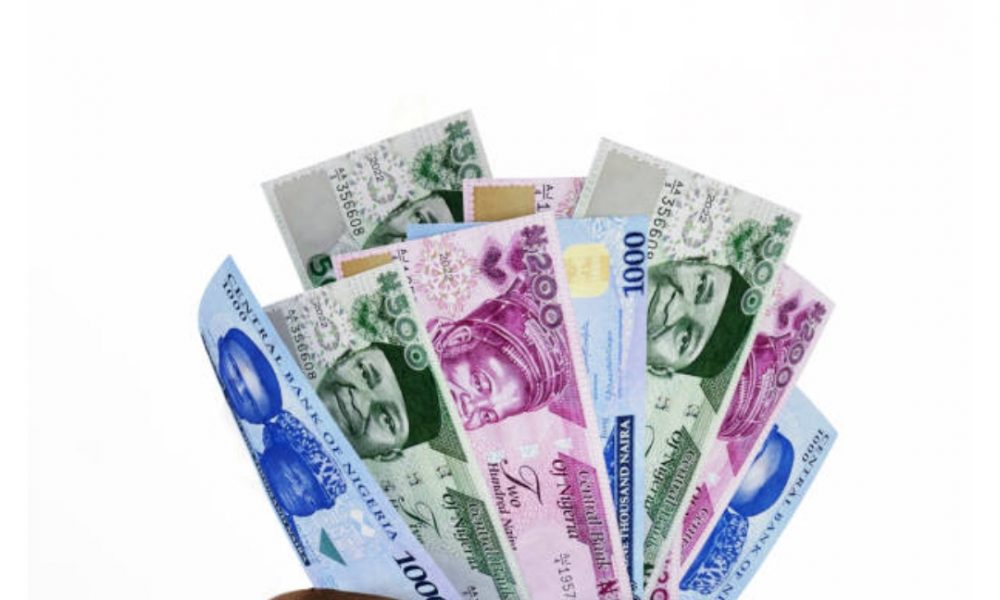
At the Nigerian Autonomous Foreign Exchange Market (NAFEM), the naira appreciated by N20.53 or 1.5 per cent to close at N1,367.36/$1, compared with N1,387.89/$1 recorded on Thursday.
The recovery extended beyond the dollar. The local currency gained N27.78 against the Pound Sterling to close at N1,793.41/£1 from N1,821.19/£1, while it appreciated by N27.64 against the Euro to settle at N1,497.09/€1, compared with N1,524.73/€1 a day earlier.
At the GTBank foreign exchange counter, the naira also improved by N6 against the dollar to close at N1,401/$1 from N1,407/$1. However, there was no movement at the parallel market, where the currency remained at N1,435/$1.
The gains offer some relief to businesses and individuals whose transactions depend on access to foreign currency, particularly importers and companies with international payment obligations. However, the sustainability of the recovery will depend on whether improved dollar supply can be maintained and market demand adequately managed.
A major factor behind the latest movement was the Central Bank of Nigeria’s (CBN) intervention to improve dollar availability in the retail market.
Under a new arrangement, the apex bank has authorised banks to sell up to $1 million in physical dollar notes to Bureau De Change (BDC) operators. Previously, operators were limited to 25 per cent of banks’ approved weekly foreign exchange sales to them.
The revised arrangement is intended to give BDC operators greater access to physical dollar notes, improve supply in the retail market and ease some of the constraints that have contributed to pressure on the local currency.
Demand also weakened in the official market during the session. Interbank foreign exchange turnover fell by 54.5 per cent to $106.876 million from $235.038 million recorded a day earlier.
The number of transactions equally declined to 119 deals from 180, indicating a significant reduction in trading activity.
While improved supply and softer demand supported Friday’s appreciation, the foreign exchange market remains exposed to external and domestic uncertainties. Expectations of higher United States interest rates and uncertainty ahead of Nigeria’s January elections have continued to constrain investment inflows.
The CBN retained its benchmark interest rate at 23 per cent earlier in the week, citing recent currency volatility among the factors informing its decision.
You May Like: Naira Falls to N1,397/$ as Dollar Turnover Jumps 328
For businesses planning imports, servicing foreign obligations or pricing goods and services, the naira’s latest gains offer a welcome development. But one day’s appreciation does not necessarily signal a lasting turnaround, particularly in a market where access to dollars and investor confidence remain important determinants of exchange rate stability.
While the naira strengthened in the foreign exchange market, investors in the cryptocurrency market faced another difficult session as Bitcoin failed to sustain gains around $62,000 and retreated towards $59,000.
Bitcoin (BTC) declined by 2.9 per cent to $59,773.59, as renewed selling pressure weighed on the leading cryptocurrency.
The sell-off was accompanied by the liquidation of approximately $190 million worth of derivatives positions in the preceding hour, with long positions accounting for most of the forced closures.
Several cryptocurrency analysts said the wave of liquidations accelerated Bitcoin’s decline, although the forced selling appeared to have amplified the downturn rather than triggered the initial rejection of higher prices.
Losses spread across other major digital assets. Cardano (ADA) fell by 4.2 per cent to $0.1465, while Ethereum (ETH) depreciated by 4.1 per cent to $1,657.37.
Ripple (XRP) dropped 3.2 per cent to $0.9444, Solana (SOL) declined by 2.6 per cent to $71.14, and Binance Coin (BNB) contracted by 2.3 per cent to $551.04.
Dogecoin (DOGE) lost 1.9 per cent to trade at $0.0569, while TRON (TRX) declined by 1.5 per cent to $0.3004.
The stablecoins US Dollar Tether (USDT) and US Dollar Coin (USDC), however, remained broadly unchanged at $0.999 apiece.
Adding to the uncertainty surrounding global financial markets, the United States Federal Reserve’s preferred inflation measure, the Personal Consumption Expenditures (PCE) price index, rose by 3.8 per cent year-on-year in October.
The increase complicates the Federal Reserve’s efforts to bring inflation back to its two per cent target and could influence expectations about the direction of US interest rates.
For emerging markets such as Nigeria, movements in US interest rates matter because they can influence global investment flows, demand for dollar-denominated assets and pressure on local currencies.