The Nigerian Education Loan Fund (NELFUND) has recorded approximately ₦379 billion in disbursements after processing about 2.65 million applications, the Minister of Education, Dr Maruf Tunji Alausa, has disclosed….
The Nigerian Education Loan Fund (NELFUND) has recorded approximately ₦379 billion in disbursements after processing about 2.65 million applications, the Minister of Education, Dr Maruf Tunji Alausa, has disclosed.
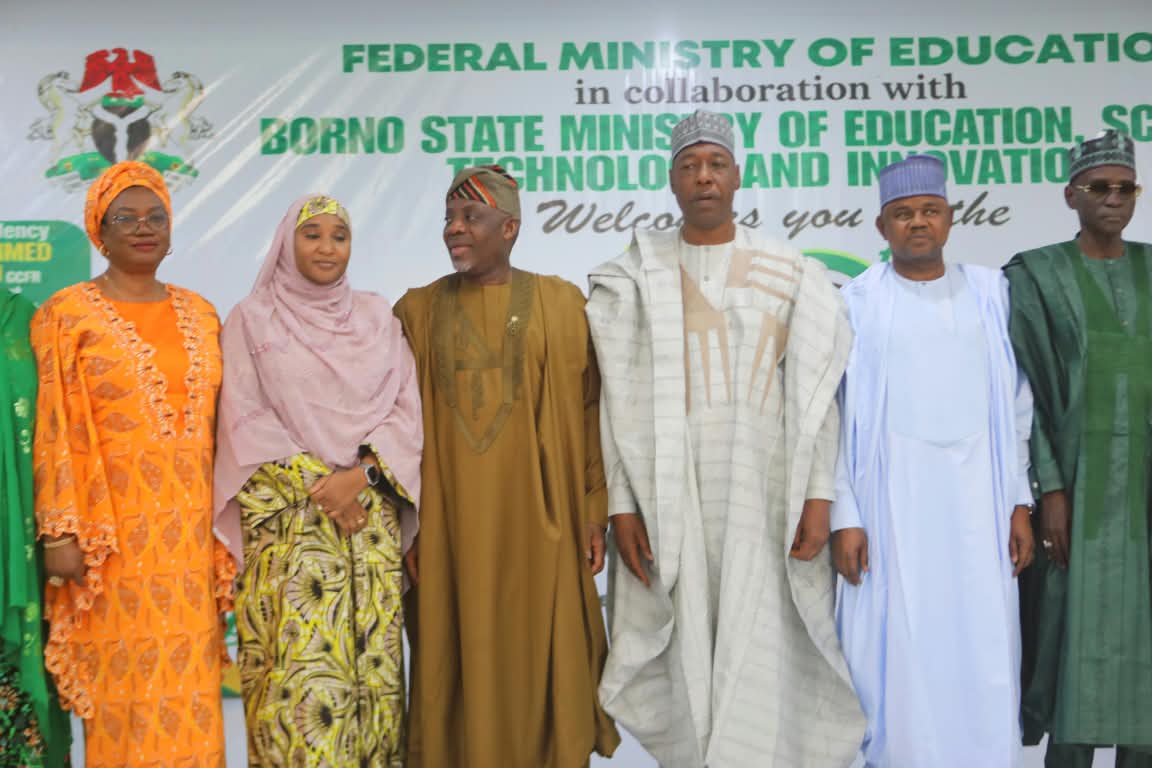
Alausa gave the figures on Thursday during the ministerial session of the 70th National Council on Education (NCE) meeting in Maiduguri, Borno State.
He 


 said the student financing scheme was among several Federal Government interventions aimed at expanding access to education under President Bola Tinubu’s Renewed Hope Agenda.
The minister also disclosed that the Federal Government’s Technical and Vocational Education and Training (TVET) programme had attracted more than 2.8 million applications.
He said the government was investing in teacher development, tertiary institution infrastructure, digital learning and basic education as part of efforts to improve learning outcomes nationwide.
On teacher development, Alausa said more than 80,000 teachers were undergoing certification and licensing through the Teachers Registration Council of Nigeria (TRCN).
He said the government was targeting 75 per cent teacher certification by the end of 2027, with all senior secondary school teachers expected to be certified by 2028.
The minister also listed major investments in tertiary education, including ₦55 billion for medical education infrastructure, ₦150 billion for tertiary institution revitalisation, ₦32 billion for needs-assessment projects in public colleges of education and ₦39 billion released to 166 public tertiary institutions.
On digital learning, he said 34 solar mini-grid installations had been undertaken in tertiary institutions, while plans were underway to extend independent solar power to all federal tertiary institutions by 2028.
He added that more than ₦11 billion had been committed to digital skills development, while over 40,000 geo-located schools had been integrated into digital education management systems to support planning, monitoring and school safety.
Alausa also highlighted the $532 million HOPE for Basic Education programme and the expansion of the Adolescent Girls’ Learning and Empowerment Project from 18 to 21 states.
He urged members of the National Council on Education to ensure that their deliberations produced measurable improvements, stressing that investments in infrastructure must be matched by teacher welfare, professional development and accountability.
The minister commended Borno State for increasing school enrolment from about 770,000 learners in 2018 to approximately 1.8 million.
He attributed the growth to investments in school facilities, improved security and the state government’s commitment to education.
Borno State Governor, Babagana Umara Zulum, welcomed the Federal Government’s reforms, particularly the efforts to expand access to education and address the mismatch between graduates’ skills and labour-market demands.
Zulum said stronger collaboration between educational institutions and industry, particularly through technical and vocational training, would improve employability and help tackle unemployment.
He disclosed that the state was establishing 27 high-skilled colleges, with 15 already completed and the remaining facilities expected to be ready by the end of the year.
The governor said the institutions were designed to promote skills acquisition and create pathways between non-formal and formal education.
The 70th National Council on Education meeting brings together federal and state education officials and other stakeholders to deliberate on policies for improving education delivery, infrastructure, teacher motivation and learning outcomes across the country.