….Four Countries Unveil Fresh Military Offensive Against Boko Haram, ISWAP, Bandits
….Musa Says Deal Will Stop Fleeing Insurgents From Escaping Military Operations
…. US Supplies Nigeria With Real-Time Intelligence, Satellite Images
Daud Olatunji
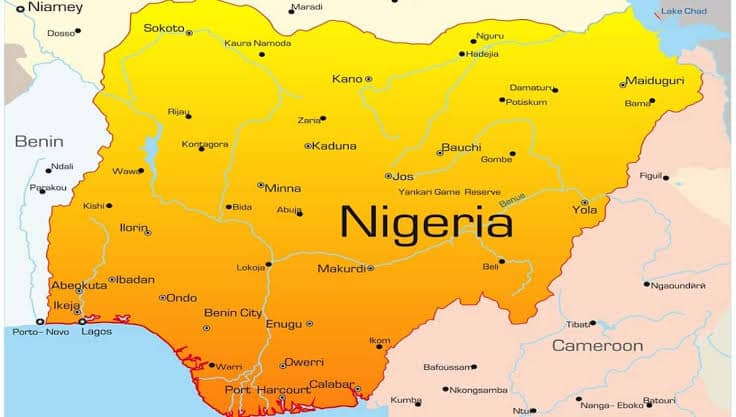
Nigeria and three neighbouring countries, Cameroon, Chad and Niger, have reportedly agreed to allow their military forces to pursue terrorists, armed bandits and other criminal groups up to five kilometres across their shared borders in a renewed effort to tackle cross-border insecurity.
The agreement is expected to strengthen regional military cooperation and prevent fleeing insurgents from exploiting international boundaries to escape security operations.
The Minister of Defence, General Christopher Musa (retd.), disclosed the arrangement in Abuja, explaining that it would allow security forces from the four countries to sustain hot pursuit of terrorists fleeing military offensives across border communities.
The development is particularly significant for Nigeria’s North-East, where Boko Haram and the Islamic State West Africa Province have continued to exploit porous borders and difficult terrain around the Lake Chad Basin to sustain their operations.
The agreement also covers efforts to tackle armed bandits and other criminal networks whose activities extend beyond individual countries.
Musa said the arrangement would improve coordination among the neighbouring countries and strengthen ongoing counterterrorism operations against armed groups operating across the region.
The Defence Minister also disclosed that Nigeria was receiving real-time intelligence, satellite imagery and training support from the United States to improve its military capabilities and strengthen operations against terrorists.
He further revealed that Nigerian troops had recently neutralised several terrorist and bandit commanders during overnight operations across the North-East and North-West.
The latest agreement comes amid persistent security challenges in communities bordering Nigeria, Cameroon, Chad and Niger, where insurgents have repeatedly taken advantage of territorial boundaries to evade military offensives.
In Cameroon’s Far North Region, Boko Haram and ISWAP activities have remained a major security concern, reinforcing the need for coordinated military action among countries sharing the Lake Chad Basin.
For years, the activities of insurgent groups across the region have posed challenges to individual national security operations, as militants often retreat into neighbouring territories when confronted by troops.
The new arrangement is therefore expected to address one of the major operational difficulties confronting security forces by allowing them to maintain pressure on fleeing terrorists beyond their national boundaries.
However, details of the agreement, including its operational procedures, rules of engagement, command structure and safeguards for civilians in affected border communities, were not immediately made public.
It also remains unclear how the five-kilometre pursuit arrangement will be implemented and coordinated among the four countries to prevent operational misunderstandings or violations of territorial sovereignty.
The agreement nevertheless represents a renewed regional security push against terrorist networks and other armed criminal groups whose operations have continued to threaten communities across the Lake Chad Basin and adjoining areas.
For Nigeria, the arrangement could provide additional operational leverage in the fight against insurgency, particularly if supported by sustained intelligence sharing, coordinated military offensives and effective border surveillance.