Nigeria’s headline and core inflation rates declined to 14.06 per cent in October 2026, the lowest level in six years, as the Federal Government’s Economic Management Team reviewed progress on economic reforms, budget implementation and price stability….
Nigeria’s headline and core inflation rates declined to 14.06 per cent in October 2026, the lowest level in six years, as the Federal Government’s Economic Management Team reviewed progress on economic reforms, budget implementation and price stability.
The team also reported real Gross Domestic Product (GDP) growth of 4.43 per cent in the second quarter of 2026, external reserves of about $55 billion and a stable, appreciating exchange rate.
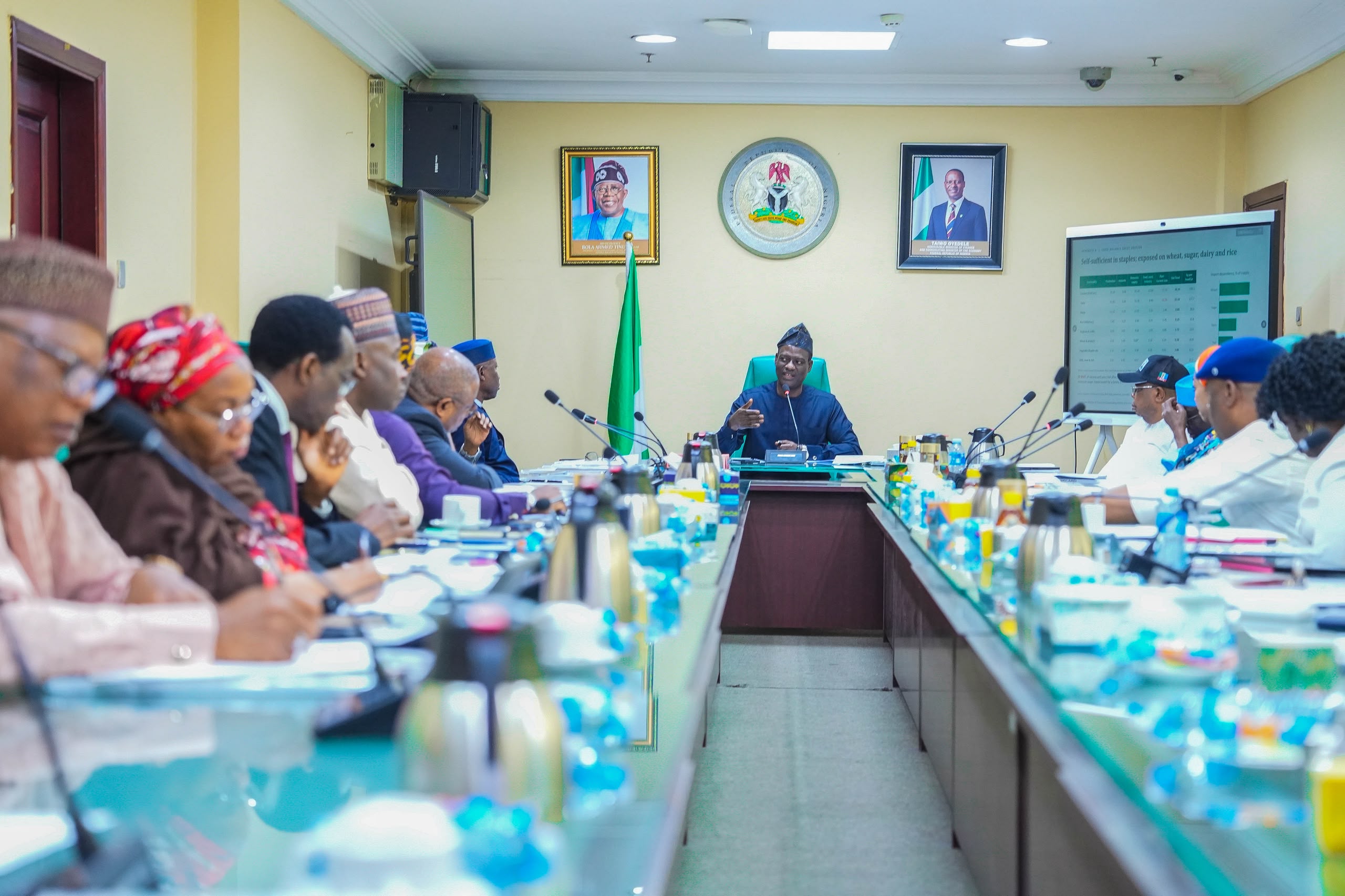
These figures were contained in a statement issued after the Economic Management Team meeting chaired by the Minister of Finance and Coordinating Minister of the Economy, Taiwo Oyedele, in Abuja on November 18.
The meeting reviewed Nigeria’s macroeconomic performance and considered measures to strengthen fiscal discipline, harmonise budgets, stabilise food prices and improve coordination across the energy sector.

On Nigeria’s international credit standing, the team noted that Moody’s and Fitch had revised the country’s sovereign credit outlook from stable to positive in 2026, following S&P Global’s upgrade of Nigeria’s credit rating from B- to B in May.
It stressed that assessments of the economy and the country’s credit ratings should be based on verifiable data and evidence.
The Ministry of Finance is also working to publish finalised financial and economic information on its website before the end of the year.
Budget harmonisation, tax reforms
On fiscal management, the team advanced plans to harmonise the national budget around more realistic revenue and financing assumptions.
It discussed implementing as much of the 2026 capital expenditure as possible, while carrying outstanding balances into 2027 as part of efforts to transition towards a single annual budget cycle.
The proposed measures are aimed at improving the ease of doing business, reducing borrowing costs and directing more financial-sector liquidity towards productive activities in the real economy.
Food prices, agricultural support
Food security and price stability also featured prominently at the meeting, with the team reviewing a 90-day action plan earlier approved by the National Economic Council and endorsed by the Federal Executive Council.
The discussions focused on stabilising prices of staple foods, including cassava, yams, maize and rice.
Other measures include improving the delivery of farm inputs to farmers, reducing post-harvest losses and ensuring better targeting of agricultural support.
It also considered measures to improve electricity transmission capacity, expand metering and protect critical power infrastructure against vandalism and theft.
National Development Plan 2026–2036
The EMT further reviewed the draft National Development Plan 2026–2036, which is structured around seven pillars covering macroeconomic stability, energy, industrialisation, infrastructure, governance, security and human capital development.
Members were asked to conduct further reviews and submit feedback ahead of the plan’s eventual launch.
The meeting also received updates on the creative economy and tourism sectors, including progress on a creative economy bill before the National Assembly and plans for a Presidential Council on Tourism approved by the Federal Executive Council.
Those at the meeting included the Minister of Marine and Blue Economy, Adegboyega Oyetola; Minister of Power, Joseph Tegbe; Minister of Communications, Innovation and Digital Economy, Bosun Tijani; and Minister of Regional Development, Abubakar Momoh.
Others were the Minister of Labour and Employment, Muhammadu Maigari Dingyadi; Minister of Art, Culture, Tourism and the Creative Economy, Hannatu Musa Musawa; Minister of State for Petroleum Resources (Gas), Ekperikpe Ekpo; and Minister of State for Budget, Doris Uzoka-Anite.
The Deputy Governor of the Central Bank of Nigeria in charge of Economic Policy, Philip Ikeazor, Special Adviser to the President, Tope Fasua, and Postmaster General, Omotola Odeyemi, were also in attendance, alongside other senior government officials.
The meeting forms part of the Federal Government’s efforts to coordinate economic policies, strengthen fiscal management and sustain ongoing reforms.