BY EHI BRAIMAH
There is perhaps no better illustration of Nigeria’s governance failures than the country’s persistent inability to provide reliable electricity to its citizens.
For decades, successive administrations have promised to fix the power sector, committed enormous public resources to it and announced ambitious reform programmes.
Unfortunately, the experience of ordinary Nigerians remains largely unchanged: erratic electricity supply, prolonged blackouts, astronomical electricity bills and an almost compulsory dependence on generators.
The frustration is particularly acute in Lagos, Nigeria’s commercial nerve centre, where businesses and households struggle daily with unreliable power. Ikeja Electric, one of the country’s 11 electricity distribution companies (DisCos), serves several communities across Lagos and parts of Ogun State.
Even in highbrow neighbourhoods such as Ikeja GRA, where residents reasonably expect a higher standard of public utility services, electricity supply has become disturbingly unreliable. What hope is there for the less privileged communities?
Consider the routine message from Ikeja Electric to its customers:
“The current power outage is due to a system outage on the feeder supplying your vicinity. Efforts are currently underway to resolve the fault and restore the power supply as soon as possible. Kindly bear with us.”
This communication may sound polite and professional, but it offers little comfort to customers who have been without electricity for extended periods. What exactly is the fault? When will it be repaired? How long should customers bear with a distribution company that continues to collect money for electricity services it has failed to deliver? These are legitimate questions.
Customers are not asking for favours; they are demanding a service for which they pay. Ikeja Electric and other DisCos should wake up from their deep slumber.
Nigeria’s electricity challenge predates the privatisation of the power sector. From the days of Bola Ige as Minister of Power, through successive administrations and ministers, including Babatunde Fashola and Adebayo Adelabu, the country has struggled to translate policy pronouncements into dependable electricity supply.
Joseph Tegbe, who assumed office as Minister of Power in June 2026, has inherited a sector burdened by decades of structural weaknesses.
The political leadership since 1999 has not shown enough determination and political will to resolve the electricity supply crisis. Nigerians are tired of excuses and empty promises.
The generation, transmission and distribution trap
The familiar explanation is that electricity supply is constrained by problems across three interconnected segments: generation, transmission and distribution. While this diagnosis is correct, repeating it without delivering solutions has become an exercise in public frustration.
Nigeria has installed generation capacity considerably higher than the electricity it consistently delivers to consumers. Gas supply constraints, inadequate maintenance, ageing infrastructure, liquidity problems and the inability of the national grid to evacuate available electricity have combined to keep actual output far below potential.
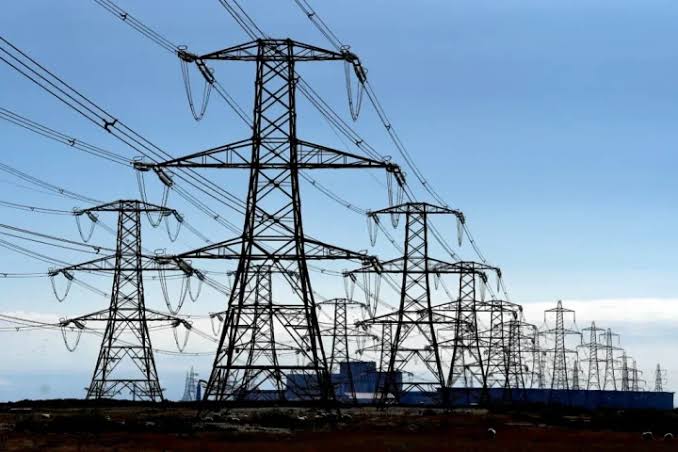
Transmission infrastructure is another major bottleneck. The Transmission Company of Nigeria (TCN) must be capable of transporting electricity efficiently from generating stations to distribution networks. Weak transmission capacity, obsolete equipment, inadequate substations and repeated grid disturbances undermine the entire electricity value chain.
Distribution companies, meanwhile, face infrastructure deficits, overloaded transformers, inadequate feeders, commercial losses, electricity theft and poor revenue collection. However, these challenges cannot become permanent excuses for poor service delivery.
The latest Nigerian Electricity Regulatory Commission (NERC) second-quarter 2026 performance report illustrates the scale of the problem. Although grid-connected power plants recorded an average hourly generation of approximately 4,022 megawatt-hours, average aggregate technical, commercial and collection losses across DisCos stood at 36 per cent, against an allowed average target of approximately 16.92 per cent. The national metering rate was only 62 per cent.
These figures demonstrate that the sector should become more efficient in transmitting, distributing, metering, billing and collecting revenue.
Band A: Paying more without getting what was promised
The introduction of service-based tariffs was presented as a major reform. The argument was straightforward: customers receiving better electricity supply would pay higher tariffs, while those receiving fewer hours would pay less.
Under the arrangement, Band A customers are entitled to a minimum of 20 hours of electricity daily. Band B customers are entitled to 16 hours, Band C 12 hours, Band D eight hours and Band E four hours.
In principle, this is a reasonable approach. Consumers should pay according to the quality of service delivered. However, the arrangement becomes indefensible when customers are charged premium rates but receive substantially less electricity than promised.
For residents of Ikeja GRA and other communities supplied by Ikeja Electric, the experience can be particularly frustrating. There is something fundamentally wrong with asking customers to pay higher tariffs on the basis of a 20-hour supply commitment while prolonged outages become commonplace.
NERC has established mechanisms for monitoring feeder performance, downgrading feeders that fail to meet their service commitments and adjusting tariffs or compensating affected customers. These provisions must not remain on paper.
A distribution company that consistently fails to meet its obligations should face regulatory consequences. Customers should not have to embark on endless correspondences, petitions, telephone calls, social media complaints or express their outrage through protests before receiving relief.
Indeed, electricity consumers deserve a transparent, accessible complaints and compensation mechanism that automatically identifies service failures and adjusts bills accordingly.
Solar power and the flight from the national grid
Another troubling consequence of the electricity crisis is the growing number of Nigerians abandoning the national grid wherever they can afford to do so. Households, offices, hotels, factories and commercial establishments are investing in solar panels, inverters and battery storage systems. For those with sufficient financial resources, solar energy offers a measure of independence from the unpredictable national supply. Understandably, DisCos are worried about what they call “Loss of Revenue (LoR).”
This transition to solar power raises an important question: should access to reliable electricity become a privilege reserved for wealthy Nigerians? Small businesses that cannot afford alternative energy solutions remain particularly vulnerable. Manufacturers spend heavily on diesel and gas-powered generators, increasing production costs and undermining their competitiveness. These expenses eventually find their way into the prices consumers pay for goods and services.
The irony is that Nigeria is blessed with abundant sunlight and considerable renewable energy potential, yet millions of citizens remain without dependable electricity. Solar energy, mini-grids and other decentralised solutions should therefore be encouraged as complementary components of a diversified national electricity strategy. The Electricity Act 2023 provides a framework for states to participate more actively in electricity generation, transmission and distribution within their jurisdictions.
This creates opportunities for state governments, private investors and communities to develop solutions suited to local circumstances. However, decentralised electricity should complement, not excuse the failure to fix the national grid.
What must change?
First, government must establish clear, measurable performance targets across the electricity value chain. Generation companies, TCN and DisCos should publish regular performance data that citizens can independently verify. Nigerians need to know how much electricity is generated, how much is transmitted, how much reaches distribution networks and how much is ultimately delivered to consumers.
Second, investment in transmission and distribution infrastructure must become an urgent national priority.
New generating capacity is of limited value if the grid cannot evacuate the electricity. TCN requires modern substations, transformers, transmission lines, digital monitoring systems and adequate maintenance funding. DisCos must similarly invest in feeders, transformers and network upgrades.
Third, the gas-to-power challenge must be addressed decisively. Nigeria has substantial natural gas reserves, but inadequate gas infrastructure, payment difficulties and supply constraints continue to undermine electricity generation. Government must develop a credible gas supply framework, ensure that generating companies can meet their obligations and address outstanding payment liabilities across the sector.
Fourth, DisCos must be held accountable for service delivery. NERC should intensify independent feeder-level monitoring, enforce the minimum supply commitments attached to each tariff band and impose appropriate sanctions for persistent violations. Where customers pay Band A tariffs without receiving Band A service, automatic tariff adjustments and compensation should follow. Ikeja Electric must demonstrate that its customer engagement is matched by operational performance.
Fifth, Nigeria must accelerate the provision of prepaid meters. Estimated billing remains a major source of distrust between electricity companies and consumers. Customers should pay for electricity actually consumed, not arbitrary estimates. Closing the metering gap will improve transparency, strengthen revenue collection and reduce disputes.
Sixth, the financial sustainability of the electricity market must be resolved. Cost-reflective tariffs are difficult to avoid if the sector is to attract investment, but tariff increases alone cannot repair a dysfunctional system. Government must provide transparent, targeted subsidies for vulnerable households, settle legitimate outstanding obligations and ensure that revenues collected are reinvested in improving service delivery.
Finally, electricity reform must be treated as a national economic emergency rather than another ministerial programme. The Federal Government, state governments, regulators, investors and operators must work within a coordinated framework with clearly defined responsibilities and deadlines.
A test of leadership
Minister Tegbe has an opportunity to approach the power sector differently. His professional background in economic and institutional reforms may provide useful experience, but Nigerians will judge him by results, not credentials or policy presentations.
The Tinubu administration must also recognise that electricity is not simply another item on its infrastructure agenda; it is fundamental to economic growth, industrialisation, job creation, education, healthcare and national productivity.
How can Nigeria compete as an investment destination when businesses cannot plan production around predictable electricity supply? The country cannot build a trillion-dollar economy on generator fumes. For residents of Ikeja GRA, the immediate concern is simple: when will the electricity return, and how long will it stay? For millions of other Nigerians, the question is equally urgent. The time for explanations has passed. Nigerians have endured decades of promises, reform announcements, tariff adjustments and technical excuses. What they need is a power sector that works.
Electricity should not be a luxury, a political slogan or an expensive gamble – it is an essential public utility and a foundation of modern economic life. The success of any Minister of Power, regulator or electricity distribution company will not be measured by the number of meetings held, but the number of hours Nigerians actually enjoy electricity, the reliability of that supply and the affordability of the service.
Until that changes, Nigeria’s electricity crisis will remain one of the most enduring indictments of its governance.
–Braimah is a PR specialist, marketing strategist, and publisher/editor-in-chief of Naija Times (www.ntm.ng) and Lagos Post (www.lagospost.ng). He is a strong advocate for Nigerian and African prosperity, and can be reached through: [email protected]