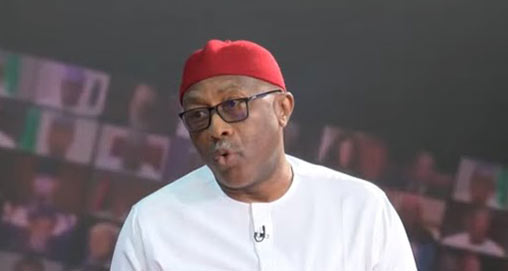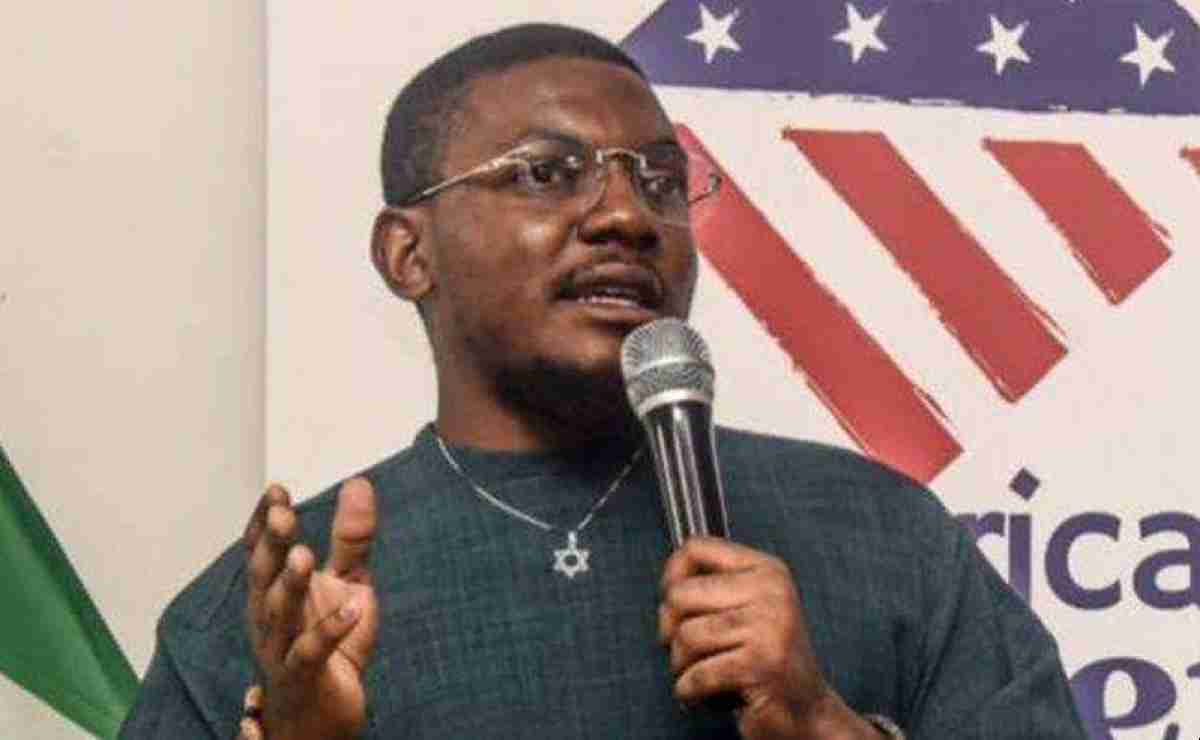
There is fresh outrage over remand of journalist Daniel Ojukwu, a correspondent with the Foundation for Investigative Journalism (FIJ), as media organisations and civil society groups continue to demand his immediate release.
A Federal High Court in Abuja on Tuesday remanded Ojukwu at the Kuje Custodial Centre in Abuja after being arraigned on 12 counts of alleged cyberstalking and criminal defamation over reports questioning expenditure by the Office of the Senior Special Assistant to President Bola Tinubu on Sustainable Development Goals, headed by Adejoke Orelope-Adefulire.
The journalist pleaded not guilty to all the charges.
During Tuesday’s proceedings, Ojukwu’s lawyers, Oluseye Ayo Moore and Abimbola Ojenike, asked the court to allow their client to continue enjoying his previous administrative bail.
Justice Joyce Abdulmalik declined the request, ruling that the fresh bail application filed on Monday was not yet ready for hearing.
She adjourned the matter until December 1 to allow the prosecution to respond.
The prosecution also requested a bench warrant against Soyombo, who was absent from court.
However, the judge rejected the request, stating that the second defendant had not been properly served.
His detention has drawn criticism from the Nigeria Union of Journalists (NIJ), the West Africa Editors Society and a coalition of media and civil society organisations, which argue that prosecuting journalists over investigations into public spending threatens press freedom and accountability.
In a joint statement titled, ‘A Dangerous Attack on Press Freedom and Democratic Accountability’, the coalition described the decision to remand Ojukwu, despite his lawyers’ request for him to remain on his previous administrative bail, as an escalation in the use of criminal prosecution against journalists.
The groups said the reports that triggered the case raised legitimate questions about public expenditure, including payments of N147.1m and N47.5m for classroom construction projects and concerns about the functionality of solar installations reportedly completed under the projects.
They maintained that public officials responsible for managing taxpayers’ money must be willing to explain how such funds are spent.
“The appropriate response to investigative journalism should be far from intimidation, detention, or criminal prosecution. Where a report is considered inaccurate or defamatory, the law provides legitimate avenues for redress that must be pursued in a manner consistent with constitutional guarantees and Nigeria’s human rights obligations,” the statement read.
Alhassan Yahya, National President of the NUJ also called for Ojukwu’s unconditional release and the withdrawal of charges against him and FIJ founder, Fisayo Soyombo, who is the second defendant in the case.
Yahya warned security agencies against using the Cybercrimes Act and criminal defamation laws to intimidate or silence journalists.
He recalled that Ojukwu was arrested and detained for 10 days in May 2024 over the same investigation before his release following public pressure.
The NUJ president said journalists should not face criminal prosecution for investigating the management of public resources.
“Journalism is a constitutionally mandated public service, not a crime; deploying the apparatus of the criminal justice system to punish reporters for scrutinising public spending undermines the very foundations of Nigeria’s democracy,” he said.
Yahya urged the authorities to respect constitutional protections for freedom of expression and the press, citing Sections 22 and 39 of the 1999 Constitution, Article 9 of the African Charter on Human and Peoples’ Rights and Article 19 of the International Covenant on Civil and Political Rights.
The West Africa Editors Society also condemned Ojukwu’s detention and called for the charges to be dropped.
In a statement signed by its representatives, Emmanuel Dogbevi, the organisation expressed concern over what it described as a growing pattern of journalists facing punishment for carrying out their professional responsibilities.
“Journalism has in the past and even today brought honour to Nigeria, and the actions of a few officials should not bring the country to disrepute,” the society said.
The coalition urged the government to address the questions raised in FIJ’s investigations by releasing relevant records and allowing independent scrutiny of the projects.
Other organisations, including the Socio-Economic Rights and Accountability Project, Amnesty International Nigeria and the Committee to Protect Journalists, have also called for Ojukwu’s release.
The case stems from FIJ investigations published between late 2023 and early 2024, which examined contracts and payments made by the Office of the Senior Special Assistant to the President on Sustainable Development Goals.
One of the reports, published on November 7, 2023, was titled, ‘Special Report: Two weeks before end of Buhari’s tenure, special assistant, Adefulire paid a restaurant N147.1m to build classrooms in Lagos. A lot was amiss.’
The investigation questioned an alleged payment of N147,127,467.58 to Enseno Global Ventures Limited for a skill acquisition centre and classroom projects, raising concerns about the company’s operations and capacity to execute the contracts.
Another report examined a N47.5m classroom construction contract awarded to Tru3 Nigeria Limited, including questions about the company’s status and its alleged failure to mobilise to the project site.
FIJ also reported that solar panels installed at some of the project locations stopped functioning shortly after completion.
The investigations examined the procurement process, the contractors’ capacity and the execution of the projects.
According to the charge sheet, the prosecution alleged that Ojukwu and Soyombo conspired to commit cyberstalking and published reports on the FIJ website that allegedly placed Orelope-Adefulire in fear of death, violence or bodily harm.
The case, marked FHC/ABJ/CR/486/2024 and titled, ‘Inspector-General of Police vs Daniel Ojukwu & Anor’, lists former Inspector-General of Police, Kayode Egbetokun, as the complainant.
The charges were brought under the Cybercrimes (Prohibition, Prevention, etc.) Act 2015, as amended in 2024, and the Criminal Code Act.
A mid-term assessment by Media Rights Agenda, titled ‘The Onslaught Intensifies: A Mid-term Assessment Report on Media Freedom under the Tinubu Administration’, documented 141 incidents involving attacks on journalists, media workers and ordinary citizens between May 29, 2023, and May 29, 2025.
The report attributed 61 incidents, representing 43.26 per cent, to police operatives, while the Department of State Services accounted for seven cases, or 4.96 per cent.
MRA Executive Director, Edetaen Ojo, said the continued use of restrictive laws, arrests, detention, surveillance and intimidation remained major concerns for media freedom.
He particularly questioned the use of Section 24 of the Cybercrimes Act to arrest and prosecute journalists and social media users over critical or dissenting expressions.
The Committee to Protect Journalists identified 91 journalists who had been arrested, attacked or harassed since Tinubu assumed office, while the International Press Centre recorded 65 attacks in 2024.
The Centre for Journalism Innovation and Development also documented at least 231 attacks since the President took office.
Among the cases cited by press freedom advocates are the arrests of FIJ’s Emmanuel Uti, blogger Destiny Ekhorutomuen, four journalists with Informant247 in Kwara State and publisher Fejiro Oliver, who has remained in detention since September 2025.
The CPJ also reported that at least 56 journalists were assaulted or harassed while covering the #EndBadGovernance protests in August 2024.
Deputy Director of the Centre for Journalism Innovation and Development, Busola Ajibola, warned that Ojukwu’s prosecution could discourage journalists from investigating powerful individuals and public institutions.
“Journalism isn’t a crime and shouldn’t be equated with it,” she told Saturday NGBREAKINGNEWS.
Ajibola urged Nigerians to speak against criminal defamation and provisions of the Cybercrimes Act which, she said, threaten freedom of expression, access to information and press freedom.
She argued that individuals who believe they have been defamed should seek redress through civil proceedings rather than rely on the police and criminal justice system to prosecute journalists.
Citing Ojukwu’s detention and the earlier case of Secret Reporters journalist Stanley Ugagbe, who reportedly spent about two months in custody, Ajibola said the use of criminal laws against reporters was putting pressure on investigative journalism.
She claimed that more than 20 journalists had been targeted through criminal defamation and cybercrime laws in the past two years, warning that the trend could discourage reporting on public officials and institutions.