PANDEF warned that diverting 20 per cent of the fund to the proposed research council could undermine the board’s existing commitments and weaken its capacity to sustain ongoing investments
The Pan Niger Delta Forum (PANDEF) has urged members of the National Assembly to reconsider the proposed funding arrangement in a bill seeking to establish the National Council on Research, Science, Technology and Innovation.
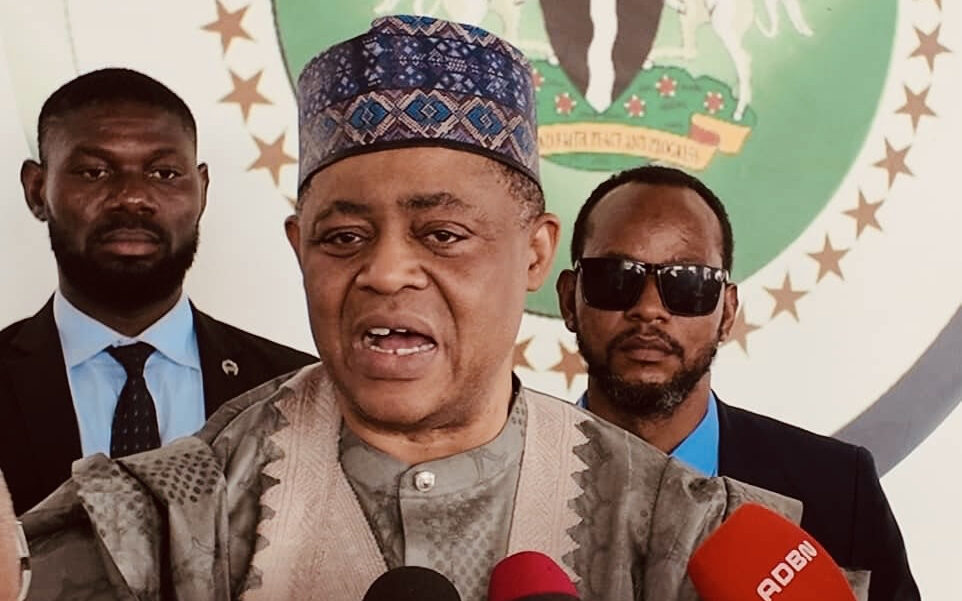
Godknows Igali, the national chairman of PANDEF, the apex socio-political organisation in Nigeria’s South-South geopolitical zone, made the call at a press briefing in Abuja on Friday.
The bill, an executive proposal sponsored by Senate Leader Opeyemi Bamidele, was read on the floor of the Senate on 13 October, passed second reading on 22 October, and scaled third reading on 19 November. It is currently at the second reading stage in the House of Representatives. If the House passes it, it’ll be transmitted to President Bola Tinubu for assent.
The proposed council is intended to provide sustainable funding for research, development and innovation activities in Nigeria, as well as offer strategic direction, policy oversight and general supervision of the sector.
However, Section 19(a) of the bill proposes that 20 per cent of the Nigerian Content Development Fund (NCDF) be deducted as a primary source of funding for the proposed research council.
The Nigerian Content Development and Monitoring Board (NCDMB), established in 2010, is mandated to promote the development, acquisition and application of indigenous capacity in Nigeria’s oil and gas industry. It also supports research, industrialisation and economic diversification.
Mr Igali, however, opposed the proposed funding arrangement, arguing that the NCDMB extends support beyond the oil and gas industry to other sectors, including agriculture, manufacturing and transportation.
He said the board’s interventions had contributed significantly to job creation and industrial development, particularly in communities across the Niger Delta grappling with the environmental consequences of oil and gas exploration.
Mr Igali warned that diverting 20 per cent of the fund to the proposed research council could undermine the board’s existing commitments and weaken its capacity to sustain ongoing investments.
“Consequently, diverting 20 per cent of the Fund to another institution at this stage would undermine its existing commitments, weaken its capacity to sustain ongoing investments and potentially slow down the momentum of local content development,” he said.
He maintained that reducing the fund’s resources by 20 per cent would constrain the board’s ability to expand its programmes and fulfil its development responsibilities.
“Reducing the Fund’s resources by 20% would inevitably constrain the Board’s ability to deepen these interventions, expand its programmes and fulfil its development responsibilities. PANDEF therefore considers any attempt to weaken this important institution a matter of serious regional and national concern,” he said.
Mr Igali urged the National Assembly to review the funding provisions before passing it and transmitting it to President Tinubu for assent.
The PANDEF chairman maintained that the proposed research council should have a dedicated and sustainable funding framework that would enable it to discharge its responsibilities without undermining the mandates and financial capacities of existing statutory institutions.
He recommended that, if necessary, the proposed funding provision should be referred back to the executive for a more thorough review and the development of an appropriate, sustainable and independent funding mechanism.
The NCDMB was established in April 2010 following the enactment of the Nigerian Oil and Gas Industry Content Development (NOGICD) Act, 2010, signed by former President Goodluck Jonathan.
The board was established amid concerns about foreign companies’ dominance in Nigeria’s oil and gas industry, particularly in providing technical services, equipment, engineering, fabrication, and other specialised activities. Despite being a major oil-producing country, Nigeria relied heavily on foreign expertise, equipment and service providers, resulting in significant capital flight and limited opportunities for indigenous companies and workers.
The NOGICD Act was therefore designed to increase the participation of Nigerian companies and professionals in the oil and gas industry, promote the use of locally manufactured goods and services, develop indigenous technical capacity and retain a greater proportion of the industry’s expenditure within the country.
Under the Act, the NCDMB monitors and enforces compliance with local content requirements, reviews and approves Nigerian Content Plans submitted by oil companies and contractors, and develops indigenous capacity through training, research, infrastructure a, nd financial interventions.
To support these objectives, Section 104 of the NOGICD Act established the Nigerian Content Development Fund (NCDF), which is financed through a mandatory one per cent deduction from the value of every contract awarded in the upstream sector of the oil and gas industry.
The fund is managed by the NCDMB and is dedicated to financing projects, programmes and activities aimed at increasing Nigerian content in the oil and gas industry.
One of the board’s major financing initiatives is the Nigerian Content Intervention Fund (NCI Fund), launched in 2017 in partnership with the Bank of Industry (BOI), initially with $200 million.
The intervention fund provides affordable financing to indigenous oil and gas companies, manufacturers, contractors, and service providers to help them acquire equipment, finance contracts, expand their businesses, and improve their capacity to compete with foreign companies.
Its financing windows include manufacturing loans, asset acquisition, contract financing, loan refinancing and financing for community-based contractors.
The fund was subsequently expanded to $350 million in 2020 to accommodate additional financing needs, including special intervention windows for women-owned businesses in the oil and gas industry and working capital and capacity-building support for indigenous companies.