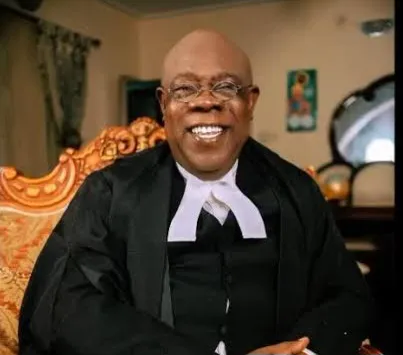
Legal practitioner, Asiwaju Kunle Kalejaye, SAN, has called on the Federal Government and the National Assembly to establish an independent electoral prosecution body to investigate and prosecute perpetrators and sponsors of political violence ahead of the 2027 general elections.
Kalejaye made the call in a statement issued on November 13, expressing concern over the growing cases of political violence, intimidation and attacks on political supporters, journalists and campaign activities across the country.
He lamented that political campaigns, which should ordinarily revolve around manifestos, policy debates and the presentation of ideas, had increasingly been characterised by violence, destruction of property, physical assaults and killings.
He noted that the President had also condemned the growing trend, insisting that political campaigns should focus on issues and ideas that promote the welfare of Nigerians and national development.
According to Kalejaye, recent incidents across Lagos, Delta, Katsina, Enugu, Nasarawa and Ekiti states demonstrate the worsening security situation surrounding political activities.
He cited an attack by armed hoodlums on an event centre in Ikeja, Lagos, where journalists and supporters were reportedly injured and property destroyed ahead of a town hall meeting organised by the Nigeria Democratic Congress (NDC).
He also referenced a violent political procession in Asaba, Delta State, which reportedly claimed one life and left five persons injured, as well as an attack on All Progressives Congress (APC) supporters in Katsina, where several people sustained injuries and a vehicle was set ablaze.
The legal practitioner said the incidents had raised serious concerns about the safety of political participants and the ability of citizens to exercise their democratic rights without intimidation.
He recalled that the President had condemned the attacks and directed security agencies to take decisive action against perpetrators of political violence, stressing that violence should have no place in the country’s democratic process.
Kalejaye, however, argued that presidential directives and public condemnations would not be sufficient to address the problem without an independent institution empowered to investigate and prosecute electoral offences.
He observed that although the Electoral Act, 2026 provides penalties for campaign-related violence and threatening political statements, enforcement remains a major challenge.
He specifically cited Sections 96 and 97 of the Act, which provide penalties for certain electoral offences, including fines and imprisonment, while noting that political parties found culpable could also face sanctions.
He further argued that the absence of an independent electoral offences prosecution mechanism had created an institutional gap, leaving enforcement largely dependent on agencies that may face political and administrative constraints.
According to him, the Independent National Electoral Commission (INEC) is already burdened with the logistical responsibilities of conducting elections and lacks sufficient investigative and prosecutorial capacity to independently tackle electoral crimes.
He also expressed concern that the involvement of the Police and Attorneys-General, who operate within the executive structure, could create challenges when politically influential individuals or sponsors of violence are implicated.
Kalejaye warned that the situation could encourage impunity, particularly where arrests are made but investigations and prosecutions fail to progress beyond initial public announcements.
He also drew attention to findings attributed to a September 2026 Yiaga Africa survey, which indicated that 61 per cent of Nigerians, including 78 per cent of respondents in the North-East, feared that electoral violence could prevent them from voting in the 2027 elections.
Similarly, he referenced the CLEEN Foundation’s Election Security Threat Assessment, which reportedly documented 70 physical election-related attacks across 19 states and the Federal Capital Territory between January 1 and October 27, 2026, resulting in 27 deaths.
The assessment identified Kaduna, Edo and Enugu states as major flashpoints.
He added that warnings issued by the Nigeria Civil Society Situation Room on November 5 and the African Centre for Security, Governance and Development (CentreSGD) on November 9 had further underscored concerns about the implications of escalating political violence for the credibility of the forthcoming elections.
To address the situation, Kalejaye urged the Presidency and the National Assembly to urgently establish an Office of the Independent Electoral Counsel, modelled on the proposed Electoral Offences Commission.
He proposed that the institution should enjoy security of tenure, independent funding and sufficient investigative and prosecutorial powers to operate without executive interference.
According to him, an independent electoral prosecutor would be better positioned to investigate attacks, identify and prosecute sponsors of political violence, and ensure that electoral offenders are held accountable regardless of their political affiliations.
He also called for stronger collaboration between the proposed institution and INEC to ensure the effective enforcement of relevant provisions of the Electoral Act.
Kalejaye maintained that Nigeria did not necessarily need additional prohibitions to tackle electoral violence, arguing that existing laws already provide substantial penalties for offences such as assault, arson, murder and online incitement.