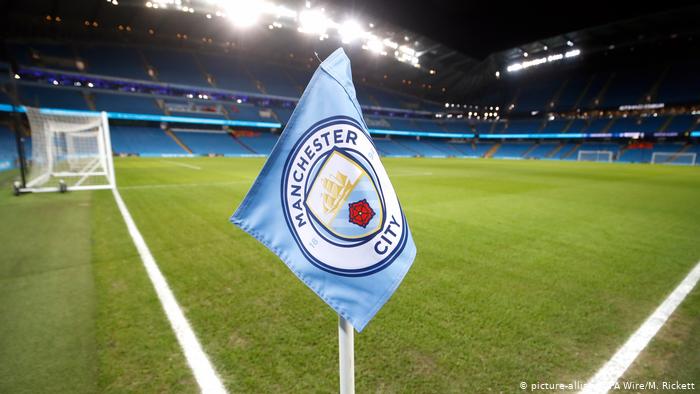
Senior officials at several Premier League clubs have called for Manchester City’s owners to be forced to sell the club following an independent commission’s finding that the champions breached financial regulations.
The demand comes after the Independent Football Regulator (IFR) confirmed that it has the authority to investigate the club’s ownership and potentially order the removal of its owners.
According to BBC Sport, officials at three Premier League clubs believe Abu Dhabi United Group should be stripped of control of Manchester City following the commission’s September ruling.
The commission found the club guilty of breaching financial regulations between 2009 and 2018 and failing to cooperate with the investigation.
It also determined that City inflated revenues and disguised £900m in losses through sham commercial arrangements.
Although the commission has yet to announce a final punishment, possible sanctions include a fine, points deduction, removal of titles or expulsion from the Premier League.
However, some rival club executives believe such measures would be insufficient unless the current owners are forced to relinquish control.
One senior figure reportedly argued that any punishment short of an ownership change would be meaningless, while another said the Premier League’s credibility had been undermined and that rival clubs could not move on if the existing ownership structure remained.
The growing pressure has placed IFR chairman David Kogan under scrutiny, with the regulator empowered under Section 34 of the Football Governance Act to investigate an owner’s honesty, integrity and financial soundness, and ultimately issue an ownership removal order.
Speaking before a parliamentary committee earlier this week, Kogan insisted that the regulator would not hesitate to act after Manchester City’s appeal process had concluded.
“Forget the name of the club, forget the size of the club, forget the scale of the issue,” Kogan said. “We cannot simply ignore our statutory duties in relation to a club because it happens to be of a certain size.”
He added that the commission’s findings had already established a basis for the regulator to consider its responsibilities.
“In one sense, the evidence has already been judged by those cases having been found guilty, so we will absolutely have the stomach to do so,” he added. “Assuming those circumstances are triggered, if we don’t act, what is the purpose of having a football regulator?”
Any attempt to force Sheikh Mansour’s investment group to sell the club could have wider political and financial implications.
In September, Prime Minister Andy Burnham attracted criticism after expressing concern that the scandal could result in a sale of the club.
He described City’s owners as “a huge partner in the building of modern Manchester” and said he would be “really concerned” if they were forced to sell.
Kogan, however, has maintained that the regulator would not be influenced by political pressure.
Preparations for a possible legal battle are also underway, with IFR chief executive Richard Monks revealing that a £2m litigation reserve is being built through club levies.
The reserve forms part of the £20.3m annual cost of regulating England’s top five divisions, while the government has agreed to provide a loan if legal expenses exceed the amount set aside.
“We’d expect to win that litigation, to claim costs and repay government,” Monks told MPs.
“If we failed in that massive litigation, then ultimately it would be added to the levy and we’d repay government that way.”
Meanwhile, Premier League clubs voted last week to cover the legal expenses of the league’s five board directors after UAE-based Manchester City sponsors Etihad and Etisalat indicated that they were considering suing the competition.
The outcome of City’s appeal remains central to the next stage of the dispute.
The Premier League has asked clubs to refrain from making public comments while the legal process continues.
Manchester City have strongly denied any wrongdoing and formally appealed the commission’s findings, maintaining that the ruling contains clear material errors of law, principle and fact.