Follow THISDAYLIVE on GoogleAdd us as a preferred source to see more of our stories in Google
Follow us on Google
Chuks Okocha in Abuja
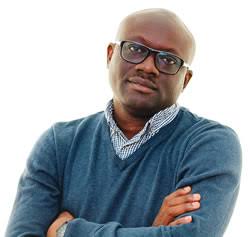
A former editor of THISDAY newspapers and founder of The Cable, Simon Kolawole, has said Mr. Peter Obi could not win the presidential election in 2023 because he failed to secure substantial votes in core northern states.
Kolawole spoke on Monday during an appearance on Arise Television’s Prime Time programme hosted by Charles Aniagolu, where he discussed the power games, political calculations, and lessons of the 2023 election, as captured in his new book.
Titled, “Winning Formula: The Inside Story of Nigeria’s 2023 Presidential Election,” the 296-page book offers an account of the political intrigues, power struggles, strategic alliances, and electoral calculations that shaped one of Nigeria’s most fiercely contested presidential elections.
Kolawole said Obi and Buhari were the only presidential candidates in the Fourth Republic who, in his assessment, enjoyed natural followership without having to spend money to mobilise supporters.
He stated, “Obi did extremely well. In the history of the Fourth Republic, only two presidential candidates have had organic following, in my own reckoning: Muhammadu Buhari and Obi. These were people that did not have to spend; they had natural followers.”
He said his analysis of voting data from 1999 showed that every successful presidential candidate had performed strongly in at least two of Nigeria’s three major voting blocs: the Hausa-Fulani bloc, represented by the North-west and parts of North-east; the Igbo bloc in the South-east; and the Yoruba bloc in the South-west.
The author said each of the three leading candidates won the bloc associated with their respective regions, with Obi polling 88 per cent in the South-east, Bola Tinubu securing 54 per cent in the South-west, and Atiku Abubakar getting 39.76 per cent in the core north.
However, he said Obi was unable to make significant inroads into the core north and this affected his chances badly in 2023.
He listed the core northern states in his book as Jigawa, Kaduna, Kano, Katsina, Kebbi, Sokoto and Zamfara (all in the North-west), as well as Adamawa, Bauchi and Gombe (in the North-east).
Kolawole stated, “He couldn’t penetrate the core north. He had six per cent when you put the 10 states that are dominated by Hausa-Fulani. Tinubu had 37.4 per cent. Atiku had 39.76 per cent from those states.
“So, the inability of Obi to penetrate one of the two blocs, I believe, affected his ability to win the election.”
TheCable CEO stated that given the peculiar role ethnicity, race, and religion play in politics across the world, presidential candidates must strive to attract substantial support from other voter bases while consolidating their traditional strongholds.
He said the three major voting blocs in Nigeria accounted for about 66 per cent of the voting population, making them crucial to the electoral calculations of presidential candidates.
“Nobody is going to become president by just winning fragments, fragments, fragments,” he said.
Kolawole also revealed how Nyesom Wike, a former governor of Rivers State, and his political allies allegedly worked with Bola Tinubu’s camp to undermine Atiku in the 2023 presidential election, using Obi to split opposition votes in strategic states.